Best for
Newer FPV pilots who have practiced in a simulator and want a compact outdoor drone for learning manual control, freestyle lines and basic racing skills.
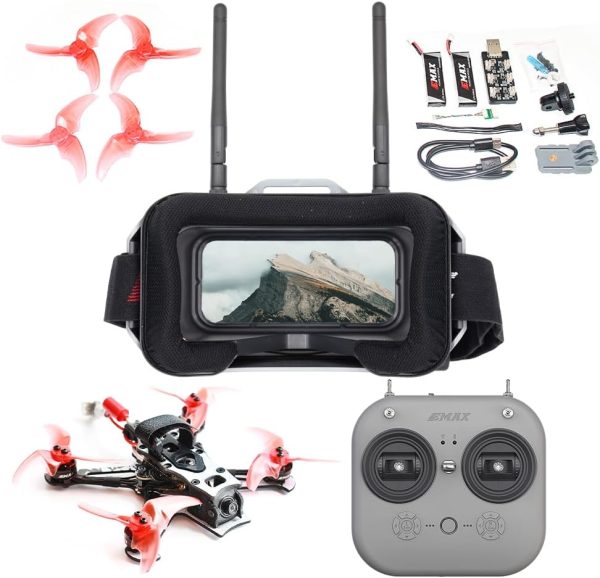
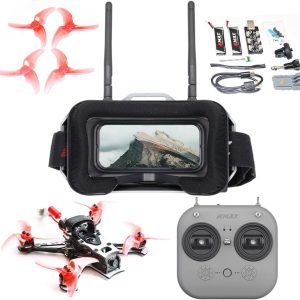
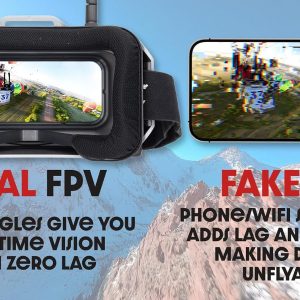
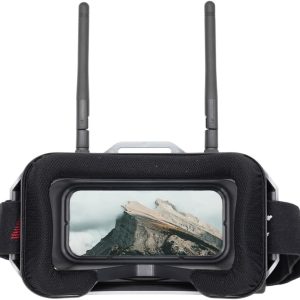
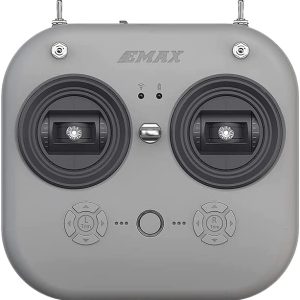
The EMAX Tinyhawk III Plus Freestyle is an analog ELRS RTF kit for pilots ready to progress from simulator practice into real outdoor FPV freestyle.
The EMAX Tinyhawk III Plus Freestyle RTF Kit is a compact analog FPV package for pilots who want to progress into genuine manual and freestyle flying. The Amazon configuration covered here is advertised as including the carbon-fiber drone, an ExpressLRS controller and analog FPV goggles.
This is not a self-flying camera drone or a protected indoor trainer. Its exposed 2.5-inch propellers, responsive controls and manual flight characteristics make it better suited to someone willing to practice in a simulator before flying outside. It can be a first freestyle drone, but it is not the easiest first drone for someone with no FPV experience.
Best for
Newer FPV pilots who have practiced in a simulator and want a compact outdoor drone for learning manual control, freestyle lines and basic racing skills.
Not ideal for
Someone expecting GPS hovering, Return to Home, obstacle avoidance, stabilized aerial video or a drone that can safely hover unattended.
Verify first
Confirm that the selected offer is the analog RTF version and check the included battery count, battery capacity, charger, goggles, controller and spare parts.
| Product type | Micro freestyle and racing FPV drone kit |
|---|---|
| Configuration | Ready-to-fly kit |
| Video system | Analog FPV |
| Control system | ExpressLRS, commonly abbreviated ELRS |
| Frame | Carbon fiber with exposed propellers |
| Propeller size | 2.5 inches |
| Retailer-listed video resolution | 480p |
| Retailer-listed battery | 450mAh lithium-polymer battery; verify the exact count and connector |
| Advertised included equipment | FPV drone, controller and analog FPV goggles; verify the current bundle before ordering |
RTF means the offer is intended to provide the main equipment needed to operate the drone: the aircraft, compatible controller and FPV viewing equipment. It does not mean the drone requires no preparation or learning.
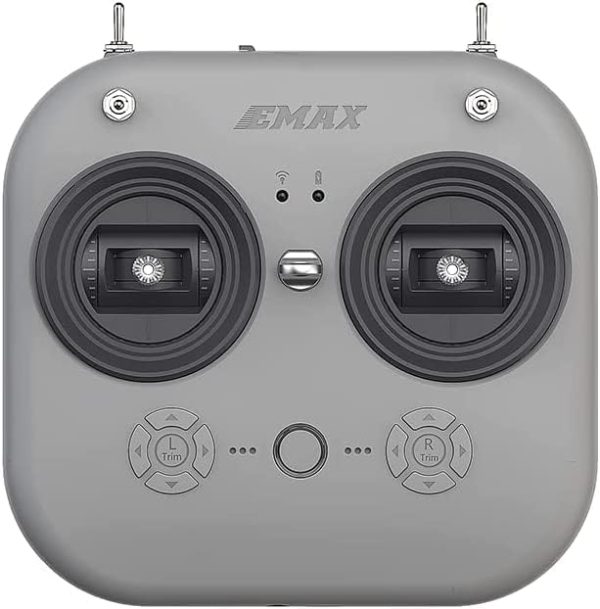
Before the first flight, the pilot still needs to inspect and charge the batteries, understand the controller switches, verify the arm and disarm controls, check the video channel, confirm the failsafe behavior and choose a safe flying area. Firmware or configuration work may also be necessary if settings are changed or equipment loses its binding.
The included controller may be useful for simulator practice, but buyers should confirm USB simulator compatibility for the exact controller and firmware included with the current bundle. Simulator time is strongly recommended before attempting outdoor manual flight.
The Tinyhawk III Plus Freestyle should not be treated like a toy-grade altitude-hold drone. It requires active control while airborne, and the exposed propellers can damage themselves, nearby objects or people if the drone is armed in the wrong place.
Learning how to disarm immediately is one of the most important first skills. A rough landing can leave the motors pushing the propellers against grass or another object, potentially damaging the propellers or stressing the electronics.
Start over short grass in a large, open area away from people, vehicles, pets and buildings. Use conservative rates or beginner-friendly settings where available, keep the drone close and use a spotter until you are comfortable maintaining orientation and finding the aircraft after a landing.
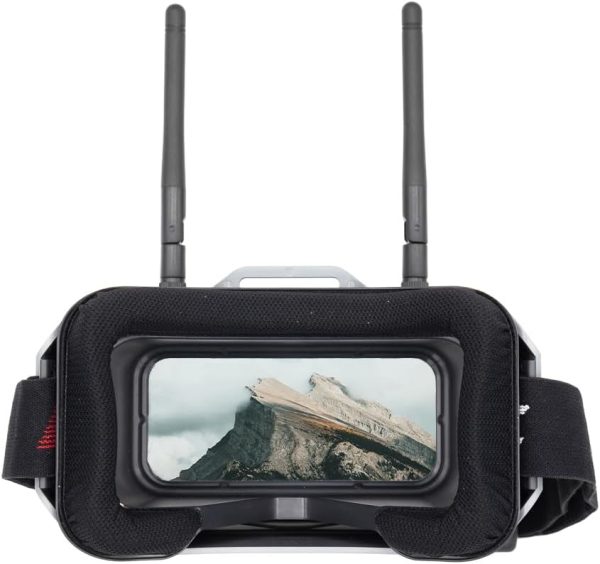
Retailer feedback commonly describes the drone as fast, responsive and durable for its size, but also identifies a meaningful learning curve. Weak documentation and difficulty focusing on the included box-goggle screen are recurring concerns worth considering before purchase.
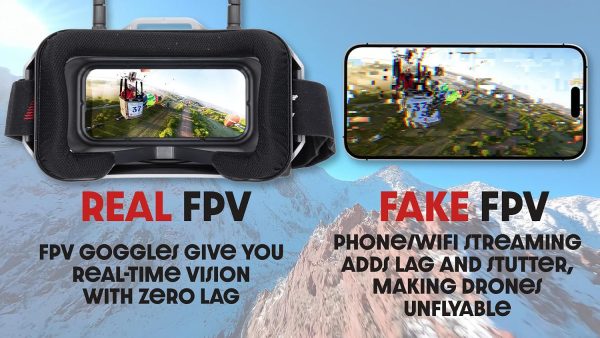
This Amazon offer is advertised as the analog version. Analog FPV prioritizes low latency, simplicity and relatively affordable replacement equipment, but its picture will look much softer than DJI O4, Walksnail or HDZero video. The retailer lists 480p capture information, which should not be confused with stabilized, high-resolution footage from a camera drone.
EMAX also sells separate HDZero configurations. Analog and HDZero goggles are not interchangeable without compatible receiving hardware, so buyers should verify the video system before purchasing replacement goggles or choosing between RTF and BNF packages.
This is primarily a piloting and freestyle platform. It is not intended to replace a stabilized 4K camera drone for cinematic recording.
Extra compatible batteries and spare propellers are the most practical additions because FPV flights are short and propeller damage is normal while learning. A fire-resistant charging location and a charger designed for the exact battery type are also important.
The included goggles are enough to establish an FPV view, but they may become the first major upgrade if the screen is difficult to focus on or if you want better antennas, reception, comfort or recording features. Any replacement must support the drone’s analog video signal.
A small field bag, spare hardware and a suitable tool kit can make repairs easier. Avoid ordering batteries, connectors or replacement electronics based only on the general Tinyhawk name because different Tinyhawk generations and configurations can use different components.
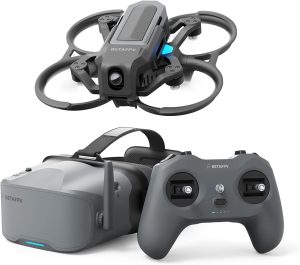
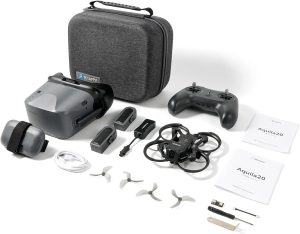
If you want a more forgiving first FPV kit with propeller protection and assisted hovering, consider the BETAFPV Aquila20 FPV Kit. It is a better fit for someone who wants a gradual path from assisted flight into manual control.
If your priority is protected propellers, stabilized 4K recording and an easier immersive camera-drone experience, the DJI Avata 2 is the more capable—although substantially different—option.
The official EMAX product listing separates the analog RTF and analog BNF configurations and lists HDZero as a separate product option. This page covers Amazon ASIN B0D6ZW7RHL, advertised as the analog ELRS RTF kit.
Use the product page for the purchase decision and the guides below for deeper research.
The BETAFPV Aquila20 FPV Kit is the best beginner FPV drone kit for most first-time pilots. It is a genuinely complete analog ready-to-fly set with a protected drone, ExpressLRS radio, goggles, two flight batteries, charger, spare...
An FPV drone build kit can mean a complete ready-to-fly package, a nearly finished drone that needs compatible equipment, or a loose collection of parts that still leaves major decisions to the buyer.
The best FPV drone depends on what you want to learn or record. Choose the DJI Avata 2 for the most polished premium package and stabilized 4K footage.
The EMAX Tinyhawk III Plus Freestyle RTF Kit makes sense for someone who specifically wants to learn real FPV freestyle without assembling a complete radio, goggle and drone system separately. Its small carbon-fiber frame and ELRS control system provide a more authentic progression path than a self-leveling toy drone.
The tradeoff is that it demands more preparation, practice and personal responsibility. Exposed propellers, manual control, short flights and basic analog goggles make it a poor choice for someone expecting an effortless first-flight experience. Buy it for the freestyle learning path—not because the words “ready to fly” make it sound automatic.
It can be a beginner’s first freestyle drone, but simulator practice should come first. Someone who wants assisted hovering and protected propellers will have an easier start with a trainer-oriented whoop kit.
It is advertised as including the main RTF components, but batteries still need to be charged and the pilot must verify binding, video reception, switch assignments, failsafe behavior and safe operating procedures.
Amazon ASIN B0D6ZW7RHL is advertised as the analog ELRS RTF configuration. Confirm the selected variation before ordering because EMAX also offers BNF and HDZero versions.
Its compact size may fit some indoor spaces, but the exposed propellers and responsive freestyle performance make normal occupied rooms a poor training environment. A clear outdoor area over grass is the safer starting point.
The current offer does not document GPS positioning, automatic Return to Home or obstacle avoidance. Buyers should treat it as a manually controlled FPV drone unless the seller supplies documentation showing otherwise.
Extra batteries are useful for FPV training, but verify the required voltage, capacity, connector and physical dimensions before ordering. Also confirm whether the current kit includes one battery or multiple batteries.
| Brand | EMAX |
|---|---|
| Model | Tinyhawk III Plus Freestyle |
| Product Type | Micro Freestyle FPV Drone |
| Configuration | Ready-to-Fly Kit |
| Video System | Analog FPV |
| Control Link | ExpressLRS (ELRS) |
| Frame Material | Carbon Fiber |
| Propeller Size | 2.5 inches |
| Video Capture Resolution | 480p (retailer-listed) |
| Battery | Lithium-polymer; 450mAh retailer-listed |
| Included Controller | Yes |
| Included FPV Goggles | Yes |
| Skill Level | Beginner with simulator practice to intermediate |
| Best Use | Outdoor FPV freestyle and racing practice |
Practice throttle control, coordinated turns, recovery and disarming in an FPV simulator before flying the drone. A freestyle quad does not hold its position like a GPS camera drone and requires continuous pilot input.
Use only batteries and charging equipment confirmed for this exact configuration. Never charge a damaged or swollen LiPo battery, and do not leave charging batteries unattended. Let batteries cool after a flight before recharging them.
The Tinyhawk III Plus Freestyle is sold in multiple configurations. An RTF package is intended to include the controller and viewing equipment, while a BNF package generally assumes the buyer already owns compatible equipment. EMAX also separates analog and HDZero video versions.
Before ordering, verify that the current Amazon package includes:
Do not assume that parts sold for an older Tinyhawk, Tinyhawk III, Tinyhawk Freestyle 2 or HDZero model will fit this analog Tinyhawk III Plus Freestyle. Compare exact part numbers, connectors, mounting dimensions and video-system compatibility.