Best for
First-time camera-drone pilots, travelers, and value-focused buyers who want GPS-assisted flight, 4K recording, two batteries, and a compact under-249 g aircraft.
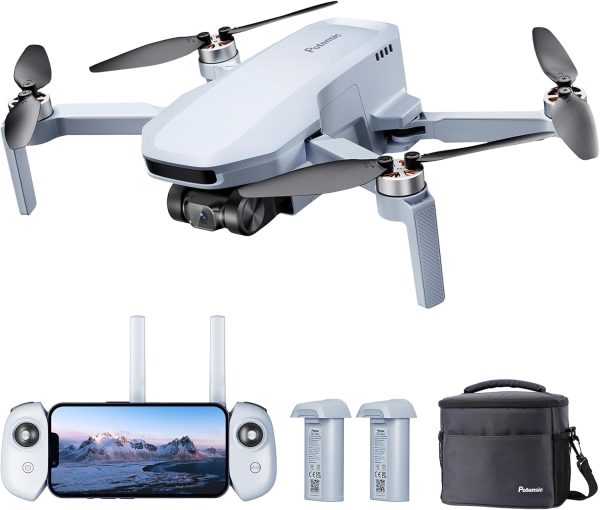
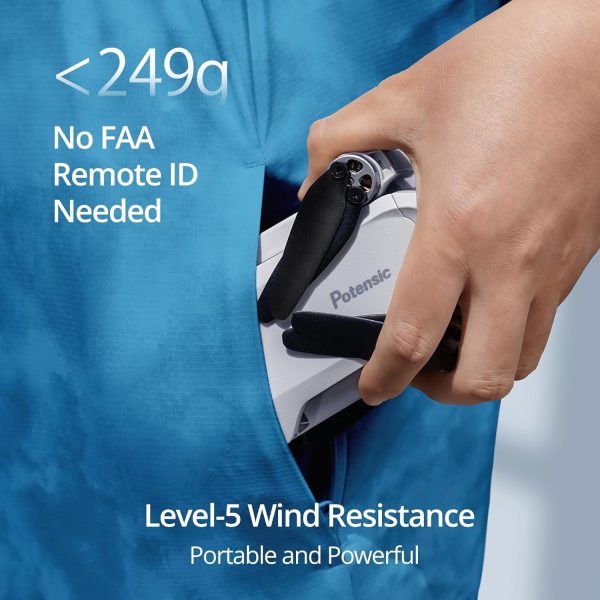
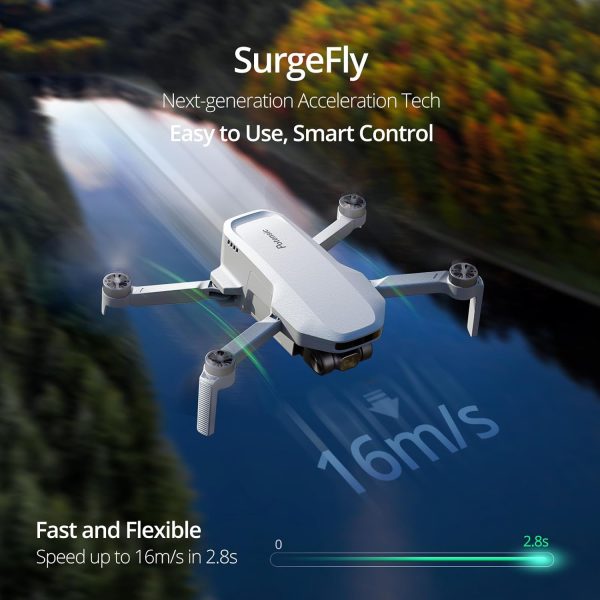
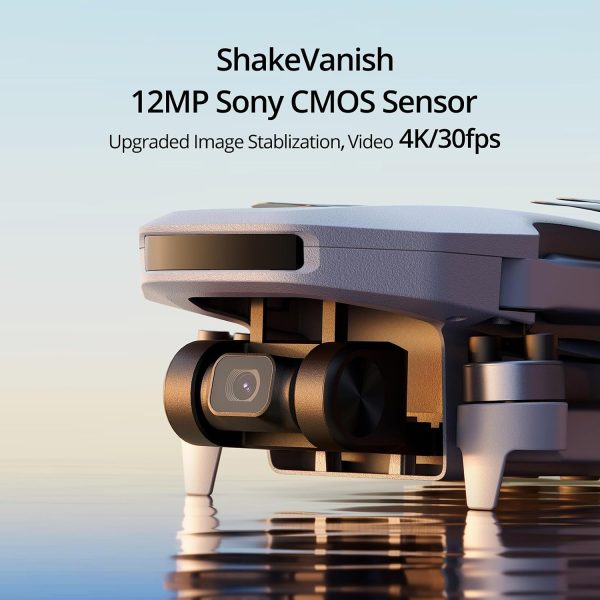
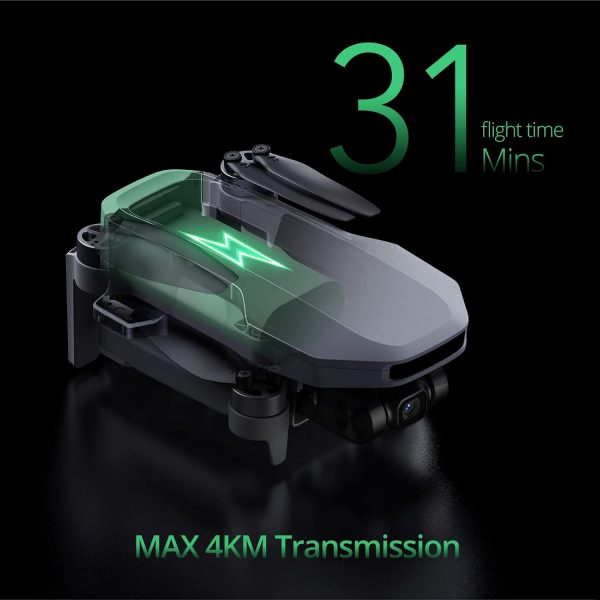
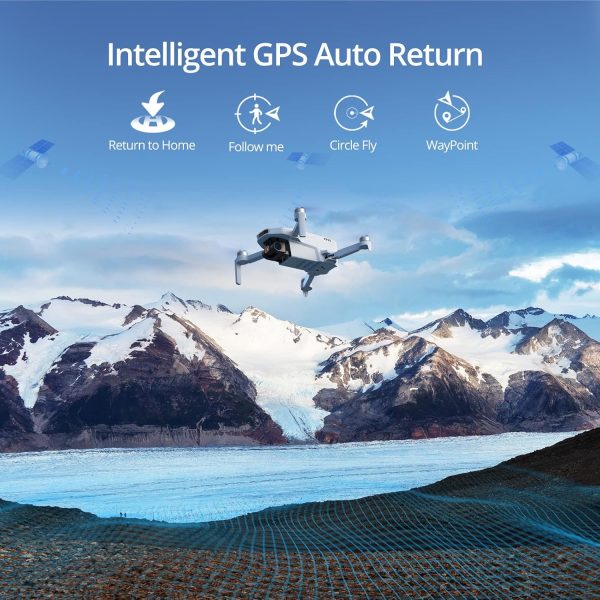
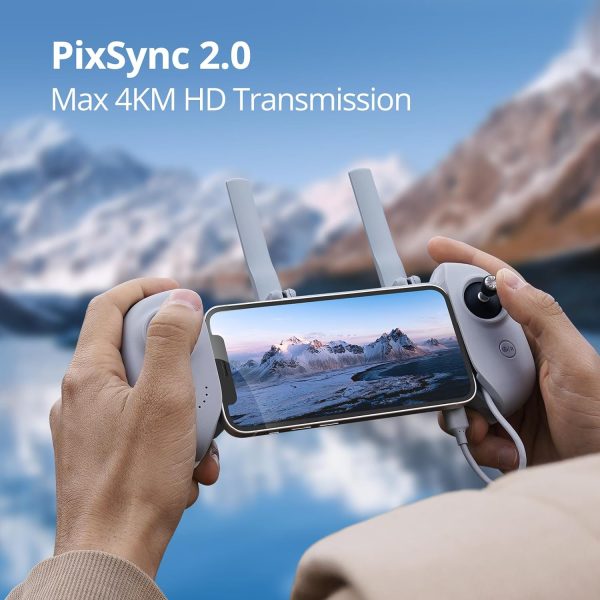
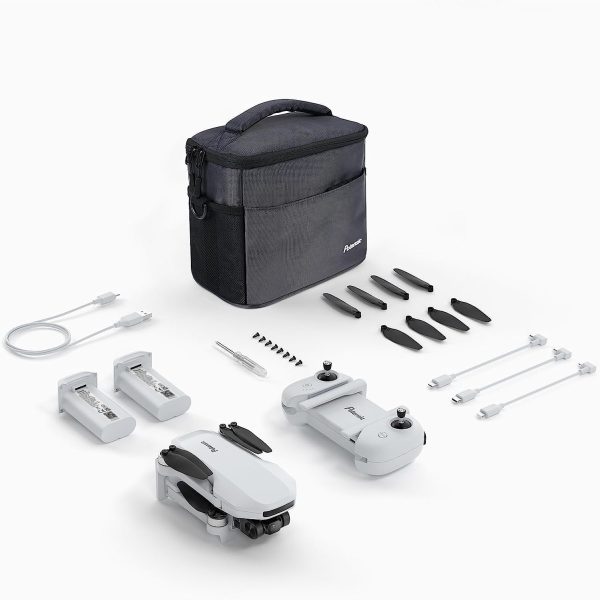
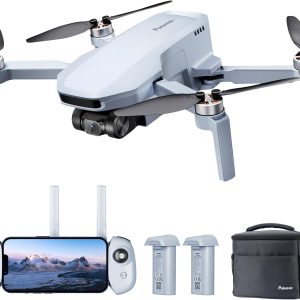
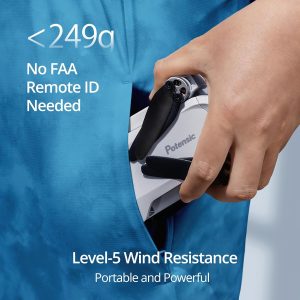

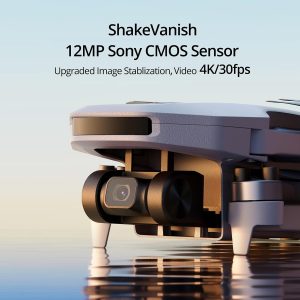
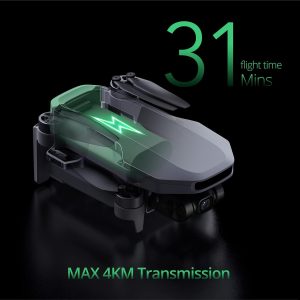
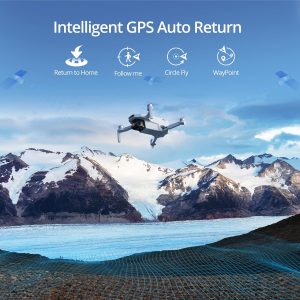
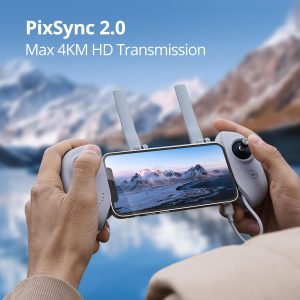
The Potensic ATOM SE is an under-249 g GPS camera drone with 4K/30 fps EIS video, 12 MP RAW photos, Return to Home, a 4 km manufacturer-rated transmission system, and two batteries rated for up to 31 minutes each.
The Potensic ATOM SE is a compact GPS camera drone for beginners who want under-249 g portability, 4K/30 fps recording, electronic image stabilization, Return to Home, and a two-battery package at a lower entry point than many three-axis-gimbal drones. The supplied Expansion Kit includes two batteries rated for up to 31 minutes each, but that 62-minute figure is the combined controlled-condition maximum rather than one continuous flight.
The central tradeoff is its camera stabilization. The ATOM SE uses a single-axis tilt mechanism with ShakeVanish electronic image stabilization, not a three-axis mechanical gimbal. It can produce useful daylight aerial footage, but buyers who prioritize the smoothest video, a consistently level horizon in crosswinds, visual subject tracking, obstacle avoidance, vertical capture, or stronger low-light performance should compare a higher-tier camera drone.
Best for
First-time camera-drone pilots, travelers, and value-focused buyers who want GPS-assisted flight, 4K recording, two batteries, and a compact under-249 g aircraft.
Not ideal for
Creators who need three-axis gimbal stabilization, visual subject recognition, obstacle avoidance, vertical video, digital zoom, polished low-light footage, or true goggles-first FPV flight.
Verify before buying
Confirm the exact battery count, included charging hardware, PotensicPro phone compatibility, microSD requirements, seller, warranty, and whether the ATOM SE’s EIS camera meets your footage expectations.
| Specification | Potensic ATOM SE |
|---|---|
| Product type | Foldable GPS camera drone |
| Takeoff weight | Under 249 g with the original battery, propellers, and a microSD card |
| Camera | 1/3-inch CMOS, 12 MP, 118° field of view |
| Video | Up to 4K/30 fps; 1080p up to 60 fps |
| Stabilization | Single-axis camera tilt plus ShakeVanish electronic image stabilization |
| Photo formats | JPG and JPG + RAW (DNG) |
| Transmission | PixSync 2.0 with 720p/30 fps live view |
| Rated transmission distance | Up to 4 km in unobstructed, interference-free manufacturer conditions |
| Maximum flight time | Up to 31 minutes per battery in low-altitude, windless manufacturer testing |
| Included batteries | Two 2,500 mAh intelligent batteries in the supplied Expansion Kit |
| Positioning | GPS, GLONASS, Galileo, BeiDou, downward vision, and ToF |
| Obstacle sensing | No forward, rear, or lateral obstacle avoidance; downward sensors assist positioning |
Specifications were checked against Potensic’s official ATOM SE specifications, product page, and download center on July 15, 2026. Flight-time, speed, wind-resistance, and transmission figures are manufacturer maximums; actual results depend on conditions and operating choices.
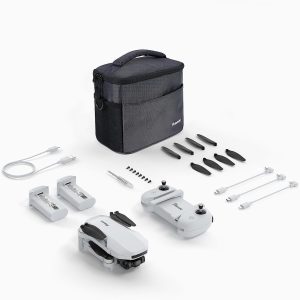
The supplied Amazon Expansion Kit lists the aircraft, remote controller, two intelligent batteries, three phone cables, a carrying bag, one spare propeller pair, spare propeller screws, a screwdriver, and a data cable. Two batteries reduce the frustration of ending a practice session after one short real-world flight. The package does not list a microSD card, so recording and some camera-related update procedures require a separate purchase.
Beginner Mode and Video, Normal, and Sport flight modes let a new pilot start with restrained controls and move toward faster operation. GNSS supports outdoor position holding and Return to Home, while downward vision and ToF sensing assist lower-altitude positioning when the surface and lighting are suitable. These aids can make learning easier, but they do not replace preflight checks, a recorded Home Point, adequate satellite reception, or manual control.
The ATOM SE records 12 MP JPG or RAW photos and video up to 4K/30 fps. RAW capture gives an owner more latitude when correcting exposure, color, and lens characteristics after a flight. Its 118° view is wide, and the camera can tilt from 20° above level to straight down. The system does not support digital zoom, native vertical capture, or advanced visual tracking.
The ATOM SE electronically stabilizes video and lets the pilot control camera tilt, but it does not mechanically correct pitch, roll, and yaw the way a three-axis gimbal does. This distinction matters more than the 4K label alone.
Potensic lists Circle Flight, Waypoint Flight, and GPS Tracking for the ATOM SE. Its tracking is GPS-based rather than the visual subject-recognition system offered by newer models. Buyers should not assume it will identify and frame a person, vehicle, or animal with the behavior of a modern vision-based tracker.
The aircraft’s downward vision and ToF sensors are positioning aids, not all-direction obstacle avoidance. They do not detect and route around trees, walls, wires, branches, vehicles, or people in the flight path. Reflective, transparent, dark, repetitive, moving, or poorly lit surfaces can also reduce downward-vision performance.
Return to Home is a valuable backup, not a guarantee against a flyaway or collision. Set a safe RTH altitude for the area, wait for adequate positioning and Home Point confirmation, monitor wind and battery reserve, and remain prepared to cancel or correct the return if conditions require it.
The 4 km figure describes the rated communication system under open, unobstructed, low-interference conditions. It is not a promise that every flight can or should travel 4 km from the pilot. Trees, buildings, terrain, radio congestion, antenna orientation, phone performance, and regulatory limits can shorten the usable connection substantially.
Battery energy also limits safe out-and-back distance. Potensic’s 31-minute maximum was measured at 5 m/s in low-altitude, windless conditions. Climbing, hovering, Sport mode, cold weather, wind, battery aging, and maintaining a safe landing reserve reduce usable time. A tailwind on the outbound leg can become a headwind during the return.
The ATOM SE is under 249 g in its standard configuration. For U.S. recreational flying, the FAA says registration is required at 250 g or more. Recreational pilots still must complete TRUST, follow airspace and operating rules, maintain visual line of sight, and fly at or below applicable altitude limits. Non-recreational operations generally fall under Part 107, and registration or Remote ID requirements can differ.
Adding accessories can change weight and flight characteristics. Confirm the takeoff weight and current rules for the actual configuration and location. Review the current FAA recreational flyer requirements before flying in the United States.
The Potensic ATOM SE Expansion Kit is a practical value option for a beginner who wants a compact GPS camera drone, two batteries, 4K recording, RAW photos, Return to Home, and straightforward flight modes. It is more capable than a toy-grade Wi-Fi drone and avoids forcing the buyer to purchase a second battery immediately.
Its limitations should drive the decision. The camera uses EIS and single-axis tilt rather than a three-axis gimbal, tracking is GPS-based rather than visual, and the downward sensors do not provide obstacle avoidance. If those compromises are acceptable, the ATOM SE offers a useful entry point. If smooth cinematic footage or automated subject capture is the priority, paying more for a mechanically stabilized model is the better long-term choice.
No. It uses a controllable single-axis tilt mechanism with ShakeVanish electronic image stabilization. That can reduce visible shake, but it does not provide the mechanical roll, pitch, and yaw correction of a three-axis gimbal.
No. Its downward vision and ToF sensors assist positioning near the ground. The drone does not have forward, rear, lateral, or omnidirectional obstacle avoidance.
It supports GPS Tracking through PotensicPro. Potensic distinguishes this from the visual tracking used by newer models, so buyers should not expect camera-based subject recognition and framing.
Potensic rates one battery for up to 31 minutes in controlled conditions. The supplied two-battery package is marketed as up to 62 total minutes, but real flights are normally shorter after accounting for wind, maneuvering, temperature, and landing reserve.
It uses PotensicPro. The newer Potensic Eve app is for ATOM 2 and later models. Verify that the current PotensicPro app supports your phone before buying.
The standard aircraft is below the FAA’s 250 g recreational registration threshold. TRUST, visual-line-of-sight, airspace, altitude, and other rules still apply, and non-recreational flights can have different requirements.
| Brand | Potensic |
|---|---|
| Model | ATOM SE |
| Model Number | DSDR04B |
| Product Type | Foldable GPS Camera Drone |
| Skill Level | Beginner |
| Takeoff Weight | Under 249 g with original battery, propellers and microSD card |
| Folded Size | 88 × 143 × 58 mm |
| Unfolded Size | 300 × 242 × 58 mm with propellers |
| Max Flight Time | Up to 31 minutes per battery in manufacturer testing |
| Bundle Flight Time | Up to 62 total minutes with two included batteries |
| Camera Sensor | 1/3-inch CMOS |
| Photo Resolution | 12 MP |
| Photo Format | JPG and JPG + RAW (DNG) |
| Video Resolution | 4K up to 30 fps; 1080p up to 60 fps |
| Camera Stabilization | Single-axis tilt with ShakeVanish electronic image stabilization |
| Camera Tilt Range | -90° to +20° |
| Field of View | 118° |
| Transmission System | PixSync 2.0 |
| Rated Transmission Distance | Up to 4 km in unobstructed, interference-free conditions |
| Live View | 720p at 30 fps |
| GNSS | GPS, GLONASS, Galileo and BeiDou |
| Obstacle Sensing | Downward vision and ToF positioning only; no obstacle avoidance |
| Intelligent Flight Modes | Return to Home, Circle Flight, GPS Tracking and Waypoint Flight |
| Max Horizontal Speed | 16 m/s in Sport mode |
| Wind Resistance | 38 km/h; Level 5 |
| Battery | 2500 mAh, 7.2 V, 18 Wh Li-ion |
| Batteries Included | 2 |
| Remote Controller | DSRC02A |
| App | PotensicPro |
| Phone Compatibility | iOS 13.0+; Android 7.0+, 64-bit processor and at least 4 GB memory |
| Storage | microSD, U1 or Class 10 or faster; retailer lists 4–256 GB |
The ATOM SE uses the PotensicPro flight app. Potensic states that Potensic Eve is only compatible with ATOM 2 and later models. Download the current PotensicPro version from Potensic’s official download center, the Apple App Store, or Google Play rather than relying on an unrelated third-party APK.
Some older retailer copy still lists iOS 11. Potensic’s current download center and the current App Store listing require iOS 13.0 or later. For Android, Potensic currently lists Android 7.0 or later, a 64-bit processor, and at least 4 GB of operating memory. Confirm compatibility with the exact phone before ordering because app support can change.
The official controller specification supports phones up to 170 × 100 × 8.5 mm and includes Lightning, USB-C, and Micro-USB connection options. Measure the phone with its case installed. A thick case may need to be removed for the holder or cable to fit securely.
Potensic specifies a U1 or Class 10-or-faster microSD card. The supplied Amazon listing states support for 4–256 GB and does not include a card. Format it through the supported workflow, confirm that the app recognizes it, and follow current in-app instructions for camera-related firmware updates.
The ATOM SE can tilt its camera from -90° to +20° and uses ShakeVanish EIS to stabilize recorded video. It cannot mechanically correct roll or yaw. Expect wind, braking, and sideways movement to affect the horizon and motion more than they would on a three-axis-gimbal drone.
The intelligent modes include GPS Tracking, Circle Flight, and Waypoint Flight. Potensic separately identifies visual tracking on higher models. Do not buy the ATOM SE expecting advanced camera-based recognition, automatic subject framing, or reliable tracking around obstacles.
The downward vision and ToF system supports low-altitude positioning but does not detect obstacles ahead, behind, or beside the aircraft. It can also perform poorly over water, glass, reflective surfaces, uniform patterns, moving surfaces, or extreme lighting. Use a clear takeoff area and maintain direct visual awareness of the flight path.
Wait for adequate positioning and Home Point confirmation, set an RTH altitude that clears local obstacles, and leave enough battery for wind and course corrections. Return to Home is an emergency aid; it does not make long-distance or unattended flight safe.