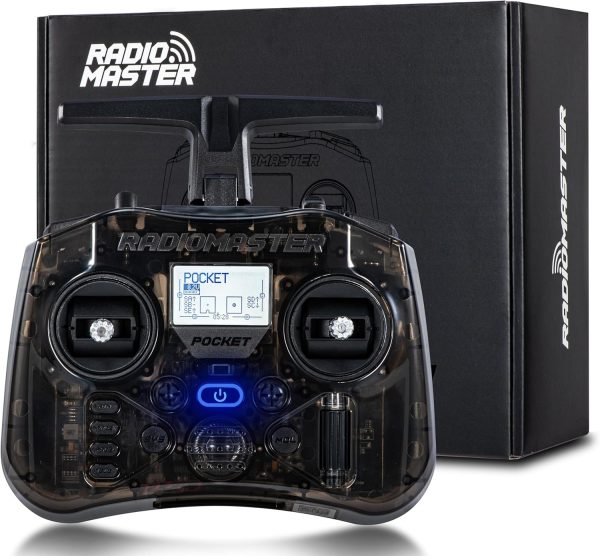
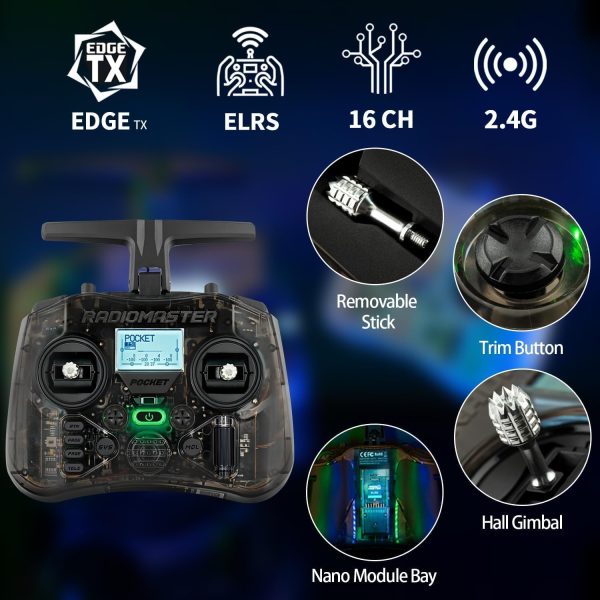
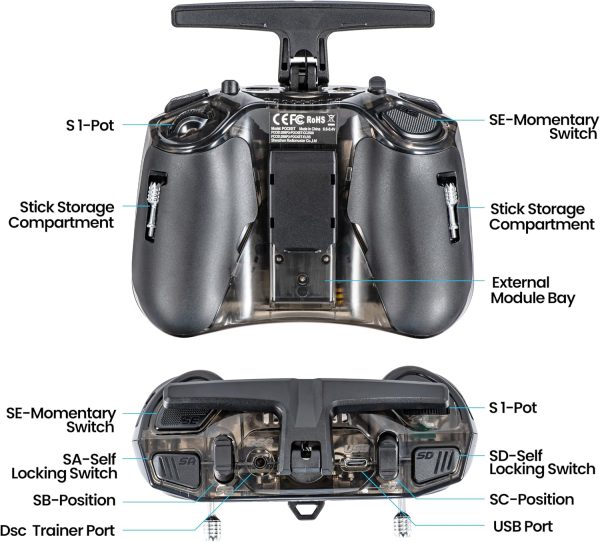
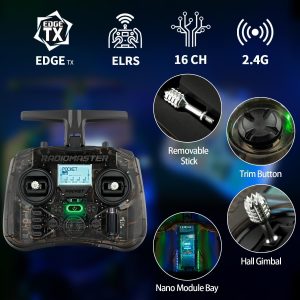
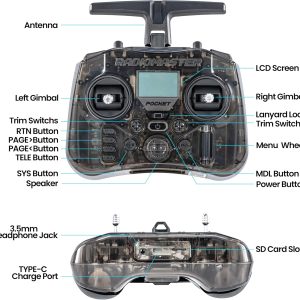
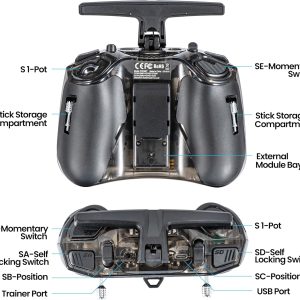
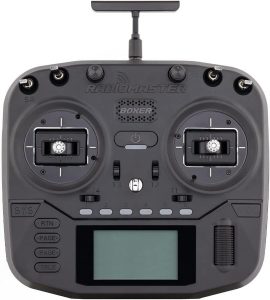
The RadioMaster Pocket ELRS is a compact EdgeTX FPV radio with Hall-effect gimbals, an internal 2.4 GHz ExpressLRS system, up to 16 channels, and a Nano external module bay.
Best for: FPV beginners, simulator practice, travel, tiny whoops, and portable ELRS setups
Not ideal for: Pilots wanting full-size gimbals, a large color display, or minimal initial configuration
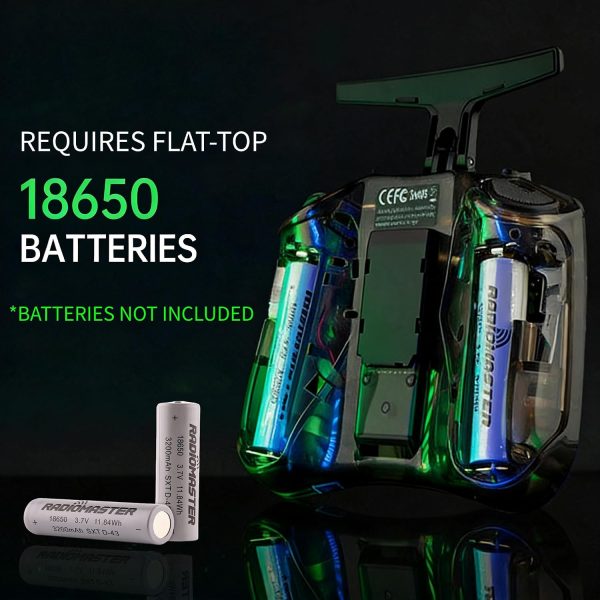
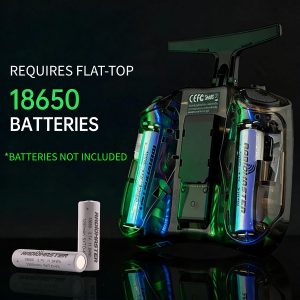
Key note: Requires two compatible 18650 cells, and buyers must verify ELRS plus the correct FCC or LBT version
The RadioMaster Pocket ELRS is a compact EdgeTX radio for FPV pilots who want an affordable transmitter they can use with multiple 2.4 GHz ExpressLRS models. It combines Hall-effect gimbals, up to 16 channels, a folding antenna, removable stick ends, a backlit display, and a Nano external module bay in a controller that is easier to transport than a full-size radio.
Its biggest limitations are the smaller gimbals and controls, the EdgeTX and ExpressLRS learning curve, and the fact that batteries are not included. Buyers must also verify that the offer is the ELRS version and that its FCC or LBT region matches where it will be used.
Best for
FPV beginners, simulator users, travelers, tiny-whoop pilots, and experienced pilots wanting a compact secondary ELRS radio.
Not ideal for
Pilots who prefer full-size gimbals, a large color display, extensive physical controls, or a radio that requires almost no initial configuration.
Verify before buying
Confirm ELRS rather than CC2500, the correct FCC or LBT region, Mode 2 if desired, and the exact 18650 cells required by the current offer.
Buyer-Critical Specifications
RadioMaster Pocket ELRS specifications that affect the buying decision
Product type
Portable FPV and RC radio transmitter
Internal radio system
ExpressLRS 2.4 GHz on this ELRS version
Operating system
EdgeTX
Maximum channels
Up to 16, depending on the receiver and configuration
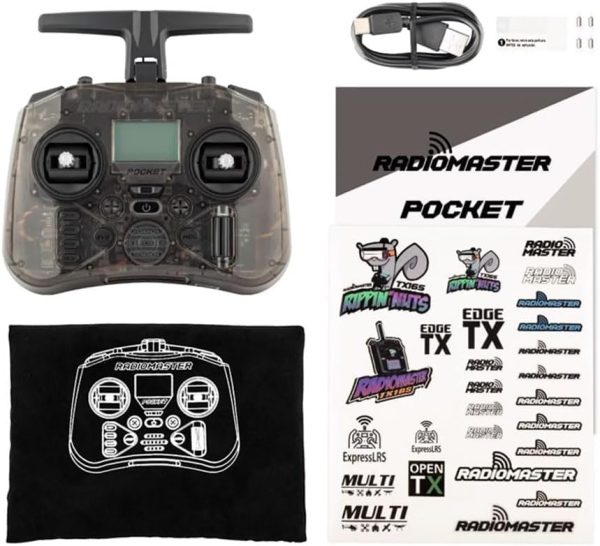
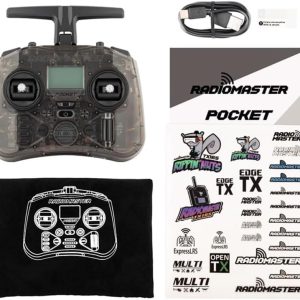
The Pocket provides the functions most FPV pilots need without the size or expense of a flagship radio. The folding antenna, removable stick ends, and included carrying pouch make it practical for a field bag or backpack. At the same time, it runs EdgeTX rather than a simplified proprietary operating system.
EdgeTX supports separate model profiles, channel mapping, rates, curves, logical switches, timers, telemetry, voice alerts, Lua tools, and extensive control assignment. Beginners do not need to configure everything immediately, but the platform leaves room to grow without replacing the radio as soon as basic skills improve.
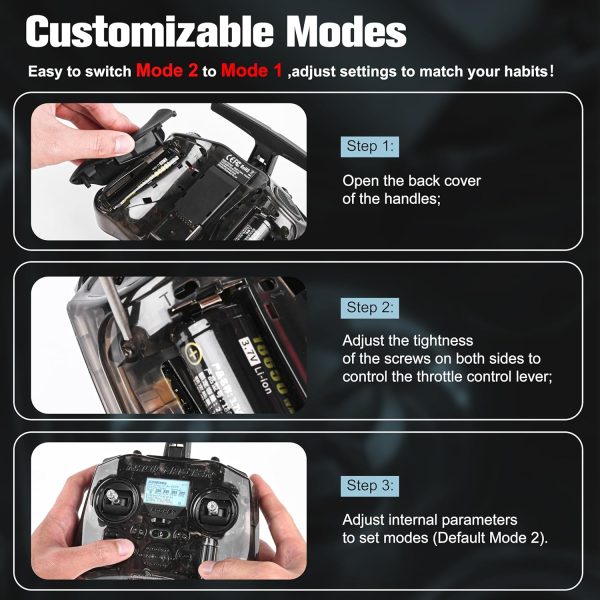
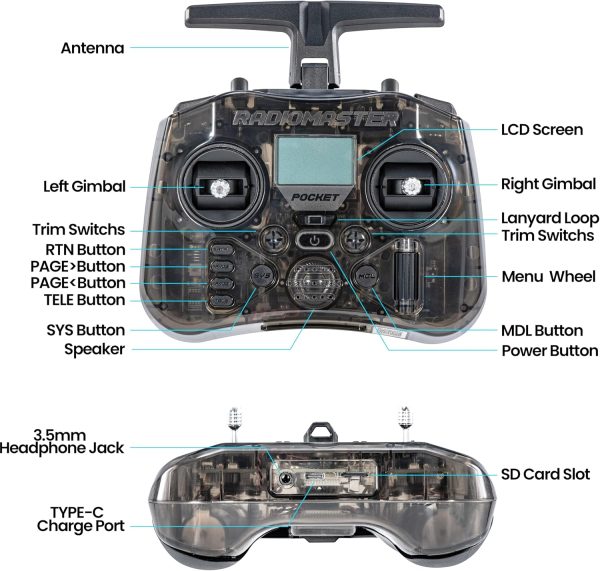
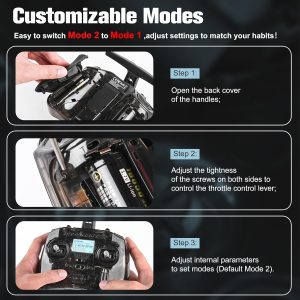
The X5 Hall-effect gimbals are another meaningful advantage over entry-level radios that use traditional potentiometers. The Pocket also allows gimbal tension adjustments and physical conversion between Mode 1 and Mode 2. Most U.S. FPV pilots will want Mode 2, with throttle and yaw on the left stick.
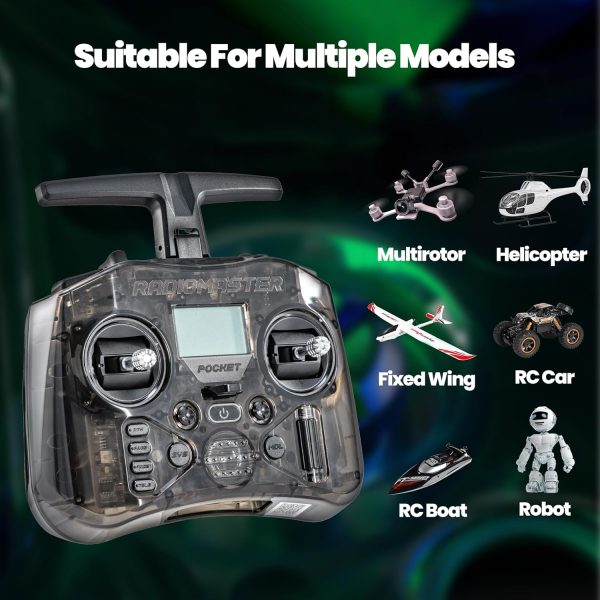
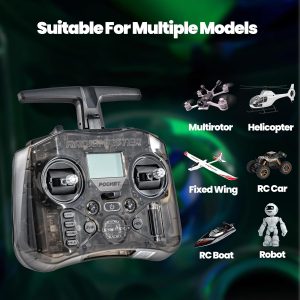
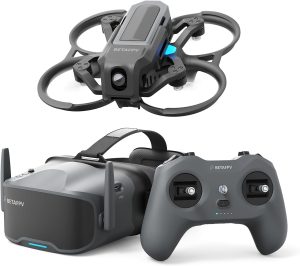
Its internal ExpressLRS system is intended for models equipped with compatible 2.4 GHz ExpressLRS receivers. One transmitter can store profiles for multiple compatible drones, airplanes, helicopters, cars, boats, or other RC models. The radio controls the receiver and flight controller; it does not replace FPV goggles or determine the drone’s video system.
ELRS Compatibility and Version Choice
Do not confuse ELRS and CC2500. RadioMaster sells Pocket radios with different internal RF systems. This product record is for the 2.4 GHz ExpressLRS version. The CC2500 version targets a different collection of legacy RC protocols and is not equivalent to an internal ELRS radio.
A drone marked “ELRS” is not automatically ready to bind without verification. Confirm that its receiver operates at 2.4 GHz, check the installed ExpressLRS firmware, and determine whether it uses a binding phrase, traditional bind mode, or an SPI receiver configuration.
ExpressLRS documentation recommends using the same binding phrase on compatible devices when that method is selected. The transmitter and receiver must also use compatible firmware. If a receiver will not bind, check the RF version, regulatory domain, firmware generation, receiver type, model configuration, and binding method before assuming the radio is defective.
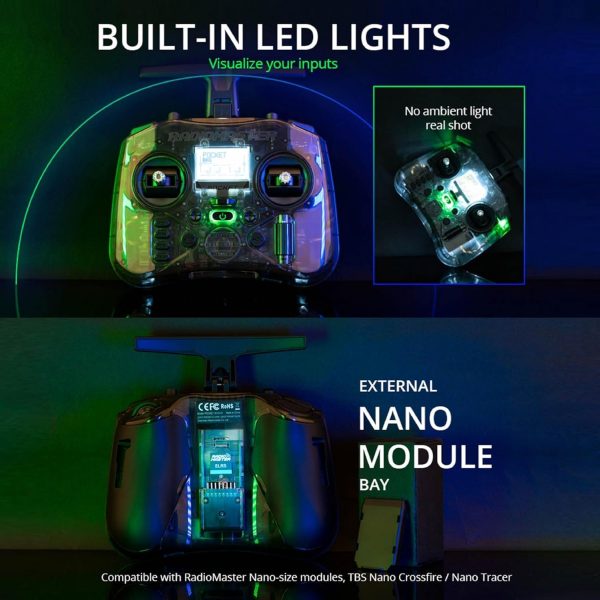
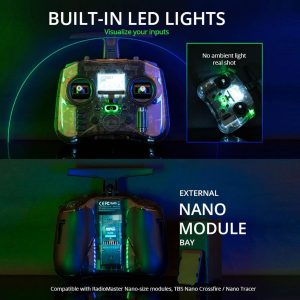
The Nano module bay provides another upgrade route. RadioMaster lists compatibility with its Nano-size modules and TBS Nano Crossfire or Nano Tracer modules. An external module can add another supported radio system, but it does not make every receiver or aircraft universally compatible.
Important Limitations
Batteries are not included: The radio requires two compatible 3.7 V 18650 lithium-ion cells.
Battery fit must be verified: The current retailer listing specifies flat-top 18650 cells. Confirm the exact cell dimensions, chemistry, voltage, polarity, and protection style before installation. Never force a battery into the compartment.
Compact controls are a tradeoff: Pilots with large hands or a strong preference for full-size gimbals may find the Pocket less comfortable than a Boxer or TX16S-style radio.
The display is functional rather than luxurious: The monochrome screen is adequate for model configuration but is not comparable to a large color touchscreen.
Setup can challenge first-time users: EdgeTX, receiver binding, channel mapping, arming switches, firmware versions, and failsafe configuration require some learning.
Range is configuration-dependent: Receiver antennas, packet rate, transmitter power, interference, installation, firmware, and the operating environment affect the usable control link.
What Current Buyer Feedback Suggests
Current retailer feedback commonly praises the Pocket’s compact size, functionality, value, and customization. Setup difficulty and battery compatibility receive more mixed feedback. Those patterns reinforce two practical recommendations: source the correct 18650 cells before the radio arrives, and expect to spend time learning EdgeTX and ExpressLRS configuration.
The current Amazon listing is sold by a third-party seller and uses “Black” in its color selection, while RadioMaster calls the standard dark case “Charcoal.” Verify the seller, color, internal RF version, regulatory region, included accessories, and return policy on the exact offer.
What Else You Need
Two compatible 3.7 V 18650 lithium-ion cells
A drone or RC model with a compatible 2.4 GHz ExpressLRS receiver
A USB data cable for computer configuration or simulator use when needed
Current EdgeTX and ExpressLRS documentation
A propeller-free setup process and correctly configured failsafe before the first flight
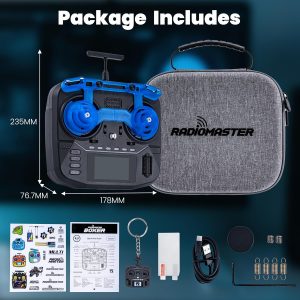
The supplied package is a transmitter, not a complete FPV system. Goggles, drone, receiver, flight batteries, and model-specific charging equipment must be purchased separately unless they are already owned.
Related RadioMaster Pocket ELRS Radio Controller buyer guides
Use the product page for the purchase decision and the guides below for deeper research.
Long-range FPV drones do not have one dependable maximum distance. Usable range ends at the first limit reached by the control link, video link, battery reserve, navigation setup, terrain, interference, or flight rules.
An FPV drone build kit can mean a complete ready-to-fly package, a nearly finished drone that needs compatible equipment, or a loose collection of parts that still leaves major decisions to the buyer.
Final Verdict
The RadioMaster Pocket ELRS is a strong value for pilots who want a compact EdgeTX transmitter with Hall-effect gimbals and a built-in 2.4 GHz ExpressLRS system. It can serve as a first serious FPV radio, a portable simulator controller, or a smaller backup transmitter for an existing ELRS fleet.
Its low entry cost does not remove the need to understand versions and compatibility. Buy it when portability, ELRS, customization, and value matter more than full-size ergonomics or a large display. Before ordering, verify the regional version and source the correct 18650 cells.
RadioMaster Pocket ELRS FAQs
What drones work with the RadioMaster Pocket ELRS?
It works with appropriately configured models using compatible 2.4 GHz ExpressLRS receivers. Receiver frequency, firmware, binding method, model configuration, and regulatory domain must match. It does not control every drone simply because the drone uses the term FPV.
Does the RadioMaster Pocket include batteries?
No. RadioMaster specifies two 3.7 V 18650 lithium-ion cells. The current retailer listing specifies flat-top cells. Verify the exact cell requirements and polarity before installation, and never force a cell that does not fit correctly.
Can the RadioMaster Pocket be used with an FPV simulator?
Yes, the Pocket can be connected to a computer as a controller for compatible simulators. Use a USB data cable and select the appropriate USB joystick option when prompted by EdgeTX. Simulator calibration and channel mapping are normally required.
What is the difference between Pocket ELRS and CC2500?
The ELRS version has an internal 2.4 GHz ExpressLRS transmitter. The CC2500 version supports a selection of CC2500-based protocols. Choose according to the receivers you intend to control rather than assuming one version includes both internal systems.
Can the RadioMaster Pocket use an external RF module?
Yes. It has a Nano-size module bay that RadioMaster lists as compatible with its Nano modules and TBS Nano Crossfire or Nano Tracer modules. Verify the module’s physical fit, power requirements, firmware, and receiver compatibility.
Can the Pocket be changed between Mode 1 and Mode 2?
Yes. RadioMaster provides rear gimbal adjustments for changing the throttle self-centering configuration and stick tension. Follow the official instructions carefully and update the EdgeTX control mode to match the physical configuration.
Additional information
Brand
RadioMaster
Model
Pocket M2 ELRS
Product Type
FPV Radio Transmitter
Internal RF System
ExpressLRS 2.4 GHz
Operating Frequency
2.400-2.480 GHz
Operating System
EdgeTX
Control Channels
Up to 16; receiver dependent
Receiver Compatibility
Compatible 2.4 GHz ExpressLRS receivers
Gimbals
X5 Hall-effect quad ball-bearing Nano gimbals
Gimbal Mode
Adjustable between Mode 1 and Mode 2
Display
128 x 64 monochrome backlit LCD
Weight
288 g
Folded Dimensions
156.6 x 65.1 x 125.3 mm
Unfolded Dimensions
156.6 x 73.1 x 154.8 mm
Operating Voltage
6.6-8.4 V DC
Battery
2 x 3.7 V 18650 lithium-ion cells; not included
Charging
Built-in USB-C charging
Firmware Updates
Via USB or SD card
External Module Bay
Nano size; RadioMaster Nano and compatible TBS Nano modules
Regional Versions
FCC and LBT versions; verify before buying
Before Binding a Drone
Confirm that the transmitter is the ELRS version, not the CC2500 version.
Confirm that the model uses a 2.4 GHz ExpressLRS receiver.
Install the antenna before powering the internal RF module.
Install two compatible 3.7 V 18650 cells with the correct polarity.
Create a separate EdgeTX model profile for the aircraft.
Configure the model to use the internal ExpressLRS module.
Check the transmitter and receiver ExpressLRS firmware before binding.
Binding Methods
A binding phrase is usually the cleanest approach for managing several personal ELRS models. The same phrase must be configured on the transmitter module and receiver. Do not publish, share, or use an easily guessed binding phrase.
Traditional bind mode can also be started through the ExpressLRS Lua tool and the receiver’s supported bind procedure. Some receivers enter bind mode after repeated power cycles, while others use a button, web interface, Betaflight command, or model-specific process. Follow the receiver manufacturer’s instructions.
Before the First Flight
Remove the propellers while checking channels, switches, and motor controls.
Verify that roll, pitch, yaw, and throttle move in the correct direction.
Assign and test the arm switch.
Configure and test the receiver failsafe.
Confirm link-quality and telemetry warnings.
Perform an appropriate range test before normal flight.
Receiver frequency, firmware compatibility, and binding configuration
CC2500
Internal CC2500 multiprotocol transmitter
The exact receiver protocol appears on the current supported-protocol list
FCC
Regional configuration intended for markets using the applicable FCC domain
That this is the correct legal configuration for the operating location
LBT
European Listen Before Talk regional configuration
That the receiver and transmitter use compatible regulatory-domain firmware
18650 Battery Requirements
The Pocket uses two 3.7 V 18650 lithium-ion cells, which are not included. The current Amazon offer specifies flat-top cells. Confirm the exact length, chemistry, voltage, polarity, and protection style before installation.
Do not mix cells of different models, capacities, ages, or charge states.
Inspect cell wraps and terminals before installation.
Never force a cell into the compartment.
Do not reverse polarity.
Charge only compatible cells and never leave charging batteries unattended.
Stop using cells that are damaged, swollen, unusually hot, or physically difficult to install.
The radio provides built-in USB-C charging. The official manual states that the charging circuit is intended for two compatible 3.7 V lithium-ion cells with a maximum charging voltage of 4.2 V per cell.
Current Amazon Offer
The supplied Amazon listing identifies an ELRS, Mode 2 radio and states that batteries are not included. It is sold by STARDRONE rather than directly by RadioMaster. Verify the selected color, seller, ELRS version, FCC or LBT region, package contents, and return policy before ordering.