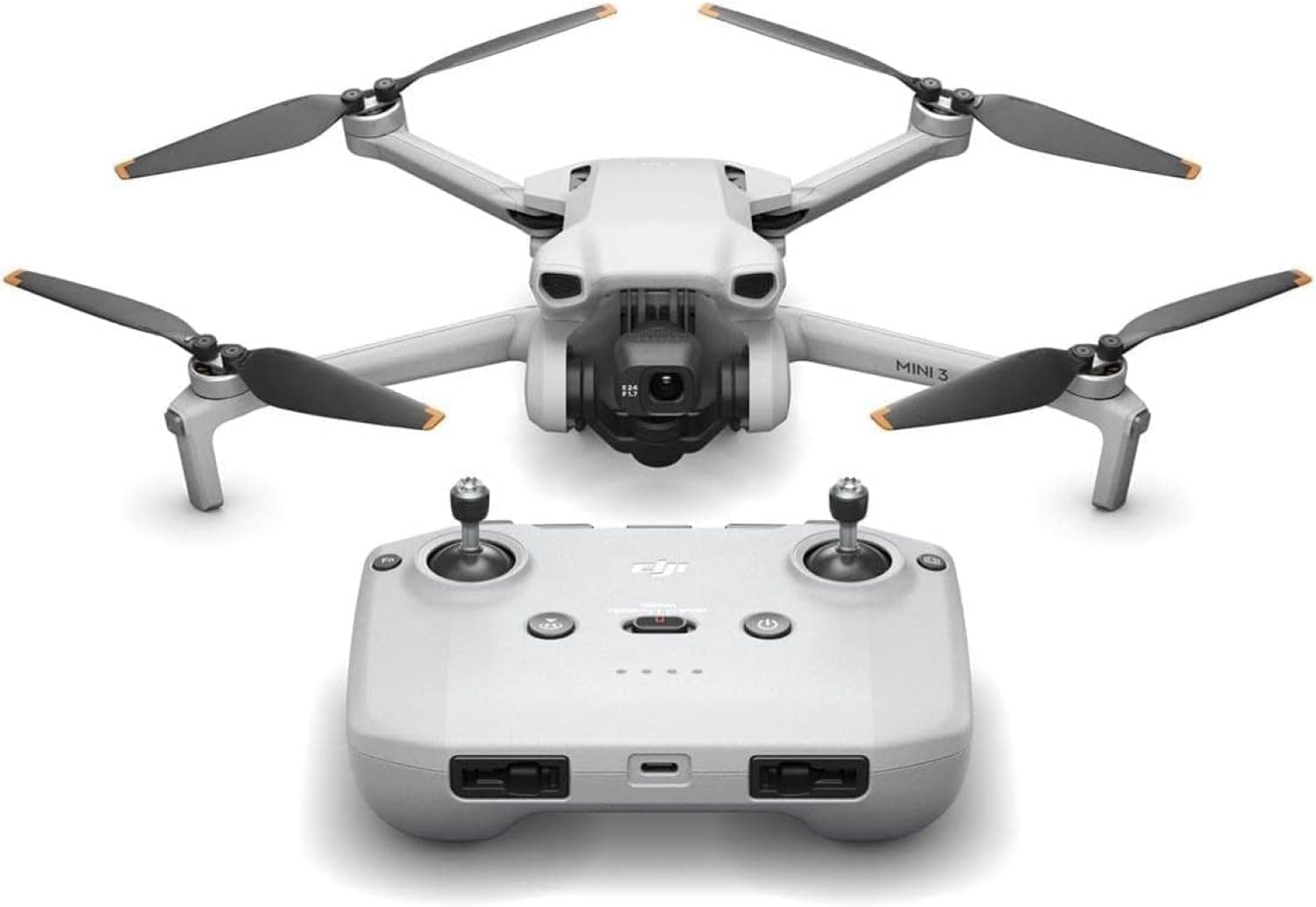
Yes, the DJI Mini 3 can still be worth buying, but only when the bundle is meaningfully less expensive than a newer model with obstacle sensing and subject tracking. Its 1/1.3-inch camera, true vertical shooting, long battery rating, compact 248 g body, and optional DJI RC screen controller remain useful. Its age now matters, though. The Mini 3 lacks directional obstacle avoidance and ActiveTrack, stops at 4K/30fps, and DJI lists guaranteed software updates only through December 31, 2026.
This DJI Mini 3 review is research-based, using current DJI documentation, retailer information, regulator guidance, and attributed hands-on findings. FPV Drone has not presented the aircraft as personally tested.
Quick verdict
The Mini 3 remains a good camera-first value, not an automatic recommendation. Buy it when you want better image quality and true vertical capture than the most basic DJI models, will fly in open areas, and find a trustworthy bundle at a clear discount. Skip it when the price approaches a newer obstacle-sensing model or when tracking, 4K/60fps, a longer guaranteed support runway, or the latest transmission system matters.
Best for
Travel, landscapes, vertical social content, daylight photography, and careful recreational pilots who prefer camera quality over automation.
Not ideal for
Obstacle-rich locations, autonomous subject tracking, 4K slow motion, advanced color grading, or buyers who always want the newest platform.
Verify first
Seller, condition, warranty region, controller, battery health, included charger and storage, return terms, and the gap to a newer model.
Featured product
Featured gear
DJI Mini 3 Drone
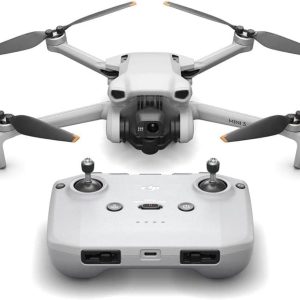
The DJI Mini 3 is a lightweight beginner camera drone with 4K HDR video, True Vertical Shooting, a 1/1.3-inch CMOS sensor, and up to 38 minutes of standard-battery flight time. Best for: beginners, travel…
The DJI Mini 3 is a lightweight beginner camera drone with 4K HDR video, True Vertical Shooting, a 1/1.3-inch CMOS sensor, and up to 38 minutes of standard-battery flight time.
- Best for
- Best for beginners and casual creators who want a lightweight DJI camera drone with…
- Skill level
- Beginner
- Product type
- Beginner Drones, Camera Drones, DJI Drones, Drones, Under 249g Drones
- Best for
- Beginners and casual creators who want a lightweight DJI camera drone with 4K HDR…
- Skill level
- Beginner
- Product type
- Camera Drone
DJI Mini 3 at a glance
The Mini 3 sits between DJI's basic Mini 4K and more advanced obstacle-sensing models. It is a traditional folding camera drone controlled with either the phone-based DJI RC-N1 or the DJI RC with an integrated screen. It is not the Mini 3 Pro, even though the names and camera hardware are similar.
The table separates current published specifications from what each one means for a buyer now.
| Decision factor | Current published specification | What it means now |
|---|---|---|
| Standard takeoff weight | 248 g with standard battery, propellers, and microSD card | Compact and below the 250 g threshold used in some rules. The larger Plus battery raises the aircraft to about 290 g. |
| Camera | 1/1.3-inch CMOS, f/1.7 lens, 12 MP and 48 MP photo modes, JPEG and DNG | Still a meaningful step above smaller-sensor entry models, especially for RAW photos and mixed-light scenes. |
| Video | 4K up to 30fps; 2.7K and Full HD up to 60fps; 100 Mbps; Normal color mode | Good for ordinary travel and social footage, but limited for 4K slow motion or a graded Log workflow. |
| Vertical shooting | Gimbal rotates between landscape and true portrait orientation | Produces full-frame vertical photos and video without cropping a horizontal image. |
| Maximum flight time | Up to 38 minutes standard or 51 minutes with the Plus battery under DJI test conditions | Excellent advertised endurance for its size, but real safe flights are shorter and the Plus battery changes the weight category. |
| Transmission | DJI O2, up to 10 km FCC or 6 km CE/SRRC/MIC under ideal conditions | Dependable for normal line-of-sight use, but older than DJI's current higher-resolution transmission systems. |
| Controllers | DJI RC-N1 or DJI RC | The included controller can materially change value. DJI RC avoids using a phone and speeds up setup. |
| Obstacle sensing | Downward vision positioning only | No forward, rear, or side collision protection. Automated QuickShots still require a visibly clear path. |
| Storage | No internal media storage | A compatible microSD card is required for normal onboard recording. |
| Published update guarantee | DJI lists guaranteed software updates through December 31, 2026 | The aircraft is supported now, but a buyer should not treat it like a newly launched platform with a long published support horizon. |
Buyer takeaway: the camera, rotating gimbal, standard battery rating, and DJI RC compatibility are the Mini 3's durable strengths. For a field-by-field breakdown, see our DJI Mini 3 specifications guide.
What is still good about the DJI Mini 3?
The camera remains better than basic entry-level hardware
The 1/1.3-inch sensor and bright f/1.7 lens give the Mini 3 a stronger imaging foundation than the 1/2.3-inch camera in the Mini 4K. The difference matters most when a scene contains bright sky and darker ground, when the light is fading, or when a RAW file needs editing latitude.
DJI's current specification page lists both 12 MP and 48 MP photo modes, JPEG and DNG capture, HDR at supported frame rates, and manual control over shutter speed, ISO, and white balance. The three-axis gimbal remains the feature that makes footage look controlled rather than shaky.
True Vertical Shooting is still genuinely useful
The camera physically rotates 90 degrees. That produces a native portrait frame for Shorts, Reels, TikTok, vertical property views, tall buildings, waterfalls, and other subjects that benefit from portrait composition. It preserves more useful resolution than cropping a landscape frame after the flight.
The standard battery rating is unusually strong
DJI advertises up to 38 minutes with the standard battery, seven minutes more than the Mini 4K's published maximum. A second battery still improves any session, but the Mini 3 gives a careful pilot more planning room before considering the heavier Plus battery.
The DJI RC remains a desirable controller
A DJI RC bundle avoids using a phone as the aircraft display. That means fewer cables, no incoming calls on the flight screen, and a faster setup. A used or remaining-stock bundle with a healthy DJI RC can be more attractive than an aircraft-only deal that appears cheaper.
The practical case for the Mini 3 is therefore not nostalgia. It still combines a good small-drone camera, native portrait capture, long endurance, and a screen-controller option in a compact system.
Compare the complete Mini 3 bundle
Check the controller, battery count, charger, storage, seller, condition, warranty region, and return terms before judging the offer.
What feels dated in 2026?
No directional obstacle avoidance
The downward vision system helps with positioning and landing. It does not detect a branch, wall, pole, wire, or person in front of, behind, or beside the aircraft. Return to Home and QuickShots cannot change that hardware limitation.
This is the main reason not to recommend the Mini 3 universally to beginners. A careful learner in an open field can manage the risk. A buyer who expects the aircraft to help protect itself near trees, buildings, or other obstacles should pay for a model with broader sensing.
No ActiveTrack or continuous Follow Me
QuickShots automate five short camera paths, but the Mini 3 does not continuously track a runner, cyclist, vehicle, or hiker. It is a camera drone that the pilot flies and frames. Solo creators who need reliable subject tracking should choose a product that explicitly includes it.
4K stops at 30fps
The aircraft records 2.7K and Full HD at up to 60fps, but 4K is limited to 30fps. It also offers only the Normal color mode. That is enough for straightforward footage that looks good without extensive grading, but it restricts 4K slow motion and advanced post-production.
The platform has a shorter published support horizon
DJI's specification page lists guaranteed software updates through December 31, 2026. This does not prove that every update stops the following day, but it is the published commitment a buyer can verify now. A newer platform may be the better choice when long-term firmware and app support outweighs the purchase discount.
Availability is inconsistent
The DJI U.S. store listed the RC-N1 configuration as out of stock when checked, while availability differed in other regions. That makes seller quality, warranty region, condition, and battery age more important than they were during the original launch.
None of these limitations makes the camera obsolete. Together, they mean the Mini 3 should now win on total bundle value rather than its model name alone.
Camera quality: still the main reason to buy
The camera records 4K video at up to 30fps and 12 MP or 48 MP still images according to DJI's current specification page. DNG files give photographers more flexibility over exposure, color, highlights, and shadows than a finished JPEG. The f/1.7 lens gathers more light than the Mini 4K's f/2.8 lens, although neither aircraft should be treated as a night-production platform.
In its hands-on review, TechRadar reported strong overall image quality, good high-ISO handling for the sensor size, pleasing color, and some loss of sharpness toward the edges of still photos. Those observations support the Mini 3 as a capable travel and enthusiast camera, while also showing why a larger number on a specification sheet is not the whole image-quality story.
Where the camera performs best
- Daylight landscapes and travel establishing shots
- Sunrise and sunset scenes where the larger sensor and HDR have useful work to do
- RAW landscape photography and exposure bracketing
- Native vertical footage for social platforms
- Smooth, deliberate reveals, approaches, orbits, and overhead compositions
Where the camera shows its age
Fast motion cannot be recorded at 4K/60, and the Normal profile offers less grading flexibility than 10-bit Log or HLG options on more advanced aircraft. Digital zoom crops the captured image. The fixed aperture also means video shooters may need ND filters to maintain a suitable shutter speed in bright conditions.
For most casual creators, the camera remains good enough. The buying mistake would be paying nearly the price of a newer 4K/60, obstacle-sensing model merely because the older bundle includes accessories.
Flight performance and ownership considerations
Plan around less than the advertised battery maximum
DJI measured 38 minutes by flying forward at a constant 21.6 kph in windless, sea-level test conditions until forced landing from battery depletion. Real flights include takeoff, hovering, climbing, turns, wind, temperature, Return to Home, and a landing reserve.
TechRadar reported about 25 minutes during winter testing. That is one test under particular conditions, not a guaranteed result, but it illustrates the difference between a laboratory maximum and a safe usable session. Battery age and storage history become especially important when buying an older or used bundle.
The Plus battery changes the regulatory calculation
The Plus battery raises the aircraft from 248 g to about 290 g before other accessories. It extends DJI's advertised maximum to 51 minutes, but actual takeoff weight determines which rules apply. Do not buy the larger battery solely for the headline time without checking its availability, compatibility, and regulatory effect where you fly.
Range is not a destination
DJI rates the O2 link for up to 10 km under FCC conditions in an unobstructed environment without interference. The aircraft must also return against wind with enough battery to land. In the United States, recreational pilots must maintain visual line of sight under current FAA recreational flyer rules.
Return to Home cannot see obstacles
Satellite positioning supports stable hovering, home-point recording, and Return to Home. Set an appropriate RTH altitude before takeoff and confirm that the route is clear. The aircraft cannot detect directional hazards during the return path.
Older Mini 3 ownership checklist
- Confirm the exact aircraft, controller, charger, hub, and battery models.
- Inspect the gimbal, arms, motors, shell, landing points, and propeller screws.
- Check every battery for swelling, physical damage, charging faults, and unusual voltage behavior.
- Verify that the aircraft can be bound to your DJI account and is not locked to a previous owner.
- Install DJI Fly from the official source and confirm phone compatibility if using RC-N1.
- Update firmware, format a compatible microSD card, and test close and low in an open area.
- Confirm seller identity, warranty region, return window, and whether the product is new, refurbished, renewed, or used.
The five-part 2026 Mini 3 value test
There is no single price at which every Mini 3 bundle becomes good or bad. Use these five checks to compare the actual offer with a newer alternative.
| Test | A stronger Mini 3 offer | A reason to walk away |
|---|---|---|
| 1. Price gap | The complete bundle is meaningfully cheaper than a newer model that solves the limitations you care about. | The total approaches a newer obstacle-sensing or tracking model after required accessories are added. |
| 2. Seller and condition | Condition, warranty region, serial status, return terms, and seller identity are clear. | The listing mixes “new,” “renewed,” “refurbished,” and “used,” or avoids showing exactly what is included. |
| 3. Controller | A working DJI RC is included at a sensible premium, or you already own a compatible controller. | An aircraft-only price looks low but leaves you buying an expensive controller separately. |
| 4. Batteries | Batteries are genuine, healthy, correctly stored, and appropriate for your desired weight category. | Battery history is unknown, packs are swollen, or the seller counts aged batteries as if they retain full value. |
| 5. Support expectations | You accept an older platform and need the current camera and flight features more than a long published update guarantee. | You want a new platform, long support runway, current transmission system, or future feature development. |
Decision rule: the Mini 3 should win because the complete offer is clearly better for your needs, not because its original list price once made it a midrange bargain.
Who should buy the DJI Mini 3?
Buy it for affordable camera quality and vertical capture
The strongest buyer is a traveler, hobby photographer, or social creator who wants the 1/1.3-inch sensor and rotating gimbal without paying for advanced automation. Open landscapes and deliberate camera moves fit the aircraft well.
Buy it when the DJI RC bundle is genuinely attractive
A healthy bundle with the screen controller, suitable batteries, charger, and clear seller support can be a better complete experience than a newer bare-bones kit. Compare everything needed for the first flight, not only the aircraft name.
Skip it if you expect the drone to follow you
No ActiveTrack means it is not the right autonomous camera for running, cycling, hiking, or solo vehicle shots. QuickShots do not replace continuous tracking.
Skip it for obstacle-rich flying
New pilots who will fly near trees, structures, or other hazards should prioritize appropriate sensing and still treat it as a backup rather than permission to fly carelessly.
Skip it when a newer model is close in total cost
A newer aircraft can bring broader sensing, tracking, 4K/60 HDR, more flexible color profiles, a newer transmission system, and a longer expected platform life. The Mini 3 needs a real value advantage to offset those differences.
DJI Mini 3 alternatives
Choose an alternative according to the feature you actually need, not simply because it is newer.
| Priority | Better fit | Reason |
|---|---|---|
| Lowest-cost traditional DJI camera-drone experience | DJI Mini 4K | Choose it when stabilized 4K and basic flight features matter more than the Mini 3's larger sensor, vertical camera, and longer battery rating. |
| Camera quality and true vertical shooting at the right discount | DJI Mini 3 | It remains the balanced choice when the bundle passes the five-part value test. |
| Obstacle sensing, tracking, 4K/60 HDR, and advanced video | DJI Mini 4 Pro or the appropriate current equivalent | Spend more when those features change what you can safely or creatively accomplish. |
Our DJI Mini 4K versus Mini 3 comparison explains whether the larger sensor and true vertical shooting justify the step up. The full DJI Mini 4K review is the better next page when keeping the initial purchase simple is the priority.
Buyers browsing more lightweight options can also review FPV Drone's under-249 g drone category. Always compare actual takeoff weight because larger batteries and accessories can change it.
Final verdict: worth buying only when the value is clear
The DJI Mini 3 remains a capable camera drone. Its larger sensor, RAW photos, true vertical shooting, long standard battery rating, compact weight, and DJI RC option still solve real buyer needs. For travel, landscapes, and social content in open areas, it can produce results that do not feel obsolete.
The platform is no longer the easy default it once was. No directional obstacle avoidance, no ActiveTrack, 4K limited to 30fps, an older transmission system, uneven availability, and a published software-update guarantee ending December 31, 2026 all reduce the price it makes sense to pay.
Recommendation: buy the Mini 3 when the complete bundle is trustworthy, clearly discounted, and aligned with camera-first flying. Choose a newer model when safety assistance, subject tracking, advanced video, or longer platform support is worth more than the savings.
Check the exact Mini 3 offer
Verify the seller, condition, controller, batteries, charger, storage, warranty region, and return terms before ordering.
Frequently asked questions
Is the DJI Mini 3 the same as the Mini 3 Pro?
No. The standard Mini 3 lacks the Pro model's forward and backward obstacle sensing, subject tracking, 4K/60fps recording, and other advanced features. Similar names and airframes do not make their capabilities interchangeable.
Can the DJI Mini 3 use a controller with a screen?
Yes. DJI lists the DJI RC and phone-based DJI RC-N1 as compatible controllers. Confirm the controller model and binding status when buying a used, refurbished, or aircraft-only package.
Does the DJI Mini 3 have internal storage?
No. DJI lists no internal media storage, so a compatible microSD card is required for normal onboard recording. Check card compatibility and format the card in the aircraft before an important flight.
Is the DJI Mini 3 waterproof?
No. DJI says to avoid water and to return and land as soon as possible if rain begins. Wind resistance does not imply water resistance.
Does a DJI Mini 3 require FAA registration?
In the United States, a standard-battery Mini 3 at 248 g generally avoids registration only when flown solely under the recreational exception. TRUST and other recreational rules still apply. Part 107 operations require registration, and the Plus battery raises the aircraft above 250 g before other accessories.
Sources
- DJI Mini 3 specifications: official aircraft, camera, gimbal, battery, transmission, storage, controller, sensing, and software-update information.
- DJI Mini 3 downloads: current DJI Fly compatibility, manuals, release notes, and safety documentation.
- DJI Mini 3 FAQ: controller and accessory compatibility, activation, charging, weather, camera, and QuickTransfer guidance.
- DJI Mini 3 store page: configuration, included-items, and regional availability information checked July 13, 2026.
- FAA recreational flyer guidance: current U.S. TRUST, registration, visual-line-of-sight, and operating requirements.
- TechRadar DJI Mini 3 hands-on review: attributed findings about image quality, winter battery performance, wind behavior, controls, and missing automation.
Last checked: July 13, 2026. Specifications, software support, app compatibility, regulations, regional availability, bundles, and seller terms can change.