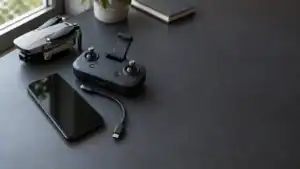
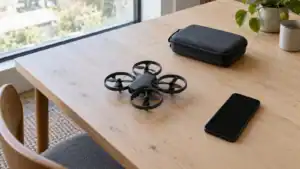
The DJI Neo 2 is worth buying if you want a tiny follow-me camera that can launch from your palm, track you without a traditional controller, and capture stabilized social-ready video. It is a meaningful upgrade over the original Neo because it adds a two-axis gimbal, 4K/60 video, faster ActiveTrack, gesture control, and obstacle sensing. Those improvements make it easier to recommend for runners, cyclists, travelers, families, and solo creators.
It is not the best choice for buyers who primarily want long flights, a high-end camera, dependable low-light footage, or the conventional flying experience of a Mini-series drone. Its rated 19-minute battery life becomes noticeably shorter in real use, and the small 1/2-inch sensor still has clear limits. U.S. buyers also face an extra complication: Neo 2 was not officially launched through DJI's U.S. store, so seller, warranty, repair, and region details matter as much as the price.
Review basis: This is a research-based review, not a claim of hands-on testing by FPV Drone. The verdict combines DJI's published specifications and operating limitations with attributed observations from independent reviewers. Specifications, availability, and reseller pricing were checked on July 16, 2026.
Quick Verdict
Neo 2 is one of the most approachable ways to record yourself from the air because it removes much of the setup that stops people from using a conventional camera drone. Camera stabilization, tracking, and obstacle awareness are all substantially better than on the first Neo. Buy it for automated, low-altitude activity footage and casual travel clips, not as a compact substitute for a serious aerial photography platform. In the United States, buy only after the seller confirms the exact bundle and gives clear written terms for returns, defects, warranty eligibility, and repairs.
Best for
Solo creators, runners, cyclists, travelers, families, and beginners who value fast controller-free filming.
Not ideal for
Long scenic flights, low-light shooting, heavy color grading, or buyers who require uncomplicated U.S. manufacturer support.
Strongest upgrades
Two-axis stabilization, 4K/60 video, omnidirectional sensing, faster tracking, gesture control, and 49GB storage.
Main thing to verify
Who actually provides the warranty and repair path, plus whether your bundle includes the controller, transceiver, batteries, hub, and charger you expect.
Featured product

Featured gear
DJI Neo 2 Follow-Me Camera Drone
The DJI Neo 2 is a 151 g follow-me camera drone with palm takeoff and return, gesture control, ActiveTrack, omnidirectional sensing, a two-axis gimbal, 4K/60 fps video, vertical capture, and 49 GB of internal…
The DJI Neo 2 is a 151 g follow-me camera drone with palm takeoff and return, gesture control, ActiveTrack, omnidirectional sensing, a two-axis gimbal, 4K/60 fps video, vertical capture, and 49 GB of internal storage.
- Best for
- Best for beginners and solo creators who want a compact controller-free follow-me drone with…
- Skill level
- Beginner
- Product type
- Beginner Drones, Camera Drones, DJI Drones, DJI flying camera, Drones, Under 249g Drones
- Best for
- Beginners and solo creators who want a compact controller-free follow-me drone with stabilized 4K/60…
- Skill level
- Beginner
- Product type
- Follow-Me Camera Drone
Specifications That Matter to Buyers
Neo 2 is built around convenience rather than maximum image quality or endurance. Its most important numbers make sense only when translated into what they change during a real purchase and flight.
| Specification | Published value | What it means for the buyer |
|---|---|---|
| Weight | About 151g without the optional Digital Transceiver | Easy to carry and below the 250g threshold, although flight rules still depend on location and how the drone is used. |
| Camera | 12MP, 1/2-inch CMOS, f/2.2 | A sensible social-video camera in good light, but not a large-sensor platform for demanding grading or night work. |
| Video | 4K/60, 4K/100 slow motion, 2.7K vertical | More flexible motion and social output than the original Neo, with some modes dependent on the selected control method. |
| Stabilization | Two-axis mechanical gimbal plus electronic stabilization | Pitch and roll are mechanically stabilized, producing a more composed image than the original one-axis design. |
| Storage | 49GB internal | Enough room for repeated short flights, but footage still needs to be transferred and backed up regularly. |
| Tracking | Up to 12 m/s manufacturer-rated tracking speed | Fast enough on paper for running and many cycling shots, provided the route, light, and subject visibility cooperate. |
| Flight time | Up to 19 minutes | A laboratory maximum. Plan for shorter sessions and consider three batteries for activity filming. |
| Wind resistance | Level 5 | Useful for a drone this small, but its light body can still move in gusts and consume battery while correcting position. |
| Transmission | Wi-Fi control or O4 with compatible hardware | Controller-free shooting is the simplest path. Longer-range remote flying requires the right transceiver and controller combination. |
The specification sheet shows why this drone feels more complete than the first Neo, but it also reveals the product's boundaries. It is optimized for short, automated clips at close to moderate distances, not long missions or high-end aerial imaging.
For a deeper breakdown of the camera modes, storage, sensing, flight limits, transmission options, and which features depend on a controller, transceiver, or goggles, see our DJI Neo 2 specifications guide.
Camera Quality: Better Than Neo, Still Below a Mini
The camera upgrade is more meaningful than the unchanged 12MP resolution suggests. Neo 2 uses a 1/2-inch sensor with an f/2.2 aperture and records up to 4K/60. Its new two-axis gimbal mechanically stabilizes both pitch and roll, while DJI's electronic stabilization handles the remaining axis. That combination reduces the tilted-horizon and bobbing look that can make footage from a very small drone feel rough.
Independent reviewers generally found the results suitable for travel clips, activity videos, and social publishing. TechRadar described image quality as solid for casual use while noting that the camera lacks advanced features expected by serious aerial photographers, including RAW stills and broader post-production controls. The practical improvement is consistency: Neo 2 is more likely to produce a usable clip while following a moving subject than the original Neo.
Where the camera works well
- Daylight follow shots for running, cycling, hiking, and family activities
- Wide establishing shots and short automated moves
- 4K/60 footage when smoother motion or a mild slow-down is useful
- 2.7K vertical capture for social platforms without relying entirely on a horizontal crop
- 4K/100 slow motion for short action moments in supported control modes
Where the camera reaches its limits
A 1/2-inch sensor has less latitude than the larger imaging systems found in more photography-focused drones. Low light increases noise and reduces detail. Bright skies and dark ground can exceed the camera's dynamic range, while the fixed wide-angle look and limited color tools leave less room for a heavy edit. Vertical video also tops out below 4K.
Camera takeaway
Buy Neo 2 when the shot matters more than owning the most capable camera. Its advantage is getting a stabilized camera into the air quickly and keeping the operator in frame. Choose a conventional Mini-series camera drone when landscape detail, low-light quality, longer flights, or post-production flexibility matters more.
Tracking and Automated Filming
Tracking is the central reason to buy Neo 2. DJI rates its maximum tracking speed at 12 m/s, up from 8 m/s on the original Neo, and adds a Cycling option to ActiveTrack. The drone can follow a person, keep the subject in Spotlight, or move around a selected point of interest. SelfieShot can automatically move between closer portraits, full-body framing, and wider environmental views.
The onboard display and dedicated mode controls also improve controller-free use. Instead of interpreting a small series of lights, the operator can see the chosen shooting mode before a palm launch. Audible alerts help communicate low battery or a tracking problem when the phone is not in hand.
Gesture control adds a useful middle layer between a preset QuickShot and full phone or remote operation. Within its supported modes, hand movements can adjust the drone's position and help call it back toward the operator. DJI specifies a limited working distance and suitable lighting range, and it warns that the subject must remain visible. Thick gloves, extreme brightness, very low light, or an obstructed subject can prevent gestures from registering.
Published tracking speed is not a guarantee that the drone will follow every athlete through every route. Direction changes, trees, cables, crowds, low light, and visual obstructions can still cause the system to slow, stop, or lose the subject. For cycling, begin in a wide open area and test the route at low speed before attempting a faster pass.
Tracking setup that reduces avoidable failures
- Choose an open route with a clear sky view and strong visual contrast.
- Remove branches, wires, glass, moving crowds, and reflective water from the planned path.
- Confirm the selected mode, direction, distance, and height before starting the activity.
- Test subject recognition and return behavior at walking speed.
- Keep the drone within sight and stay ready to stop the flight if the route changes.
- Leave enough battery to return and land without relying on the last percentage points.
If follow-me behavior is the deciding feature, the biggest gain over the first generation is not just speed. It is the combination of better framing, a more stable camera, improved positioning, and sensors that can assist when the path is less predictable. Our guide to how the original DJI Neo follows a subject provides useful background on the core tracking concept and its limits.
Obstacle Sensing Is a Major Upgrade, Not a Safety Guarantee
Neo 2 combines an omnidirectional monocular vision system, forward-facing LiDAR, and a downward infrared sensing system. This is a large step beyond the original Neo, which did not offer obstacle sensing. It can help the aircraft detect and avoid hazards while following from the front or side, and it improves hovering in environments where the first Neo was less confident.
The important word is help. DJI explicitly warns that the system does not replace the operator's judgment. Small or thin objects such as wires, fence strands, and bare branches can be difficult to detect. Transparent surfaces, water, reflective material, solid-color walls, repeating patterns, moving obstacles, and very dark or very bright scenes can also reduce performance.
That distinction is especially important because controller-free tracking encourages the operator to focus on the activity instead of the aircraft. Propeller guards lower the consequence of some low-speed contact, but they do not make the drone safe to send through a dense trail or around people who are not involved in the operation.
Obstacle-sensing takeaway
The sensors make Neo 2 easier to trust in a clear, controlled route. They do not make branches, power lines, glass, water, or crowds appropriate tracking environments.
Control Options: Simple Camera or Expandable Drone
Neo 2 can be a nearly controller-free flying camera or a more conventional remote-controlled drone. That flexibility is useful, but it also creates bundle confusion. The least expensive aircraft package does not include everything required for every control method.
| Control method | What it is best for | What to know before buying |
|---|---|---|
| Onboard modes and palm launch | Fast preset shots without carrying a remote | The aircraft and battery are enough for supported automated modes, but framing and route control are limited. |
| Gesture control | Adjusting a close follow shot while keeping hands mostly free | Works only in supported modes and conditions. It is not a replacement for full manual control. |
| DJI Fly app | Mode selection, phone-based control, live view, voice features, and clip transfer | Wi-Fi operation is convenient at close range, but phone controls are less precise than physical sticks. |
| RC-N3 or RC 2 | Traditional stick control, more deliberate composition, and O4 transmission | Requires the correct Digital Transceiver on the aircraft and the compatible controller. |
| Goggles and motion controller | Accessible immersive flight rather than acrobatic manual FPV | Requires a compatible goggles, controller, and transceiver setup. It raises the total cost substantially. |
For many buyers, the best starting point is either pure controller-free use or the standard Fly More configuration with a traditional controller. The phone app is useful for setup and occasional manual repositioning, but physical sticks are better when the goal changes from “record me” to “place the camera precisely.”
Battery Life and Charging
DJI publishes a maximum flight time of 19 minutes. That number is measured under controlled conditions and should not be treated as 19 minutes of usable tracking. Wind, faster movement, obstacle avoidance, the Digital Transceiver, colder temperatures, return reserves, and repeated takeoffs all reduce the available recording window.
Independent reviews commonly put practical sessions in a broad 10-to-15-minute range, depending on the control mode and conditions. TechRadar reported a roughly 10-to-19-minute experience across different uses, while other outdoor tests have also shown how quickly wind and active tracking consume the reserve. The precise result will vary, but the buying implication is consistent: one battery is suitable for a few planned clips, not an afternoon of continuous filming.
The 1606mAh battery can be charged inside the aircraft over USB-C. DJI states that a direct 15W charge takes about 70 minutes from empty. Its Two-Way Charging Hub can charge three batteries at once in about 68 minutes when paired with a compatible charger that supplies enough power. A wall charger is not automatically included in every bundle.
Battery plan by use
- Occasional family or travel clip: One battery can work if each shot is planned and charging access is nearby.
- Running or cycling session: Three batteries and the charging hub are the more practical baseline.
- Remote or goggles flight: Expect more setup time and shorter usable sessions, so spare batteries matter more.
- Travel day: Add a USB-C Power Delivery wall adapter or power bank that matches the hub's requirements.
Buy the three-battery configuration if the drone will be used for activities that cannot easily be repeated. The extra batteries change Neo 2 from a one-shot novelty into a more useful filming tool.
DJI Neo 2 Versus the Original Neo
The first Neo remains attractive when price is the main constraint. Neo 2 is the better purchase when tracking reliability, framing, and safer route planning matter more. The upgrade is unusually broad for a second-generation product.
| Decision factor | DJI Neo 2 | DJI Neo | Who benefits from the upgrade |
|---|---|---|---|
| Weight | 151g | 135g | Neo remains lighter, but both are highly portable. |
| Maximum standard video | 4K/60 | 4K/30 | Action shooters who want smoother motion or a modest slow-down. |
| Gimbal | Two-axis | One-axis | Anyone bothered by rough roll movement or less composed tracking footage. |
| Obstacle sensing | Omnidirectional vision with forward LiDAR and downward infrared | Not supported | Beginners and activity shooters flying around clear but less uniform routes. |
| Maximum tracking speed | 12 m/s | 8 m/s | Faster runners and cyclists, subject to route and sensing limits. |
| Gesture control | Supported | Not supported | Solo creators who want to adjust close shots without holding a phone. |
| Internal storage | 49GB | 22GB | Users recording repeated 4K clips before transferring files. |
| Maximum flight time | 19 minutes | 18 minutes | Very little difference. Battery count matters more than the one-minute rating gain. |
Existing Neo owners should upgrade only if the two-axis gimbal, obstacle sensing, or faster tracking solves a problem they actually have. Casual owners satisfied with 4K/30 QuickShots will get less value from replacing a working aircraft. New buyers should generally choose Neo 2 unless the first Neo is much cheaper and the intended use is limited to occasional daylight clips. Read our original DJI Neo review for the older model's remaining strengths and limitations.
Bundles, Price, and Overall Value
Neo 2's headline price can be misleading because the aircraft-only package includes one battery and does not include a traditional remote, charging hub, wall charger, or Digital Transceiver. The right bundle depends on whether the drone will be treated as a controller-free camera, a normal stick-controlled drone, or an accessible FPV system.
| Configuration | Reference price | Best fit | Main caution |
|---|---|---|---|
| Drone Only | $259 | Controller-free palm, gesture, and phone use | One battery and no traditional remote or charging hub. |
| Fly More Combo, Drone Only | $349 | Controller-free users who need three batteries and the hub | The “Fly More” name does not mean a remote is included. |
| Fly More Combo | $429 | Most first-time buyers who want both tracking and stick control | Confirm the controller and Digital Transceiver are included. |
| Motion Fly More Combo | $599 | Buyers specifically seeking goggles and motion-controlled flight | High total cost if immersive flight is only a curiosity. |
The standard Fly More Combo is the best default for a new buyer because three batteries and physical controls make the aircraft useful across more situations. The controller-free Fly More configuration is the smarter value if palm launch and automated follow shots are the entire reason for buying. The Motion bundle makes sense only when goggles flight is a planned use, not an optional experiment.
Our DJI Neo 2 price and bundle guide breaks down the controller, transceiver, charging hub, batteries, charger, and support path in more detail.
Check the exact configuration before comparing prices
A lower listing price may reflect one battery, no controller, no transceiver, or a different support path.
U.S. Buying Risk: Seller Support Matters
DJI launched Neo 2 internationally in November 2025 but did not officially release it through the DJI U.S. online store. At launch, The Verge reported that DJI had not confirmed warranty support for units purchased from third-party U.S. retailers and advised buyers to ask DJI Support about case eligibility. That uncertainty is now joined by broader U.S. restrictions affecting authorization and import of new DJI models.
This does not mean every U.S. listing is fraudulent or that an existing aircraft will stop working. It means a familiar-looking product page and a U.S. dollar price are not enough evidence of official DJI distribution or manufacturer-backed coverage. Some sellers may offer their own return and repair programs. Those terms need to be evaluated as seller coverage, not assumed to be DJI coverage.
Our guide to DJI Neo 2 U.S. availability and warranty risks explains the release timeline, imported regional versions, activation, DJI Care eligibility, repairs, returns, and the difference between buying availability and flight legality.
| Verify | Question to ask | Why it matters |
|---|---|---|
| Seller identity | What legal company is taking payment, and is it listed by DJI as an authorized dealer? | DJI states that products from unauthorized dealers are not eligible for its warranty service. |
| Product region | Which regional version and serial-number market will I receive? | Region can affect service eligibility, frequencies, supplied plug, software behavior, and return logistics. |
| Return window | How many days do I have to return an activated or defective drone, and who pays shipping? | Some policies narrow after activation or require international handling. |
| Defect coverage | Does the seller replace a defective unit, arrange repair, or direct me to DJI? | “Warranty included” is incomplete unless the responsible company and process are named. |
| DJI eligibility | Can DJI confirm warranty, paid repair, and DJI Care eligibility for this exact serial number and region? | The manufacturer may treat cross-region or unofficial-channel purchases differently. |
| Bundle contents | Are the batteries, hub, controller, Digital Transceiver, cables, and wall charger explicitly listed? | Similar bundle names can hide a substantial difference in usable hardware. |
| Parts path | Where can I obtain batteries, guards, propellers, and a replacement transceiver? | A working drone is less useful if normal wear items become difficult or expensive to replace. |
A buyer who receives clear written answers and accepts seller-backed service may reasonably decide the feature set is worth the added risk. A buyer who needs predictable manufacturer warranty, domestic parts, and a simple repair path should wait or choose a model with confirmed U.S. distribution.
Who Should Buy DJI Neo 2?
Buy it if you want a personal follow camera
Neo 2 is strongest when the operator is also the subject. Palm launch, automated framing, faster ActiveTrack, SelfieShot, gesture control, and return-to-palm behavior reduce the amount of equipment and attention needed to record a short activity. It is especially compelling for runners, cyclists on open routes, hikers, travelers, and parents who want an aerial angle without planning a conventional drone mission.
Buy it if portability determines whether the drone gets used
A 151g aircraft with integrated propeller protection is easy to place in a day bag. The onboard display and controller-free modes mean a short shot does not require unpacking a remote. Buyers who leave larger drones at home may get more useful footage from Neo 2 even though its camera is less capable.
Skip it if camera quality is your first priority
A conventional camera drone is the better tool for landscapes, long deliberate compositions, difficult light, and footage intended for significant color work. The difference is not simply resolution. Longer endurance, a three-axis gimbal, camera controls, and a more photography-centered design matter. Our DJI Mini 4K versus DJI Neo comparison explains the broader choice between a traditional camera drone and the Neo concept.
Skip it if you expect an acrobatic FPV quad
Goggles and motion control add an immersive view, but Neo 2 remains an assisted camera drone. It is not a repair-friendly manual freestyle quad, and it is not designed to teach the same stick skills as a conventional FPV kit.
Pause if U.S. support uncertainty would spoil the purchase
The aircraft can be appealing while the transaction is not. If the seller cannot explain returns, repair responsibility, DJI eligibility, region, and parts availability in writing, the safest recommendation is not to buy that listing.
Final Verdict: Is DJI Neo 2 Worth It?
Yes, DJI Neo 2 is worth buying for people who specifically want easy self-filming and can live with short flights. The two-axis gimbal, obstacle sensing, faster tracking, clearer controller-free interface, and improved video modes address the original Neo's most important weaknesses. It is a more confident recommendation for active creators than its predecessor.
The value falls quickly when it is judged as a general camera drone. Its sensor, battery, and creative controls cannot match a good Mini-series model, while the U.S. sales situation adds support questions that buyers elsewhere may not face. The standard Fly More Combo is the most versatile configuration, but only when its controller and transceiver are confirmed and the seller's after-sales terms are acceptable.
The right decision is simple: buy Neo 2 for the shots it can capture with almost no setup. Skip it when you need long aerial sessions, demanding image quality, manual FPV durability, or a guaranteed domestic manufacturer-support path.
Compare the listing, bundle, and support path
Confirm every included accessory and the responsible warranty provider before placing the order.
DJI Neo 2 FAQ
Does DJI Neo 2 need a controller?
No. It supports palm launch, onboard automated modes, gesture control, and DJI Fly app operation without a traditional remote. A compatible controller and Digital Transceiver are needed for conventional stick control and O4 transmission.
How long does DJI Neo 2 actually fly?
DJI rates it for up to 19 minutes under test conditions. A practical planning range is closer to about 10 to 15 minutes per battery in many active uses, depending on wind, speed, control method, temperature, and the reserve needed to land safely.
Can DJI Neo 2 avoid trees and power lines?
It can detect and avoid many obstacles under suitable conditions, but thin branches, cables, fences, reflective surfaces, water, transparent material, and poor lighting remain difficult. Never plan a tracking route that depends on the sensors seeing a small or low-contrast hazard.
Is DJI Neo 2 good for beginners?
Yes, provided the beginner starts in a clear area and learns the limits of each automated mode. Integrated propeller guards, palm operation, improved positioning, and obstacle sensing reduce friction, but they do not remove the need to follow local rules, maintain visual awareness, and stop an unsafe flight.
Is DJI Neo 2 officially sold in the United States?
DJI did not launch Neo 2 through its official U.S. store. Third-party U.S. listings exist, but buyers should verify the seller, product region, return terms, warranty provider, repair location, and DJI service eligibility before purchase.
Should an original DJI Neo owner upgrade?
Upgrade if the original model's one-axis stabilization, lack of obstacle sensing, slower tracking, or 4K/30 limit is preventing useful shots. Keep the original if it already handles occasional daylight QuickShots and the price of a full Neo 2 bundle would not change how often the drone is used.
Sources
- DJI Neo 2 official product page: Manufacturer specifications, camera modes, tracking, sensing, control compatibility, battery charging, storage, and Neo comparison data.
- TechRadar DJI Neo 2 review: Attributed hands-on observations on camera quality, controls, battery behavior, and product fit.
- The Verge Neo 2 global launch report: U.S. launch status and DJI's reported response regarding third-party purchase warranty eligibility.
- Reuters report on U.S. restrictions affecting new DJI models: Current context for authorization and import uncertainty.
- DJI authorized dealer lookup: DJI's policy on warranty eligibility for products purchased from authorized and unauthorized dealers.
- DJIUSA.com Neo listings and company disclaimer: Date-stamped reseller reference prices and confirmation that the site identifies itself as an independent reseller rather than DJI's official website.
Last checked: July 16, 2026