DJI rates the Mini 4K for video transmission up to 10 km (6.2 miles) under FCC rules and 6 km (3.7 miles) under CE, SRRC, and MIC rules. Those figures describe an ideal, unobstructed radio link. They are not a recommended flight radius, a guaranteed real-world distance, or proof that the battery can support a safe round trip.
In normal use, the responsible operating distance is usually much shorter. The practical limit is whichever comes first: visual line of sight, local flight rules, signal quality, obstacles, wind, battery reserve, or the energy needed to return and land safely.
This guide is based on current DJI specifications, the DJI Mini 4K user manual, and current U.S. FAA recreational-flyer guidance. It is not presented as original FPV Drone range testing. Radio conditions, regulations, aircraft setup, weather, and battery health vary, so no single distance applies to every flight.
Quick answer
The Mini 4K has a capable DJI O2 link, but its advertised range should be treated as a transmission-system specification. Plan around visibility, signal quality, return energy, and local rules instead of trying to reach the published maximum.
Published maximum
Up to 10 km under FCC conditions or 6 km under CE, SRRC, and MIC conditions, measured without obstruction or interference.
Practical limit
Normally much shorter and set by visibility, airspace rules, interference, terrain, wind, battery reserve, and the return route.
Verify before flight
Home point, satellite status, Return to Home altitude, antenna orientation, wind direction, battery condition, and legal operating area.
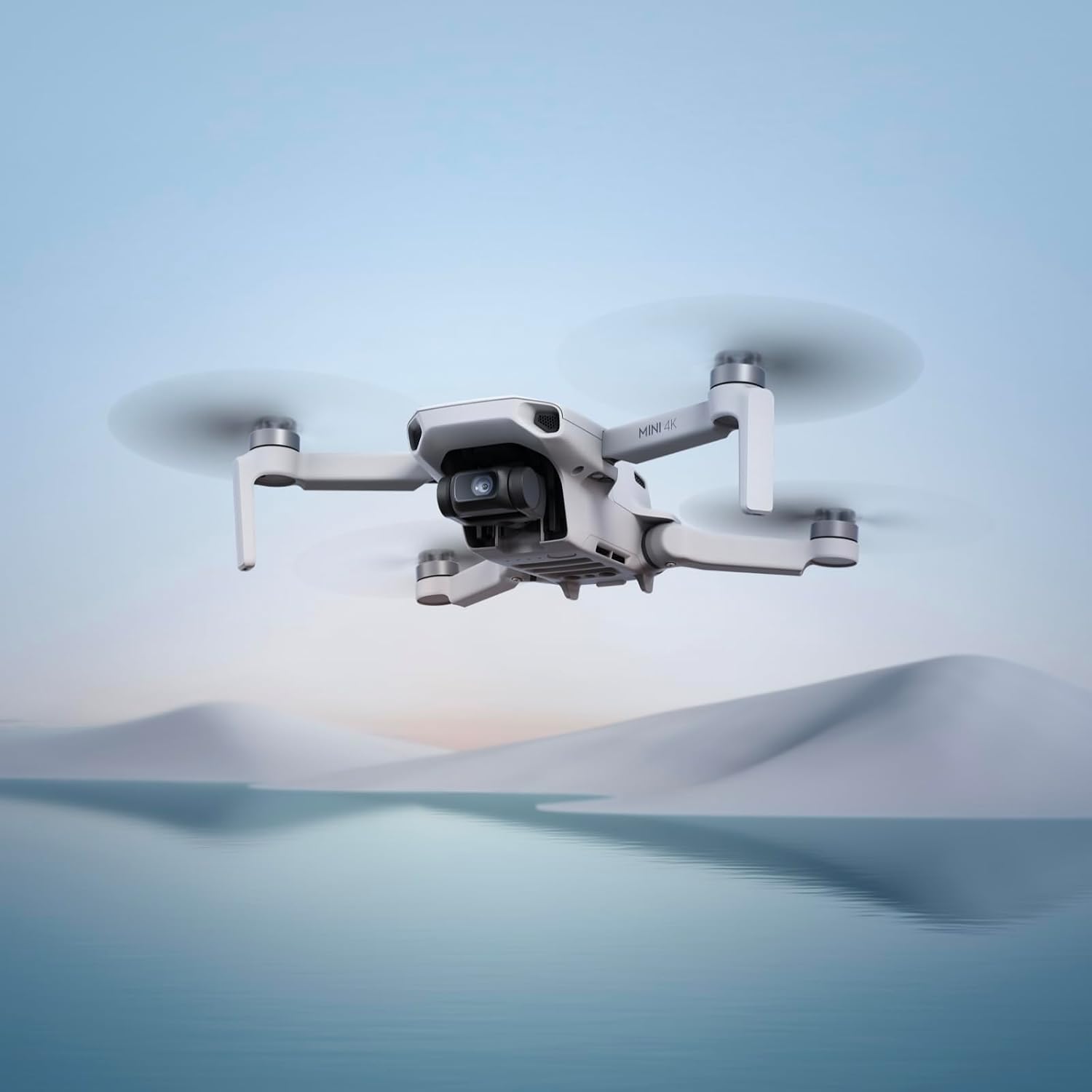
Featured DJI Mini 4K
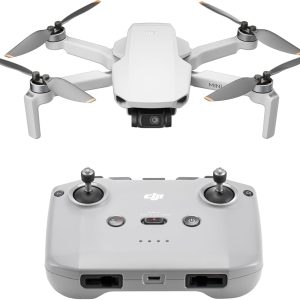
Featured gear
DJI Mini 4K Drone: Beginner 4K Camera Drone Under 249g
The DJI Mini 4K is an entry-level DJI camera drone built for beginners who want stabilized 4K footage without jumping into the higher-priced Mini models. It weighs under 249 g, supports 4K/30fps video, uses…
The DJI Mini 4K is an entry-level DJI camera drone built for beginners who want stabilized 4K footage without jumping into the higher-priced Mini models. It weighs under 249 g, supports 4K/30fps video, uses a 3-axis gimbal, and includes GPS-assisted flight features like Return to Home.
- Best for
- Best for new pilots who want a lightweight DJI camera drone with stabilized 4K…
- Skill level
- Beginner
- Product type
- Beginner Drones, Camera Drones, DJI Drones, Drones, Under 249g Drones
- Best for
- New pilots who want a lightweight DJI camera drone with stabilized 4K video, GPS-assisted…
- Skill level
- Beginner
- Product type
- Camera Drone
DJI Mini 4K range can mean five different things
A range question sounds simple, but several limits operate at the same time. The number on the specification sheet is only one of them.
| Type of range | What it measures | Why it matters |
|---|---|---|
| Transmission range | The maximum rated radio-link distance under specified test conditions. | This produces the 10 km FCC and 6 km CE, SRRC, and MIC figures. |
| Environment-limited range | How far the link remains useful around radio noise, buildings, trees, terrain, and other obstructions. | It can be far shorter than the interference-free rating. |
| Battery range | The total path the aircraft can cover before the battery is depleted. | The aircraft still needs enough energy to return, handle wind, and land with reserve. |
| Legal range | The distance allowed under the rules that apply to the pilot, location, and operation. | Visual-line-of-sight and airspace requirements can become the controlling limit. |
| Safe planning range | The conservative distance selected for the actual route and conditions. | This accounts for uncertainty instead of using every theoretical meter. |
The shortest applicable limit controls the flight. A strong video feed does not override visual-line-of-sight rules, and an aircraft with plenty of battery should not continue outbound if wind or terrain makes the return uncertain.
This distinction also explains why two pilots can report very different results with the same drone. One may be flying in an open rural area with little radio noise; another may be operating near buildings, Wi-Fi networks, trees, or uneven terrain. Their aircraft specifications are identical, but their usable links are not.
What DJI's 10 km transmission range actually means
The Mini 4K uses DJI O2 transmission and sends a 720p/30fps live view to its controller. DJI lists a maximum transmission distance of 10 km under FCC rules and 6 km under CE, SRRC, and MIC rules. The published test assumes an unobstructed outdoor environment without interference.
DJI also states that the maximum communication distance is a one-way, non-return flight measurement. That wording is critical. The specification demonstrates the radio system's potential under controlled conditions; it does not describe a route a pilot should attempt.
FCC, CE, SRRC, and MIC are regional radio-compliance regimes. Different permitted transmission characteristics help explain why the same aircraft has different published maximums by region. The drone and controller select settings based on the applicable region, and the lower regional figure should not be treated as a software defect.
| Test environment | Published reference distance | How to interpret it |
|---|---|---|
| FCC, unobstructed without interference | 10 km (6.2 miles) | Ideal maximum link rating, not a recommended radius. |
| CE, SRRC, or MIC, unobstructed without interference | 6 km (3.7 miles) | Ideal regional maximum under the listed radio standard. |
| FCC, strong interference such as an urban center | Approximately 1.5 to 3 km | DJI reference range, not a promise for every city. |
| FCC, medium interference such as a suburban area | Approximately 3 to 6 km | Reference only; local obstructions and radio use still matter. |
| FCC, low interference such as open suburb or seaside | Approximately 6 to 10 km | Reference only and still subject to legal, visual, and battery limits. |
Do not use 10 km as a mission target. Transmission range says how far the radio link may reach under ideal FCC test conditions. Safe operating distance must also leave a reliable return path, legal visibility, and enough battery for wind, maneuvering, and landing.
Check current DJI Mini 4K packages
Compare the included battery count, controller, charging equipment, microSD card, product condition, and warranty region before choosing a bundle.
Can the DJI Mini 4K battery support a 10 km flight?
Not as a normal round-trip plan. DJI rates the Mini 4K for up to 31 minutes of flight time, but its endurance test is performed in windless conditions at sea level, with the aircraft moving forward at a constant 17 km/h in Photo mode until forced landing from battery depletion.
A simple calculation shows why the transmission figure and the battery figure should not be combined carelessly:
| Input or result | Value | Meaning |
|---|---|---|
| Constant test speed | 17 km/h | DJI's stated forward speed for the endurance test. |
| Maximum test time | 31 minutes, or about 0.517 hour | The test continues until forced landing from battery depletion. |
| Calculated total path | About 8.8 km (5.5 miles) | 17 km/h multiplied by 0.517 hour, before any safety reserve. |
The calculated 8.8 km is a total path, not 8.8 km outbound. It also represents idealized test conditions that end at forced landing, leaving no practical reserve. A real route includes takeoff, climbing, positioning, turns, hovering, wind, camera work, and the final approach.
Flying outbound with a tailwind can be especially deceptive. Groundspeed may look efficient on the way out, while the return into a headwind requires more time and energy. Battery percentage is not distance remaining, and a straight-line home distance does not account for obstacles or a safer return route.
DJI's 31-minute rating is still useful for comparing aircraft and battery setups. It simply should not be converted into a universal mileage promise. Our DJI Mini 4K battery guide covers flight-time expectations, charging, reserve planning, and the practical value of spare batteries.
How far can you legally fly a DJI Mini 4K?
The answer depends on the country, airspace, purpose of flight, aircraft configuration, and rules that apply to the pilot. The radio system's technical capability does not create permission to use its full distance.
For recreational flights in the United States, the FAA says the drone must remain within the visual line of sight of the person operating the aircraft or a visual observer who is co-located and in direct communication with the operator. Recreational flyers in Class G airspace must fly at or below 400 feet, while controlled airspace requires prior authorization and compliance with the authorized altitude.
Visual line of sight means more than seeing a map icon or camera feed. Distance, haze, background, lighting, aircraft orientation, eyesight, and the Mini 4K's small size affect whether the aircraft can be observed well enough to know its location, attitude, altitude, and direction of flight.
The Mini 4K's standard published weight of 246 g may simplify some requirements in some jurisdictions, but sub-249 g does not remove airspace restrictions, visual-line-of-sight obligations, restrictions around people, or every registration requirement. Accessories can also change actual takeoff weight.
Check the current aviation authority guidance for the place and type of operation before takeoff. In the United States, start with the FAA's current recreational flyer rules and safety guidance.
What reduces DJI Mini 4K real-world range?
Several factors can shorten the radio link, reduce the battery-supported route, or make a flight inappropriate before either maximum is reached.
| Factor | Effect on the flight | Practical response |
|---|---|---|
| Buildings, trees, hills, and terrain | Can block or reflect the radio signal and obscure the aircraft. | Maintain a clear line between controller and aircraft; do not plan behind obstacles. |
| Wi-Fi and other radio activity | Raises interference and can reduce live-view quality or link margin. | Watch signal indicators and shorten the flight if the link becomes unstable. |
| Controller antenna orientation | Poor alignment weakens the effective connection. | Keep the controller antennas oriented as DJI instructs and avoid blocking them with your body or device. |
| Low flight path | Places more ground clutter, vegetation, and structures in the signal path. | Use a legal altitude appropriate for the terrain and maintain unobstructed visibility. |
| Wind | Changes groundspeed and the energy required to return. | Check direction and speed at flight altitude; avoid using a tailwind outbound as free range. |
| Cold or aging battery | Can reduce usable energy or increase voltage sag under load. | Use a healthy, properly charged battery within DJI's operating guidance and keep a larger reserve when conditions warrant. |
| Phone, cable, or app issue | Can interrupt the display even when the aircraft-controller link behaves differently. | Charge devices, secure the cable, close unnecessary apps, and verify the system before launch. |
The aircraft's GPS and positioning systems help it hold position and return, but they do not strengthen the radio link or detect obstacles ahead. The Mini 4K has downward sensing for positioning and landing support, not forward, rear, or side obstacle avoidance. Our guide to DJI Mini 4K GPS and Return to Home explains what the positioning system does and does not provide.
How to plan distance without chasing a maximum
A better question than “How far can it go?” is “What distance preserves a clear, legal, and reliable return under today's conditions?” The answer should be decided from the actual site, not copied from a forum flight.
Before takeoff
- Confirm the flight is allowed in the airspace and location.
- Check surface wind, forecast wind aloft, gusts, temperature, and visibility.
- Inspect the aircraft, propellers, battery, controller, phone, and connection cable.
- Wait for suitable satellite status and confirm that the home point is correct.
- Set a Return to Home altitude that clears relevant obstacles without being unnecessarily high.
- Identify the outbound direction, return path, alternate landing areas, and a conservative turnaround condition.
- Confirm the aircraft can remain within required visual line of sight throughout the route.
During the outbound leg
- Watch the aircraft directly, not only the camera view.
- Monitor battery percentage, signal strength, warnings, wind behavior, and home distance together.
- Turn back early if the connection fluctuates, the aircraft struggles against wind, visibility worsens, or the route becomes obstructed.
- Do not continue merely because DJI Fly has not issued a low-battery warning.
- Leave extra margin for the final approach, landing, a go-around, and unexpected delays.
A fixed battery percentage is not equally safe for every route. Twenty percent remaining near the home point in calm conditions is different from twenty percent remaining far downwind, behind terrain, or over a landing area that has become unavailable. Distance, direction, energy demand, and landing options belong in the same decision.
For a broader view of the aircraft's limits, controller, sensing, camera, and flight features, see our DJI Mini 4K specifications explained.
What happens if the DJI Mini 4K loses signal?
The Mini 4K can use its failsafe action when the control signal is lost. Depending on the selected setting and flight state, the aircraft may initiate Return to Home, descend and land, or hover. Return to Home is commonly the appropriate failsafe, but it is not an obstacle-avoidance system and should be configured before the flight.
When Return to Home is triggered and a valid home point is available, the aircraft follows the documented RTH behavior for its distance and altitude. The exact sequence matters because the aircraft may ascend to the preset RTH altitude before returning in some situations, while its behavior close to the home point can differ.
The Mini 4K does not have forward obstacle sensing. A branch, cable, building, or terrain feature along the automated path may not be detected. Setting an appropriate RTH altitude and keeping the route clear are therefore essential. Setting the altitude extremely high without considering wind and battery use is not automatically safer.
If the live view freezes or the app disconnects, stay calm, maintain the controller's proper orientation, avoid random stick inputs, and follow DJI's documented recovery procedure. The aircraft-controller link and the phone-app display are related but not identical, so a phone display issue does not necessarily prove that the aircraft has lost control signal.
Review the current DJI Mini 4K user manual before relying on failsafe Return to Home. Learn how to cancel or resume control, how the home point is recorded, and how RTH behaves at different distances.
How to improve connection reliability safely
The most effective improvements are usually basic setup and route choices, not unauthorized radio modifications.
- Fly from an open location. Keep a clear path between the controller and aircraft, and avoid standing next to large metal structures, vehicles, reinforced concrete, or dense groups of wireless devices.
- Orient the controller correctly. Follow DJI's antenna-position guidance and keep your hands, phone, and body from shielding the antennas.
- Do not fly behind obstructions. Trees, roofs, ridges, and buildings can degrade the signal abruptly even when the straight-line distance is modest.
- Use current, compatible software. Check the aircraft, controller, battery, DJI Fly app, phone, and cable before leaving for an important flight.
- Respond to early warnings. A fluctuating live view or declining signal indicator is a reason to shorten or reposition the flight, not a challenge to continue.
- Choose a legal, conservative route. Better visibility and fewer obstacles improve both situational awareness and the radio path.
A signal booster, unofficial firmware, or regional-power workaround can create reliability, compliance, warranty, and safety problems. It also does nothing to solve visual-line-of-sight, battery, wind, or obstacle limits. Good planning provides more value than chasing a larger number on the distance display.
Final verdict: is the DJI Mini 4K a good longer-range drone?
The DJI Mini 4K has more transmission capability than most beginners should need. Its O2 system is rated up to 10 km under FCC conditions and 6 km under CE, SRRC, and MIC conditions, but those are ideal link specifications rather than practical targets.
For ordinary aerial photography, the more important strengths are a stable digital connection, GPS-supported position holding, Return to Home, 31-minute published endurance, and a compact 246 g standard configuration. The absence of directional obstacle sensing is the major reason to keep routes open, visible, and conservative.
Buy the Mini 4K for affordable stabilized 4K capture and straightforward beginner flight, not for record-distance missions. If you want a better camera, longer published flight time, and True Vertical Shooting, our DJI Mini 4K vs Mini 3 comparison explains whether the upgrade is worth it. For a full ownership overview, read our DJI Mini 4K review.
Compare current DJI Mini 4K offers
Verify the battery count, controller, charging equipment, microSD card, condition, seller, and warranty region before comparing prices.
DJI Mini 4K range FAQs
How many miles can the DJI Mini 4K fly?
DJI rates the radio link up to 6.2 miles under FCC conditions or 3.7 miles under CE, SRRC, and MIC conditions, measured unobstructed and without interference. Those are transmission ratings, not guaranteed flight distances or recommended operating radii.
Can the DJI Mini 4K really fly 10 km?
Its O2 transmission system is rated for up to 10 km in an unobstructed, interference-free FCC test environment. DJI describes that maximum communication distance as a one-way, non-return measurement. Battery, wind, visibility, obstacles, and flight rules make 10 km an inappropriate normal target.
What is the DJI Mini 4K's real-world range?
There is no reliable universal figure. Urban radio noise, buildings, trees, terrain, controller orientation, altitude, weather, battery condition, and local rules can produce very different usable distances. Plan each flight around the shortest applicable limit.
Why is the DJI Mini 4K range lower in Europe?
DJI publishes different figures for regional radio standards: 10 km for FCC and 6 km for CE, SRRC, and MIC. The permitted transmission characteristics differ by region, so the lower CE rating is expected and should not be bypassed with unofficial modifications.
Does the DJI Mini 4K have Return to Home?
Yes. It supports Return to Home and can use a failsafe action after signal loss. RTH depends on a valid home point and correct setup, and the drone lacks forward obstacle sensing, so pilots must understand its documented behavior and choose an appropriate RTH altitude.
Will the DJI Mini 4K return if the controller disconnects?
It can initiate the configured failsafe action after control-signal loss, commonly Return to Home. The selected failsafe setting, home-point status, distance, altitude, battery, and surrounding obstacles affect what happens. A phone-app disconnect is not always the same as loss of the aircraft-controller link.
How far can the DJI Mini 4K fly on one battery?
DJI publishes up to 31 minutes under controlled conditions, not a mileage guarantee. Using DJI's 17 km/h endurance-test speed and 31-minute time produces about 8.8 km of total theoretical path before reserve, but the test ends at forced landing and does not represent a safe out-and-back plan.
Does the DJI Mini 4K have obstacle avoidance?
No directional obstacle-avoidance system is listed. It has downward sensing that supports positioning and landing, but it cannot scan the forward return path for trees, wires, buildings, or terrain.
Can you fly the DJI Mini 4K beyond visual line of sight?
Rules depend on jurisdiction and operation. Under current U.S. recreational guidance, the FAA requires the aircraft to remain within visual line of sight of the operator or a co-located visual observer in direct communication with the operator. A strong video feed does not replace that requirement.
How can I get the best DJI Mini 4K signal?
Fly in a legal open area, maintain an unobstructed path, orient the controller antennas correctly, keep devices and body parts from shielding them, use compatible current software, and return when signal quality begins to decline. Avoid unofficial power or firmware modifications.
Sources
- DJI Mini 4K specifications: official transmission limits, interference references, flight-time test conditions, wind resistance, positioning, and aircraft specifications.
- DJI Mini 4K User Manual: official signal-loss, failsafe, Return to Home, antenna, and operating guidance.
- FAA Recreational Flyers and Community-Based Organizations: current U.S. recreational visual-line-of-sight, altitude, and airspace guidance.
Last checked: July 13, 2026. Specifications, software behavior, regional radio limits, airspace rules, and aviation guidance can change.