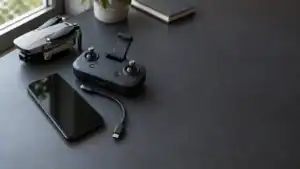
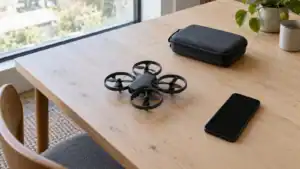
The Potensic ATOM SE is still worth buying if you want an inexpensive, sub-249 g GPS drone for learning, casual flying, and daylight photos. It offers genuine Return to Home, a proper controller, RAW photo capture, and up to 31 minutes of advertised flight time. The catch is its camera: electronic image stabilization cannot keep the horizon level like a three-axis gimbal.
That limitation matters more now that Potensic sells newer gimbal-equipped ATOM models and the DJI Mini 4K occupies the same beginner market. The ATOM SE therefore makes sense at a meaningful discount, especially in a useful two-battery bundle. If smooth aerial video is the reason you are buying a drone, spend more for a mechanical gimbal.
Review basis: This independent buying assessment combines current manufacturer specifications, current support information, regulatory guidance, and published third-party flight observations. It does not claim original hands-on testing.
Quick Verdict
Our verdict: The ATOM SE remains a good budget flight platform but no longer stands out as a camera drone. Buy it when the total bundle price is clearly lower than a Potensic ATOM or DJI Mini 4K and you can accept EIS-only footage. Skip it when the price gap is small, you want level horizons in wind, or you expect visual obstacle avoidance.
Best for
Budget-conscious beginners who prioritize GPS assistance, portability, long battery claims, and a complete bundle.
Not ideal for
Creators who need reliably smooth video, low-light quality, subject recognition, or obstacle avoidance.
Buy when
It is substantially cheaper than a comparable three-axis-gimbal drone after matching the battery count and accessories.
Skip when
A gimbal-equipped Potensic ATOM or DJI Mini 4K costs only modestly more in the bundle you actually want.
Featured Product

Featured gear
Potensic ATOM SE GPS Camera Drone
The Potensic ATOM SE is an under-249 g GPS camera drone with 4K/30 fps EIS video, 12 MP RAW photos, Return to Home, a 4 km manufacturer-rated transmission system, and two batteries rated for…
The Potensic ATOM SE is an under-249 g GPS camera drone with 4K/30 fps EIS video, 12 MP RAW photos, Return to Home, a 4 km manufacturer-rated transmission system, and two batteries rated for up to 31 minutes each.
- Best for
- Best for a beginner or traveler who wants an under-249 g GPS camera drone…
- Skill level
- Beginner
- Product type
- Beginner Drones, Camera Drones, Drones, Under 249g Drones
- Best for
- A beginner or traveler who wants an under-249 g GPS camera drone with 4K…
- Skill level
- Beginner
- Product type
- Foldable GPS Camera Drone
Potensic ATOM SE Key Specifications
The headline specifications look competitive for a compact beginner drone. The more important question is what each number changes in actual use. Potensic's maximum flight-time, range, speed, and wind-resistance figures are controlled-condition claims, not guarantees for every flight.
| Specification | Published figure | What it means when buying |
|---|---|---|
| Takeoff weight | Under 249 g with battery, propellers, and microSD card | Easy to carry and below an important US recreational registration threshold in its stock configuration. |
| Camera | 1/3-inch 12 MP CMOS, 118-degree field of view, 4K at up to 30 fps | Wide daylight coverage, but the small sensor and limited controls are not aimed at demanding imaging work. |
| Stabilization | Single-axis camera tilt with ShakeVanish EIS | Reduces vibration but cannot mechanically correct roll and yaw like a three-axis gimbal. |
| Photo format | JPEG and RAW DNG | RAW files provide more editing latitude than JPEGs, a notable feature at this price level. |
| Maximum flight time | 31 minutes at 5 m/s in low-altitude, windless testing | Strong on paper, but reserve power for a safe return and expect conditions to reduce usable time. |
| Maximum transmission | Up to 4 km with PixSync 2.0 | A link-budget ceiling under suitable conditions, not permission to fly beyond visual line of sight. |
| Maximum horizontal speed | 16 m/s in Sport mode | Quick enough for an ultralight beginner drone, although faster flight makes EIS footage less forgiving. |
| Published wind resistance | 38 km/h, Level 5 | The aircraft may hold position in moderate wind, but camera tilt and return-flight margin still matter. |
| Positioning | GPS, GLONASS, Galileo, BeiDou, downward vision, and ToF | Supports stable hovering, landing assistance, and Return to Home. It does not provide forward obstacle avoidance. |
| Storage | microSD card, U1/Class 10 or faster recommended | Budget for a compatible card because full-resolution media is recorded on the aircraft. |
Source: Potensic ATOM SE product and specification pages. Maximum figures depend on test conditions, region, interference, battery state, flight behavior, and local restrictions.
Nothing in that list makes the ATOM SE a toy. Satellite positioning, a radio controller with a wired phone connection, brushless motors, proper flight telemetry, and automatic return behavior move it well beyond cheap Wi-Fi drones. Its compromise is concentrated in the imaging system rather than the basic flight platform.
Flight Performance and Safety
GPS assistance makes it approachable
The ATOM SE uses multiple satellite constellations and combines them with downward vision and time-of-flight sensing. Outdoors with a good satellite lock, that supports position holding and Return to Home. Near the ground, the downward sensors help with hovering and landing when the surface and lighting give them enough detail to read.
This is a far more confidence-inspiring setup for a new pilot than a basic drone that drifts as soon as the sticks are released. Published hands-on testing by Digital Camera World also found the phone-and-controller connection straightforward and the app telemetry familiar, although the reviewer noted that compass calibration was requested before flight.
Important distinction: Downward positioning sensors are not obstacle avoidance. The ATOM SE cannot see and steer around trees, cables, walls, or people in front of it. Automated modes must be used in a large, clear area with the aircraft kept in sight.
Three speed modes fit different skill levels
Video, Normal, and Sport modes change how aggressively the aircraft responds. A beginner can start with gentler control, while Sport mode reaches a published 16 m/s in suitable conditions. The tradeoff is simple: sharper acceleration and more aircraft lean make EIS footage less stable, so the fastest setting is better for repositioning than for polished video.
Published range is not a flight target
Potensic rates PixSync 2.0 transmission for up to 4 km, subject to regional radio limits and favorable conditions. Buildings, Wi-Fi congestion, terrain, antenna orientation, and interference can reduce that distance substantially. More importantly, long-range capability does not override the operating rules that apply where you fly.
In the United States, recreational pilots must keep the drone within visual line of sight, pass the free TRUST safety test, follow airspace rules, and give way to other aircraft. The FAA generally exempts a stock drone under 250 g from registration only when it is flown solely under the recreational exception. Part 107 operations require registration regardless of this weight threshold. Accessories can also push the aircraft above 250 g, so check the finished takeoff weight and current FAA requirements rather than treating “under 249 g” as a blanket exemption.
Camera Quality: The Reason to Buy or Skip It
4K resolution is only part of the story
The ATOM SE records 4K video at up to 30 frames per second and takes 12 MP stills through a wide 118-degree lens. In bright, calm conditions, that is enough for casual travel clips, property overviews, family use, and learning aerial composition. RAW DNG capture is particularly useful because it gives photographers more room to recover highlights, lift shadows, and adjust color than a finished JPEG.
The sensor is only 1/3 inch, however, and the camera is built around automatic exposure rather than the fuller manual control offered by newer models. Expect the best results in good daylight. High-contrast scenes and dim conditions put more pressure on the small sensor, and the very wide lens can look less natural at the edges.
EIS cannot replace a three-axis gimbal
The camera can be tilted remotely from upward 20 degrees to straight down, but stabilization across the image relies on electronic processing. EIS can smooth small vibrations by cropping and correcting frames. It cannot physically keep the horizon level when the drone rolls into a crosswind or makes a fast correction.
That difference is visible in real flight. Digital Camera World's test described the video as reasonably steady for an EIS drone but observed that the horizon tilted as the aircraft leaned into wind. The same review found the camera less comfortable in low light and harsh mixed lighting. Those are not unusual failures for the price; they are the predictable limits of this hardware design.
| Shooting condition | ATOM SE with EIS | Three-axis-gimbal drone |
|---|---|---|
| Calm hover | Can look acceptably steady | Usually steadier with a level horizon |
| Crosswind | Aircraft lean can tilt the horizon | Gimbal compensates for roll |
| Fast turns | More visible tilt and correction | Smoother framing when flown well |
| Low light | Small sensor and electronic correction have less margin | Still sensor-dependent, but mechanical stabilization avoids extra electronic correction |
| Editing | May require horizon correction and cropping | More footage is usable directly from the camera |
Assessment based on Potensic's published stabilization design and Digital Camera World's flight observations. Image quality also depends on weather, exposure, pilot inputs, and editing.
If video is secondary and your main goal is to learn safe GPS flight, this compromise may be reasonable. If video is the purchase goal, compare the Potensic ATOM SE and DJI Mini 4K before choosing. A three-axis gimbal is the upgrade most likely to improve every clip you shoot.
Check the current ATOM SE offer
Compare the battery count, carrying case, charging accessories, and return policy before judging the bundle price.
Flight Modes and PotensicPro App
The ATOM SE uses the PotensicPro mobile app with a phone mounted in the supplied controller. Potensic's current download page still lists ATOM SE support, with iOS 13 or later and 64-bit Android 7 or later specified. Android devices are also listed with a minimum 4 GB memory requirement. Check the current compatibility list if you use an older or unusual phone.
Return to Home
GPS Return to Home is the most important automated feature. It can bring the drone toward its recorded home point after a command, low-battery event, or lost control link, depending on the situation and configured settings. It is a backup, not a substitute for preparation. Set a return altitude that clears nearby obstacles, wait for a reliable home-point confirmation, and keep enough battery in reserve for the wind on the return leg.
Follow Me, Circle Flight, and Waypoint Flight
Potensic lists Follow Me, Circle Flight, and Waypoint Flight for the ATOM SE. The key limitation is how tracking works. Potensic's own ATOM comparison describes the SE as using GPS tracking, while the gimbal-equipped ATOM uses visual tracking. In practice, the SE follows the controller or phone location rather than recognizing and framing a person as a visual subject.
GPS-based tracking can be entertaining in open fields, but it does not make the drone autonomous or obstacle-aware. The pilot remains responsible for its route, altitude, separation, and surroundings. Circle and waypoint routes have the same constraint: use them only where the complete path is clear.
Camera controls remain basic
The app provides live view, telemetry, flight settings, media controls, and gimbal-tilt control. RAW capture gives still photographers some editing flexibility, but the ATOM SE does not provide the same manual camera controls or visual-subject features as the more advanced ATOM models. This is a simple flying camera, not a compact cinema tool.
Battery Life, Charging, and Bundle Value
Potensic advertises up to 31 minutes of flight from the 2,500 mAh smart battery, measured while moving at 5 m/s at low altitude in windless conditions. Real usable flight time must leave a reserve for landing and varies with wind, temperature, speed, altitude, battery age, and repeated climbs. Plan conservatively instead of treating 31 minutes as time available for filming.
The bundle can be a genuine reason to choose the ATOM SE. Potensic's current store listing describes a dual-battery kit with the drone, controller, two smart batteries, carrying bag, spare propellers, charging cable, and phone connection cables. Its triple-battery kit adds a third battery and fast charging hub. Retailer bundles can differ, so compare the exact contents rather than the words “Fly More” or a crossed-out list price.
Bundle checklist before ordering
- Confirm whether the listing includes two or three flight batteries.
- Check whether a charging hub is included or batteries charge individually by USB-C.
- Verify that the controller cables support your phone connector.
- Look for a carrying bag, spare propellers, screws, and a screwdriver.
- Budget for a compatible microSD card if one is not listed.
- Compare warranty coverage and return terms, not just accessory count.
Two batteries are more useful than a theoretical extra kilometer of transmission for most beginners. They extend a practice session without encouraging distance, and they make the package feel complete. A three-battery bundle is attractive only if its premium is lower than buying the extra battery and hub separately.
Before choosing a listing, use our Potensic ATOM SE price and bundle guide to compare the one-, two-, and three-battery configurations and determine whether the larger package is actually worth its current price premium.
Is the Potensic ATOM SE Still Good Value?
Yes, but only in the right price relationship. The ATOM SE should be evaluated as a discounted GPS trainer with a serviceable camera, not as a direct current-generation imaging leader. Its useful core features have not stopped working: it is portable, stable with satellite lock, quick, capable of RAW photos, and backed by a currently listed app and manuals.
What changed is the surrounding market. Potensic's original ATOM adds a three-axis gimbal, a longer published 6 km transmission range, visual tracking, more camera control, and a slightly longer 32-minute flight claim. ATOM 2 moves further with a larger 1/2-inch sensor, 10 km published transmission, AI tracking, vertical shooting, and a three-axis gimbal. The DJI Mini 4K also offers a three-axis gimbal and a mature beginner-camera-drone ecosystem.
| Your situation | Buy or skip? | Reason |
|---|---|---|
| You want the lowest-cost credible GPS drone | Buy at a strong discount | Return to Home, proper radio control, and stable hovering give it real training value. |
| You mainly want smooth travel video | Skip | A three-axis gimbal is worth prioritizing over extra bundled accessories. |
| The dual-battery SE costs much less than a single-battery gimbal drone | Consider buying | The extra practice time may outweigh the weaker camera for a first-time pilot. |
| The price gap to Potensic ATOM or DJI Mini 4K is small | Skip | The gimbal upgrade has a larger everyday impact than most specification differences. |
| You want automatic filming around trees or structures | Skip | The ATOM SE has no forward or omnidirectional obstacle avoidance. |
| You prioritize still photos and edit RAW files | Consider buying | RAW DNG is useful, but the small sensor still favors good daylight. |
| You expect a polished creator tool for several years | Spend more | Newer gimbal-equipped models provide more headroom for video and automated shooting. |
FPV Drone editorial decision framework based on current model capabilities. Compare like-for-like bundles because battery and charging accessories can materially change value.
Do not anchor the decision to a volatile sale price. Instead, compare the complete cost of the setup you need on the day you buy. As a rule of thumb, the SE needs a clearly noticeable total-price advantage to justify giving up the gimbal. If you hesitate because the better model is only a little more, buy the better camera system once.
Best Potensic ATOM SE Alternatives
Potensic ATOM: the most direct upgrade
The original Potensic ATOM keeps the compact, under-249 g concept but adds the feature that matters most: a three-axis mechanical gimbal. Potensic also publishes a 6 km transmission range, up to 32 minutes of flight, visual tracking, and additional camera control. Choose it when you like the Potensic ecosystem but want footage that stays level through ordinary aircraft movement.
Potensic ATOM 2: better for creators
ATOM 2 is the more ambitious step up. Potensic lists a 1/2-inch sensor, three-axis gimbal, 10 km transmission, AI tracking, vertical shooting, and up to 32 minutes of flight. It is a better fit for social content and buyers who want room to develop, but it only makes financial sense if those camera and tracking improvements will be used.
DJI Mini 4K: the established gimbal option
DJI Mini 4K combines an under-249 g body with 4K/30 video, a three-axis gimbal, up to 31 minutes of advertised flight, Return to Home, and QuickShots. It is the safer choice for buyers who prioritize a mature camera workflow and broad third-party accessory knowledge. Bundle price and platform preferences may still favor Potensic.
Holy Stone HS360S: a cheaper GPS comparison
If the ATOM SE is already stretching the budget, the relevant question is whether you need its camera, radio link, and bundle advantages or simply a GPS-assisted first drone. Our Holy Stone HS360S versus Potensic ATOM SE comparison breaks down the camera stabilization, flight time, app, range, and beginner value differences.
Best upgrade priority: Pay for a three-axis gimbal before paying for a longer advertised range. Smooth, level footage improves nearly every legal, in-sight flight. Extra theoretical distance usually does not.
Who Should Buy the ATOM SE?
Buy it if:
- You want a credible GPS beginner drone at the lowest practical cost.
- You care more about learning to fly than producing consistently smooth cinematic video.
- You found a dual-battery or triple-battery bundle at a substantial saving.
- You mainly shoot in daylight and are willing to fly gently for better footage.
- You value RAW still photos, Return to Home, compact size, and straightforward portability.
- You understand that automated modes still require open space and active supervision.
Skip it if:
- Your main goal is smooth video with a level horizon.
- You want visual subject tracking rather than GPS-based following.
- You need forward or omnidirectional obstacle avoidance.
- You frequently shoot at dusk, in high-contrast light, or in windy locations.
- You want vertical capture and a more modern social-content workflow.
- A gimbal-equipped ATOM or DJI Mini 4K bundle is only modestly more expensive.
The ATOM SE can also work as a low-cost backup or a drone you are less nervous about learning with. Just do not buy it as a temporary compromise if you already know that stable video is essential. Replacing it later is usually more expensive than choosing a gimbal model at the start.
Final Verdict: Worth Buying, but Only at the Right Discount
The Potensic ATOM SE still clears the threshold from toy to useful camera drone. Its satellite positioning, Return to Home, proper remote link, up-to-31-minute battery claim, RAW photos, and compact weight make it a sound platform for learning. The multi-battery package can deliver excellent practice value.
Its age shows in the camera system. EIS can reduce vibration, but it cannot keep the horizon level like a three-axis gimbal. There is no forward obstacle avoidance, and GPS-based Follow Me is less capable than visual subject tracking. These are meaningful limitations, not small specification gaps.
Bottom line: Buy the ATOM SE when it is clearly cheaper than gimbal-equipped alternatives and flying value matters more than video quality. If the total price is close to a Potensic ATOM, ATOM 2, or DJI Mini 4K, skip the SE and pay for the gimbal. That is the upgrade you will notice every time you review your footage.
See the current Potensic ATOM SE bundle
Verify the included batteries, charging hardware, phone cables, microSD requirements, and seller terms before ordering.
Frequently Asked Questions
Does the Potensic ATOM SE have a gimbal?
It has remotely adjustable single-axis camera tilt, but it does not have a three-axis stabilizing gimbal. ShakeVanish electronic image stabilization corrects vibration digitally. It cannot fully compensate for aircraft roll or keep the horizon level in the same way as a mechanical three-axis gimbal.
Is the Potensic ATOM SE good for beginners?
Yes. GPS position holding, Return to Home, a proper radio controller, multiple speed modes, and a portable under-249 g body make it approachable. Beginners still need to complete applicable training, learn local airspace rules, confirm the home point, set a safe return altitude, and practice in a large clear area.
Does the Potensic ATOM SE have obstacle avoidance?
No. It has downward vision and time-of-flight sensors for low-altitude positioning and landing assistance, but these are not forward or omnidirectional obstacle-avoidance sensors.
How long does the ATOM SE battery last?
Potensic publishes a maximum of 31 minutes, measured at 5 m/s in low-altitude, windless conditions. Usable flight time will be lower after allowing a safe reserve and accounting for wind, temperature, speed, battery condition, and repeated climbing.
Can the Potensic ATOM SE follow you?
It has a GPS-based Follow Me mode. Potensic distinguishes this from the visual tracking offered by newer ATOM models. The SE tracks location rather than visually recognizing and framing a subject, and it cannot avoid obstacles along the route.
Does a Potensic ATOM SE need FAA registration?
For a US pilot flying solely under the recreational exception, the stock under-250 g configuration is generally below the FAA registration threshold. All Part 107 drones must be registered, and adding accessories can change the weight category. Recreational pilots still need TRUST and must follow airspace, visual-line-of-sight, and safety rules. Check current FAA guidance for your exact operation.
Is the Potensic ATOM better than the ATOM SE?
For video, yes. The Potensic ATOM adds a three-axis gimbal, visual tracking, more camera control, a longer published transmission range, and a slightly longer maximum flight claim. The ATOM SE can still be the better value when its multi-battery bundle is substantially cheaper and smooth video is not the priority.
Sources
- Potensic ATOM SE product overview, manufacturer feature information.
- Potensic ATOM SE specifications, manufacturer dimensions, performance conditions, camera, battery, positioning, and radio data.
- Potensic app and manual downloads, current ATOM SE software and device requirements.
- Potensic ATOM SE store listing, manufacturer bundle contents.
- Potensic ATOM versus ATOM SE comparison, manufacturer stabilization, tracking, range, camera-control, and flight-mode differences.
- Potensic ATOM product overview, current gimbal-equipped alternative specifications.
- Potensic ATOM 2 product overview, current sensor, gimbal, tracking, transmission, and flight-time information.
- DJI Mini 4K product page, manufacturer specifications for the current alternative.
- Digital Camera World ATOM SE review, independent flight, handling, and camera observations.
- FAA recreational flyer guidance, US registration threshold, TRUST, visual-line-of-sight, and operating requirements.
- FAA Remote ID guidance, current compliance and registration information.
Last checked: July 27, 2026. Manufacturer specifications, support pages, bundles, and regulations can change. Confirm current product contents and local operating requirements before purchase and flight.