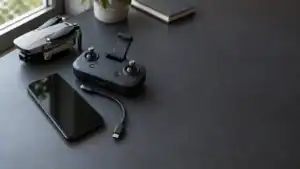
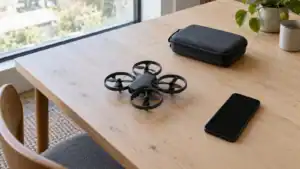
If your drone battery is not charging, do not assume the pack is dead. First rule out the power source, cable or charger, then check battery temperature and physical condition. After that, the correct diagnosis depends on whether you have a proprietary smart battery or a conventional FPV LiPo/LiHV pack with a balance lead.
Quick answer: A no-charge fault usually comes from one of five places: the wall power or charging hardware, dirty or damaged contacts, a battery that is too hot or cold, a smart-battery protection or hibernation state, or a cell/balance problem inside a conventional FPV pack. The important part is identifying the battery type before trying a fix, because DJI-style smart batteries and normal FPV LiPos should not be troubleshot the same way.
Identify the Battery Type Before You Troubleshoot It
The single biggest mistake in drone battery troubleshooting is treating every rechargeable drone pack like a hobby LiPo. Modern camera drones often use proprietary smart batteries with an internal battery-management system (BMS), while traditional FPV builds usually use conventional LiPo or LiHV packs that depend on an external balance charger.
| What to check | Smart battery | Conventional FPV LiPo/LiHV |
|---|---|---|
| Typical examples | DJI Intelligent Flight Battery and other model-specific packs with a BMS | 1S through 6S packs used on freestyle, racing, cinewhoop, and custom FPV builds |
| Charging control | The battery and manufacturer charging system manage much of the process | The pilot selects chemistry, cell count, current, and charging task on a compatible charger |
| Balance connection | Usually internal and not exposed to the user | Usually a separate balance lead on multi-cell packs |
| Sleep or hibernation | Possible on some systems after storage or deep discharge | Not normally a BMS-controlled hibernation state |
| Best first diagnostic | Use the exact model's approved charger or charging path and read its LED/app error behavior | Confirm charger settings, inspect both leads, and compare individual cell voltages with a battery checker or charger |
If your battery has its own power button, status LEDs, app-reported battery data, or a proprietary charging hub, start with the smart-battery workflow below. If it has a main XT30/XT60-style connector plus a separate balance plug, start with the conventional FPV workflow.
For a broader explanation of LiPo, LiHV, cell count, storage voltage, connectors, and charging basics, see our FPV drone battery guide.
Run This 60-Second Check Before You Blame the Battery
- Look at the battery before connecting it. If it is swollen, leaking, cracked, punctured, unusually hot, or giving off a sharp chemical odor, do not charge it.
- Confirm the outlet or DC power source works. Test it with another device if needed.
- Reseat every cable and connector. A partially inserted USB-C cable, charging-hub connector, XT connector, or balance plug can stop a charge from starting.
- Try a known-good cable or compatible charger if one is available. This is one of the fastest ways to separate a charger fault from a battery fault.
- Check the temperature. A pack that just came out of a hard flight may be too warm to charge, while a pack left in a cold vehicle may be below its permitted charging range.
- Check LEDs, charger messages, or app warnings. Write down the exact pattern or error instead of repeatedly reconnecting the battery.
- Compare with another battery. If several batteries fail on the same charger, investigate the charger or power path before replacing multiple packs.
This quick sequence solves the easiest failures without asking you to open a battery, bypass a protection circuit, or force current into a pack the charger is refusing to accept.
Drone Battery Not Charging: Charger, Battery, or Drone?
Use the symptom pattern to decide what to test next. This is more useful than trying random recovery tricks because each result rules out an entire part of the charging system.
| What you see | Most likely area to investigate | Next step |
|---|---|---|
| Every battery fails on the same charger | Power source, charger, hub, or cable | Test the charger input, substitute a known-good cable or approved charger, and inspect charging ports |
| Only one battery fails | That battery or its connector | Inspect contacts, check temperature, then follow the correct smart-battery or FPV-pack workflow |
| Smart battery shows no LEDs after long storage | Hibernation, over-discharge, charger fault, or battery damage | Use the manufacturer's documented charging method and allow the specified wake process before declaring it dead |
| Balance charger reports wrong cell count or balance error | Balance lead, connector, charger setting, or cell imbalance | Stop and inspect the balance connection, then verify individual cell readings before charging |
| Charging stops or will not start after a flight | Battery temperature | Let the pack cool naturally to the charging range specified by its manufacturer |
| Multiple smart batteries fail through the same aircraft or hub | Charging hub, aircraft charging circuit, adapter, or firmware-supported power path | Test the manufacturer's alternative approved charging path or contact support before buying new batteries |
| Swelling, leaking, hissing, smoke, or rapid heating | Battery damage or internal failure | Stop charging and retire the pack. Do not continue troubleshooting an actively failing battery |
If a DJI or Other Smart Drone Battery Will Not Charge
Smart batteries should be diagnosed through the charging system designed for that model. Do not assume a generic balance charger, voltage threshold, or "wake-up" trick applies to a proprietary pack.
1. Use the exact approved charging path
DJI's current support guidance lists an abnormal or damaged charging device as one possible reason a battery will not charge. That makes a known-good, model-compatible adapter, charging hub, cable, or in-aircraft charging method the first meaningful test. Which path is supported varies by aircraft, so follow the instructions for your exact model rather than a generic drone-battery procedure.
For example, some DJI products support charging through the aircraft while others use a separate hub or adapter. A method that works for one generation should not be assumed to work for another.
2. Consider hibernation after long storage
DJI states that an Intelligent Flight Battery can enter hibernation if it is depleted and then stored for an extended period. DJI's maintenance guidance says recharging the battery brings it out of hibernation. The important distinction is that this is a documented smart-battery behavior, not permission to force-charge a conventional LiPo that a balance charger is rejecting.
If a smart battery has no LED response after months in storage, connect it using the manufacturer's documented charging method and give that process the time specified for the model. If it never begins responding, repeatedly reconnecting it or trying higher-power chargers is not a substitute for service or replacement.
3. Let a hot or cold battery return to its permitted range
Temperature lockout is real. DJI's current Intelligent Flight Battery specifications list a 5 to 40°C (41 to 104°F) charging range for many models, including Avata 2 and Mini 4K. DJI also recommends allowing a hot post-flight battery to cool before charging.
The exact range still belongs to the battery manufacturer. Do not use 5 to 40°C as a universal limit for every LiPo or Li-ion pack. If you want the deeper engineering explanation for why temperature changes charge acceptance and cell stress, this overview of thermal management principles for battery charging provides useful background on lithium-ion thermal behavior.
4. Read the error pattern instead of guessing
A blinking LED pattern, app warning, or charging-hub indicator is diagnostic information. Record it and compare it with the manufacturer's support page for that exact battery. A voltage/current protection error should not be treated the same as a temperature warning or hibernation state.
Smart-battery rule: If the manufacturer gives a model-specific recovery or wake procedure, use that procedure. If it does not, do not improvise one by applying a different battery chemistry mode or bypassing the BMS.
If a Conventional FPV LiPo or LiHV Pack Will Not Charge
A conventional FPV pack gives you more direct diagnostic access, but it also puts more responsibility on the charger settings and connections. The charger must know the correct chemistry, cell count, and charge task, and multi-cell packs normally need a healthy balance connection.
1. Confirm chemistry and cell count before starting
LiPo and LiHV are not interchangeable charger settings. Neither are 4S and 6S. If the charger detects a different cell count from the battery label, stop and find out why rather than overriding the warning. A damaged balance lead, severely mismatched cell, or incorrect connection can all produce a cell-count error.
2. Inspect both the main connector and balance lead
Look for bent or pushed-back pins, discoloration from heat, damaged insulation, loose wires, or a balance plug that no longer seats squarely. Clean exposed contacts only with an appropriate electronics-safe method and allow them to dry fully before reconnecting.
If your issue is connector-related, our 1S connector guide explains BT2.0, PH2.0, and A30 for tiny-whoop batteries, while our XT30 vs XT60 vs XT90 guide covers larger power connectors.
3. Check individual cells, not just total pack voltage
A total-voltage reading can hide one weak or failed cell. A balance charger or dedicated battery checker can show each cell individually. If one cell is dramatically different from the others, reads zero, or the charger cannot obtain a stable cell reading, stop charging and investigate the pack rather than trying to "push through" the error.
A multimeter can also be used by experienced users, but probing adjacent balance pins carelessly can short them. For most pilots, a purpose-built checker or the charger's per-cell display is the cleaner diagnostic tool.
4. Do not use chemistry-swapping recovery tricks
Some old forum advice recommends briefly charging an over-discharged LiPo in NiMH mode or another unrestricted mode to raise its voltage enough for the charger to recognize it. That bypasses the safety logic that caused the charger to refuse the pack in the first place. For a general troubleshooting guide, that is not a responsible recovery procedure.
If a pack has fallen below the charger's accepted range, follow the battery manufacturer's guidance. If the manufacturer does not provide a recovery method, replacement is the safer choice.
When a better balance charger actually helps
If the battery is healthy but your current charger cannot reliably show per-cell voltage, balance multi-cell packs, or put batteries into storage mode, upgrading the charger can solve the equipment side of the problem and make future diagnosis easier.
The HOTA D6 Pro is the most relevant product we currently cover for this job. Its documented task menu supports charge, discharge, storage, and balance functions across 1S through 6S battery setups. It is a fit for conventional FPV and RC packs with the correct connectors and settings, not a universal replacement charger for proprietary DJI smart batteries.
Featured charger for conventional FPV packs

Featured gear
HOTA D6 Pro Dual Battery Charger
The HOTA D6 Pro is a dual-channel AC/DC balance charger for conventional FPV and RC battery packs, with two outputs and support for multiple battery chemistries. Best for: Pilots managing several 2S–6S FPV batteries.…
The HOTA D6 Pro is a dual-channel AC/DC balance charger for conventional FPV and RC battery packs, with two outputs and support for multiple battery chemistries.
- Best for
- A versatile dual-channel AC/DC charger for conventional FPV and RC packs; buyers must verify…
- Product type
- Battery Chargers
- Best for
- A versatile dual-channel AC/DC charger for conventional FPV and RC packs; buyers must verify…
- Product type
- Dual-Channel Balance Charger
If you primarily fly 6S, our 6S LiPo charger guide explains how to match charger power, channels, connectors, and pack capacity before you buy.
When to Stop Troubleshooting and Replace the Battery
A battery is a consumable energy-storage device, not a part that should be recovered at any cost. Stop trying to charge it when the physical condition or electrical behavior suggests an internal failure.
- Visible swelling or puffing: Do not charge the pack.
- Leaking, puncture, cracked case, or crash damage: Treat the battery as damaged even if it still shows voltage.
- Hissing, smoke, rapid heating, or a strong chemical odor: Disconnect power only if it is safe to do so and move away. Do not handle an actively venting battery.
- A cell that reads zero or cannot be read reliably: Do not attempt a blind charge just to see whether it recovers.
- Repeated charger or BMS fault with a known-good charging system: Service or replace the battery rather than bypassing the protection.
- Severe or recurring cell imbalance: A pack that repeatedly drifts far out of balance is no longer a pack you should trust in the air.
For disposal in the United States, the EPA says lithium-ion batteries should not go into household trash or curbside recycling. Use a dedicated battery recycler or household hazardous-waste collection program, protect the terminals from shorting, and follow special handling guidance for damaged batteries.
Do not make a failing battery prove itself in the aircraft. A pack that is questionable on the charger is not the pack to test under flight load.
How to Prevent Another No-Charge Problem
Good storage and charging habits prevent many of the failures that look mysterious later.
- Do not store conventional LiPos fully charged for long periods. Use the storage function supported by your charger and follow the battery manufacturer's specified storage voltage.
- Do not store packs fully depleted. Deep discharge during storage can leave a smart battery in hibernation or permanently damage a conventional pack.
- Let batteries cool after flight. Charging a hot pack can trigger protection on smart batteries and adds unnecessary stress to conventional packs.
- Keep connectors clean and strain-free. Pull on connector housings, not wires, and inspect balance leads before they become intermittent.
- Use the correct chemistry every time. A LiHV pack needs a LiHV-compatible charging profile. Do not assume a charger will protect you from every incorrect setting.
- Watch charging batteries. The Academy of Model Aeronautics recommends monitoring LiPo batteries during charging and storing them in a nonflammable or fire-resistant location.
For pilots managing many tiny-whoop packs, a dedicated 1S charger with storage capability can also be more practical than adapters and parallel boards. Our 1S LiPo charger guide compares that workflow separately.
The Practical Takeaway
If your drone battery will not charge, diagnose the system in layers. Start with visible damage, power, cables, temperature, and a second known-good battery or charger. Then split the workflow: proprietary smart batteries should follow their manufacturer's charging and hibernation guidance, while conventional FPV LiPo/LiHV packs should be checked through charger settings, connectors, the balance lead, and individual cell readings.
The main thing to avoid is turning a simple no-charge fault into a dangerous one. Do not force a swollen battery, override a cell-count error, or use an unrelated chemistry mode to revive a pack that the charger is rejecting.
Common Questions
Can a DJI battery that shows no lights be revived?
Sometimes. DJI says Intelligent Flight Batteries can enter hibernation after being depleted and stored for an extended period, and that recharging can bring them out of hibernation. Use the charging method documented for your exact model. If the battery never begins responding with a known-good approved charger, treat it as a battery or service issue rather than forcing a different charging method.
Why does my LiPo charger say the wrong cell count?
Stop before charging. The wrong detected cell count can point to an incorrect charger setting, a poor balance connection, a damaged balance wire, or a cell that is far outside the others. Verify the pack label and individual cell readings before continuing.
Why will my battery not charge immediately after flying?
It may be too hot. Many smart batteries block or reduce charging outside their allowed temperature range. Let the pack cool naturally and check the manufacturer's stated charging temperature before trying again.
Should I replace the battery or the charger first?
Use another battery to isolate the fault. If every battery fails on the same charger, investigate the charger, cable, hub, or power supply. If one battery fails while the others charge normally, the battery becomes the primary suspect.
Sources
- DJI Aircraft Battery Charging Failure: official troubleshooting guidance covering charging-device faults, hibernation or over-discharge, damage, current/voltage errors, and abnormal temperature.
- DJI Battery Routine Maintenance Guide: official guidance on hibernation, storage, cooling after flight, and battery information.
- DJI Intelligent Flight Battery Technical Specifications: official charging-temperature specifications for current DJI battery models.
- HOTA D6 Pro operating instructions: manufacturer documentation for supported battery types, cell-count setup, charge, discharge, storage, and balance functions.
- Academy of Model Aeronautics Battery Care and Safety: model-aviation guidance on LiPo charging observation, storage, and temperature considerations.
- U.S. EPA Used Lithium-Ion Batteries: disposal, recycling, terminal protection, and damaged-battery handling guidance.
Last checked: August 22, 2026