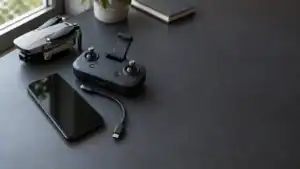
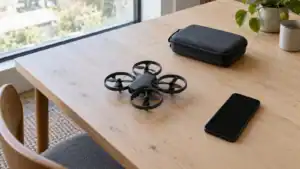
An FPV drone battery is not interchangeable just because its plug fits. Match the chemistry, cell count, voltage, connector and polarity, physical size, weight, and current capability to the aircraft before buying. Traditional FPV packs also need a charger and charge program that match the battery. Integrated camera drones may instead use proprietary smart batteries and their own charging system.
Quick Answer
The safest buying sequence is aircraft requirement first, battery second, charger third. Do not buy a pack by capacity or connector alone, and never use a LiHV charge target for a standard LiPo battery.
Traditional FPV packs
Verify chemistry, S count, connector, polarity, size, weight, current capability, and charger support. A plug that fits does not prove electrical compatibility.
Smart or proprietary batteries
Use the aircraft manufacturer's approved battery and charging workflow unless its documentation explicitly supports another option. Do not apply generic hobby-LiPo charging instructions to a closed smart-battery system.
Stop immediately
Do not charge or fly a swollen, punctured, leaking, unusually hot, discolored, or otherwise damaged battery. Isolate it safely and follow manufacturer and local disposal guidance.
How to Choose the Right FPV Drone Battery
Start with the aircraft or flight-controller documentation, not an Amazon search. A battery has to satisfy several requirements at the same time. A plug that physically connects proves only that the plug fits. It does not prove that the voltage, polarity, chemistry, discharge capability, dimensions, or weight are appropriate.
| Check | What must match | Why it matters |
|---|---|---|
| Chemistry | Standard LiPo, LiHV, or another chemistry explicitly supported by the aircraft and charger | The full-charge target and charger program are chemistry-specific. |
| Cell count | The required 1S, 2S, 3S, 4S, 5S, or 6S configuration | More cells in series raise pack voltage and can damage electronics that are not rated for it. |
| Connector and polarity | The correct main connector, pin orientation, and positive/negative wiring | Reversed polarity can cause an immediate short or component failure. |
| Physical fit | Length, width, height, lead position, and secure mounting | A pack that shifts, contacts props, or strains its lead is not a workable fit. |
| Weight | A weight the frame and motors are designed to carry | Extra mass changes handling, flight time, impact energy, and motor demand. |
| Capacity and current | A practical mAh capacity and discharge capability for the power system | Too little capacity shortens flights; excessive size and weight can erase the benefit of more capacity. |
| Charger support | The charger must support the chemistry, cell count, connection, and intended charge current | The right battery with the wrong charger is still an unsafe system. |
Common battery patterns by FPV aircraft type
These are common starting patterns, not compatibility recommendations. The exact aircraft or power-system documentation still controls.
| FPV aircraft type | Common battery pattern | Verify first |
|---|---|---|
| Tiny whoop | Often 1S LiPo or LiHV with a small direct-plug connector such as PH2.0, BT2.0, or A30 | Exact connector, polarity, chemistry, dimensions, and supported full-charge voltage |
| Micro / small cinewhoop | Often a small multi-cell LiPo or LiHV pack, frequently using XT30 | Manufacturer S count, pack weight, dimensions, motor setup, and connector |
| 5-inch freestyle or racing quad | Commonly 4S or 6S LiPo with XT60, depending on the motor and power-system design | Motor KV, ESC voltage rating, expected current, capacity, and all-up weight |
| Long-range FPV | LiPo or a suitable Li-ion pack, depending on whether the build prioritizes peak power or endurance | Actual current demand, cell discharge rating, voltage range, reserve strategy, and aircraft efficiency |
| Integrated camera FPV drone | Often a proprietary smart battery with a manufacturer-specific charger or charging hub | Use the exact supported battery and charging method listed for the aircraft |
For custom builds, the battery is part of the entire power system. Our FPV drone build and compatibility guide explains why motor KV, ESC voltage support, frame space, connector choice, and the rest of the electronics have to be considered together.
For an integrated smart-battery example, the DJI Avata 2 battery guide covers flight-time planning and the aircraft's manufacturer-specific charging workflow rather than generic balance charging.
Practical rule: copy the complete battery specification from the aircraft manual or known-compatible original pack. Then verify each field against the replacement. Do not use an adapter as evidence that two electrical systems are compatible.
LiPo, LiHV, Li-ion, and Smart FPV Batteries
The word “lithium” does not describe one interchangeable charging program. Traditional FPV uses several battery types, and integrated camera drones may use proprietary packs with onboard electronics. Identify which system you have before comparing capacity or connector size.
Standard LiPo: the common high-current FPV choice
Standard lithium-polymer packs remain common in freestyle, racing, cinewhoop, and other builds that need relatively high current from a compact pack. A standard LiPo is commonly treated as 3.7V nominal and 4.20V fully charged per cell. The aircraft still determines the correct S count, capacity range, connector, weight, and discharge capability.
LiHV: only use the higher charge target when the pack supports it
LiHV packs are designed for a higher full-charge voltage than standard LiPo. The VIFLY WhoopStor 3, for example, exposes separate 4.20V LiPo and 4.35V LiHV targets. That distinction is why the battery label and charger program must agree. A standard LiPo should not be charged to a LiHV target.
Li-ion: useful for efficient long-range builds, not a universal freestyle upgrade
Li-ion packs are used in some long-range FPV builds because suitable 18650 or 21700 cells can provide more stored energy for a given weight than a conventional high-discharge LiPo. The tradeoff is current capability: many Li-ion cells are less comfortable with the high peak demand of aggressive freestyle or racing. Modern high-discharge cells narrow that gap, so the correct decision is based on the specific cell rating and the aircraft's measured or documented current demand, not chemistry alone.
If endurance is the actual goal, our long-range FPV guide explains why battery choice has to be considered together with aircraft efficiency, control and video links, GPS recovery, failsafes, and return reserve.
Do not use the LiPo or LiHV voltage tables below as a universal Li-ion charging table. Li-ion cell specifications and charger programs vary. Follow the exact cell or pack manufacturer limits and use the charger's Li-ion program when required.
Smart and proprietary batteries: stay inside the supported charging system
Integrated FPV camera drones may use battery-management electronics, proprietary connectors, charging hubs, and firmware-managed protection. Those systems should be charged according to the aircraft manufacturer's instructions. Do not connect a proprietary smart battery to a hobby balance charger unless the manufacturer explicitly documents that workflow.
How to Read an FPV Battery Label
A typical label might read 4S 1300mAh 100C 14.8V LiPo XT60. Each part answers a different question. The label still does not tell you whether the pack physically fits your frame, so dimensions and weight must be checked separately.
Cell count: 1S, 4S, and 6S
The letter S means cells connected in series. Series wiring adds voltage. A standard 1S LiPo has one cell and a nominal rating of about 3.7V. A standard 4S pack has four cells for 14.8V nominal, while a standard 6S pack has six cells for 22.2V nominal.
Cell count is not a quality level. A 6S pack is not a universal upgrade from 4S. The quad must be designed for the higher voltage, and the motor KV, propeller load, ESC rating, and tuning must make sense together.
Some Li-ion packs also show a parallel count. A label such as 4S2P means four cell groups in series and two cells in parallel within each group. The series count sets pack voltage, while the parallel count can increase capacity and current capability when the same cells are used. Pack construction, cell ratings, fusing, and wiring still determine what the finished pack can safely deliver.
Capacity: mAh
Milliamp-hours describe capacity. Divide by 1,000 to convert mAh to amp-hours: 450mAh is 0.45Ah, and 1300mAh is 1.3Ah. Higher capacity can extend useful flight time within a suitable range, but it also usually adds size and weight. On a small FPV quad, a heavier battery can feel slower, make impacts harder, and force the motors to work more.
Discharge rating: C
The discharge C rating is the manufacturer's stated relationship between capacity and current capability. A theoretical current calculation multiplies capacity in amp-hours by the stated C rating. For example, 1.3Ah multiplied by 100C equals a claimed 130A. That arithmetic does not make C ratings from different brands directly comparable unless the test methods and rating conventions are also comparable.
Use the aircraft maker's recommended pack and reputable battery data as the starting point. Symptoms such as severe voltage sag, excessive heat, swelling, or a pack that cannot support expected throttle demand are reasons to stop and inspect the system, not reasons to keep flying until the pack fails.
Watt-hours: the useful travel number
Watt-hours describe stored energy and are important for airline limits. The FAA's formula is straightforward:
Watt-hours (Wh) = nominal voltage × capacity in amp-hours (Ah)
A 6S 1300mAh standard LiPo is approximately 22.2V × 1.3Ah = 28.86Wh. Use the battery's marked Wh rating when one is provided.
FPV LiPo and LiHV Voltage Charts
Standard LiPo and high-voltage LiHV packs do not share the same full-charge target. The voltage target applies per cell, then multiplies by the number of cells in series. The tables below consolidate the common values from 1S through 6S.
| Pack | Nominal voltage | Full charge | Storage target |
|---|---|---|---|
| 1S | 3.7V | 4.20V | 3.80V |
| 2S | 7.4V | 8.40V | 7.60V |
| 3S | 11.1V | 12.60V | 11.40V |
| 4S | 14.8V | 16.80V | 15.20V |
| 5S | 18.5V | 21.00V | 19.00V |
| 6S | 22.2V | 25.20V | 22.80V |
| Pack | Nominal voltage | Full charge | Storage target |
|---|---|---|---|
| 1S | 3.8V | 4.35V | 3.85V |
| 2S | 7.6V | 8.70V | 7.70V |
| 3S | 11.4V | 13.05V | 11.55V |
| 4S | 15.2V | 17.40V | 15.40V |
| 5S | 19.0V | 21.75V | 19.25V |
| 6S | 22.8V | 26.10V | 23.10V |
Critical distinction: never charge a standard 4.20V-per-cell LiPo with a 4.35V LiHV program. The charger screen and battery label must agree on chemistry before charging starts.
Li-ion packs are deliberately not included in these two tables because there is no single FPV-wide Li-ion target that should be inferred from a generic chemistry label. Use the cell or pack specification and the charger program intended for that battery.
Why the resting voltage after a flight can mislead you
Battery voltage sags under motor load and rebounds when the load is removed. A pack that appears to recover after landing was still exposed to its in-flight low point. There is no single landing voltage that works for every quad, pack, current draw, weather condition, and voltage-sensor calibration.
Use the aircraft maker's guidance, watch both per-cell voltage and consumed capacity when available, and leave a margin rather than planning to extract every last milliamp-hour. A battery that repeatedly returns unusually hot or badly unbalanced deserves inspection and a less aggressive operating plan.
FPV Battery Connectors Explained
The connector family affects fit and current handling, but it does not define pack voltage. The same connector type can appear on more than one cell count, and an adapter cannot reduce voltage or correct reversed polarity.
| Connection | Where it is commonly encountered | What to verify |
|---|---|---|
| PH2.0 | Many 1S tiny-whoop and micro-drone batteries | Exact plug style, polarity, battery chemistry, and whether the charger's port is intended for the pack |
| BT2.0 | Many newer 1S tiny-whoop packs and aircraft | Do not force it into a different micro connector; confirm polarity and LiPo versus LiHV mode |
| A30 | Some newer 1S tiny-whoop battery ecosystems | Confirm the aircraft and charger are designed for A30 rather than assuming another micro connector is interchangeable |
| XT30 | Smaller multi-cell FPV quads and compact packs | Supported cell count, current demand, polarity, lead gauge, and required charger adapter |
| XT60 | Many larger 4S and 6S freestyle, racing, and long-range packs | Pack voltage, polarity, current requirements, and balance-lead connection |
| JST-XH balance lead | Multi-cell packs used with a balance charger | Correct pin count, undamaged wires, and the matching balance port or board |
Why a multi-cell pack has two connections
The main lead carries the pack's operating and charging current. The balance lead gives a compatible balance charger access to the individual cell groups so it can monitor and correct cell-to-cell differences. A 1S pack has only one cell, so there are no multiple series cells to balance against one another.
Do not charge a conventional multi-cell pack as if the main lead alone tells the charger everything it needs to know. Follow the charger manual for the required main and balance connections, selected cell count, and program.
For the small-pack side, our BT2.0 vs PH2.0 vs A30 guide compares the current 1S connector ecosystems in more detail. For larger packs and custom power wiring, see XT30 vs XT60 vs XT90 for connector sizing, wire-gauge considerations, and current-loading tradeoffs.
Choosing a Charger: WhoopStor 3 or HOTA D6 Pro?
These chargers solve different problems. The VIFLY is a purpose-built 1S workflow for small PH2.0 and BT2.0 packs. The HOTA is a broader dual-channel balance charger for conventional packs across multiple cell counts and chemistries. One is not a universal replacement for the other.
Chargers Covered in This Guide

Featured gear
VIFLY WhoopStor 3 1S Battery Charger
The VIFLY WhoopStor 3 charges or storage-charges as many as six 1S LiPo or LiHV tiny-whoop batteries through independent PH2.0 and BT2.0 channels. Best for: Pilots managing multiple 1S tiny-whoop batteries. Not ideal for:…
The VIFLY WhoopStor 3 charges or storage-charges as many as six 1S LiPo or LiHV tiny-whoop batteries through independent PH2.0 and BT2.0 channels.
- Best for
- A specialized six-channel charger and storage discharger for 1S PH2.0 and BT2.0 tiny-whoop batteries;…
- Product type
- Battery Chargers
- Best for
- A specialized six-channel charger and storage discharger for 1S PH2.0 and BT2.0 tiny-whoop batteries;…
- Product type
- 1S Battery Charger and Storage Discharger

Featured gear
HOTA D6 Pro Dual Battery Charger
The HOTA D6 Pro is a dual-channel AC/DC balance charger for conventional FPV and RC battery packs, with two outputs and support for multiple battery chemistries. Best for: Pilots managing several 2S–6S FPV batteries.…
The HOTA D6 Pro is a dual-channel AC/DC balance charger for conventional FPV and RC battery packs, with two outputs and support for multiple battery chemistries.
- Best for
- A versatile dual-channel AC/DC charger for conventional FPV and RC packs; buyers must verify…
- Product type
- Battery Chargers
- Best for
- A versatile dual-channel AC/DC charger for conventional FPV and RC packs; buyers must verify…
- Product type
- Dual-Channel Balance Charger
| Charger | Best fit | Relevant connections | Main limitation to verify |
|---|---|---|---|
| VIFLY WhoopStor 3 | Charging or returning up to six independent 1S LiPo or LiHV whoop packs to a selected target | PH2.0 and BT2.0 battery ports; XT60, DC, or USB-C PD input | It is a 1S charger. USB-C input requires a compatible PD or QC source, not an ordinary 5V USB supply. |
| HOTA D6 Pro | Two-channel charging for supported conventional 1S through 6S packs, including common multi-cell FPV batteries | XT60-based charger output plus the appropriate balance connection and any correctly wired pack adapter | Confirm chemistry, input-power limits, channel power, cables, and the exact program in the current manual before charging. |
VIFLY WhoopStor 3 for 1S tiny-whoop packs
VIFLY specifies six independent ports, PH2.0 and BT2.0 battery connections, and four target voltages: 3.80V and 4.20V for standard LiPo, plus 3.85V and 4.35V for LiHV. It can move a connected pack up or down to the chosen storage target. The published charge-current range is 0.3A to 1.3A per port, but that does not mean every small pack should be charged at the maximum. Set current according to the battery maker's allowed charge rate.
Its six channels are independent, which is meaningfully different from a parallel board. VIFLY says the connected 1S packs do not have to start at the same voltage or have the same capacity. You still need to set an appropriate current for each battery and verify the correct chemistry target.
If you are still choosing a 1S charger, compare the current options in Best 1S LiPo Charger for Tiny Whoops. For a deeper look at the six independent channels, storage mode, connector support, and power requirements, see our VIFLY WhoopStor 3 review.
HOTA D6 Pro for conventional multi-cell packs
The HOTA D6 Pro is the more relevant choice when you need a dual-channel balance charger for a range of conventional FPV packs. Current listing information identifies support for 1S through 6S LiPo and LiHV batteries, dual independent channels, AC and DC input options, and XT60 outputs. The actual charge power available can depend on the input source and how power is allocated between channels, so a headline wattage should not be treated as guaranteed output in every setup.
Before buying, list every pack you expect to charge. Check its chemistry, S count, main connector, balance connector, capacity, and permitted charge rate. Then verify that the charger package includes or can safely accept every required lead. A charger with an XT60 output will normally need the correct adapter for an XT30 pack, and it is not the convenient choice for a box of direct-plug 1S whoop batteries.
If you are sizing a charger specifically for higher-voltage packs, our 6S LiPo charger guide explains charge-rate, wattage, input-power, connector, and channel planning. For the charger itself, see the HOTA D6 Pro review for its AC/DC limits, dual-channel workflow, compatibility, and required leads.
Choose the Charger for Your Battery Type
Verify battery chemistry, connector, cell count, included leads, and input-power requirements before ordering.
FPV LiPo Charging Checklist
Battery charging becomes safer when it is a repeatable inspection process instead of a habit performed from memory. Use the charger and battery manuals as the controlling instructions.
- Inspect the pack first. Do not proceed if it is swollen, punctured, crushed, leaking, discolored, unusually warm, or has damaged wires, insulation, pins, or connectors.
- Read the complete label. Confirm chemistry, cell count, capacity, voltage limits, connector, polarity, and the manufacturer's permitted charge current.
- Inspect the charger and leads. Look for loose connectors, exposed conductors, bent balance pins, heat damage, or an adapter with uncertain wiring.
- Select the exact chemistry program. LiPo and LiHV are not interchangeable settings. Never use the 4.35V LiHV target on a standard 4.20V LiPo cell.
- Confirm the S count on the charger. The selected count and the charger's detected voltage must make sense for the label before starting.
- Set charge current from the battery documentation. Do not assume that a charger's maximum current or a generic 1C or 2C rule is approved for your pack.
- Use the required main and balance connections. Follow the charger manual's connection sequence and port instructions rather than improvising.
- Charge in a suitable location. Use a stable, noncombustible surface away from flammable material, exits, direct sun, vehicles, and unattended living areas.
- Stay present and monitor the process. Stop if the charger reports a mismatch or the pack develops odor, heat, swelling, discoloration, leakage, or unusual noise.
- Verify the result. Confirm the completed voltage and cell balance are plausible, disconnect the pack, and let it cool before installation or storage.
The U.S. Fire Administration advises following product instructions, storing lithium-ion batteries at room temperature when possible, and avoiding charging below 32°F (0°C) or above 105°F (40°C). A battery maker may specify a narrower range, which should control.
How to calculate charge current without guessing
Charge rate uses capacity in amp-hours. If a 450mAh pack is explicitly rated by its manufacturer for a 1C charge, the calculation is 0.45Ah × 1C = 0.45A. If that same pack is explicitly rated for 2C, the calculation is 0.45Ah × 2C = 0.90A. The formula does not grant permission to use the higher rate. The battery's published limit does.
Why parallel charging is not the beginner default
A parallel board electrically joins multiple packs. Connecting packs with different cell counts, chemistries, polarity, or substantially different voltages can create dangerous current flow. Total charge current, board limits, connector condition, and every pack's capacity and health also matter.
Beginners are better served by individual charger channels. If you later adopt parallel charging, use a properly rated board, packs with the same chemistry and cell count, closely matched starting voltages, and a procedure from the equipment manufacturer or an experienced instructor. Do not use this overview as a parallel-charging procedure.
Charger will not start? Do not keep changing chemistry, cell-count, or voltage settings until something works. Use our drone battery not charging troubleshooting guide to separate pack, connector, charger, temperature, smart-battery, and cell-balance faults before replacing parts.
Battery Storage, Damage, and Disposal
Do not store packs fully charged by default
If a pack will not be used promptly, move it to the storage target specified by its manufacturer. The common targets used in the voltage charts are 3.80V per cell for standard LiPo and 3.85V per cell for LiHV. A storage program may need to charge a depleted pack or discharge a full one to reach that target.
- Disconnect batteries from the aircraft, charger, and accessories.
- Store them at the maker's storage voltage in a cool, dry place away from direct sun, hot vehicles, heaters, exits, and combustible material.
- Protect the main and balance leads from crushing, abrasion, and accidental short circuits.
- Separate questionable packs from healthy inventory and label them so they cannot be flown or charged by mistake.
- Check stored packs periodically for swelling, damage, or an unexpected loss of voltage.
A fire-resistant battery bag or purpose-built container can be one layer in a storage plan, but it does not make unsafe charging or a damaged pack safe. Placement, inspection, electrical isolation, and manufacturer instructions still matter.
When a pack should leave service
Stop using a battery that is swollen, punctured, crushed, leaking, discolored, producing an unusual odor or sound, or becoming excessively hot. Also investigate packs with damaged leads, exposed conductors, badly imbalanced cells, or repeated severe voltage sag. Do not try to flatten, puncture, open, or casually discharge a questionable pack.
If a battery is actively smoking, hissing, rapidly heating, or burning, prioritize people and evacuation. Call emergency services and follow local fire-department instructions. Do not carry an actively failing battery through an occupied building.
How to dispose of an FPV LiPo battery
The U.S. Environmental Protection Agency says rechargeable lithium-polymer cells should not go into household trash or ordinary municipal recycling bins. The EPA recommends a specialized battery recycler, participating retailer, or local household-hazardous-waste program. It also advises covering terminals with nonconductive tape or placing each battery in a separate plastic bag for handling, while contacting the manufacturer for specific instructions when a battery is damaged.
Local acceptance rules vary, especially for damaged or swollen packs. Contact the facility before transport and describe the battery's condition. Do not assume that a standard retail collection box accepts damaged RC batteries.
Flying With FPV Batteries
For U.S. air travel, the FAA says spare rechargeable lithium batteries must be carried in carry-on baggage, not checked baggage, and protected from damage and short circuit. If a carry-on bag is gate-checked, remove the spare batteries and keep them in the cabin.
| Battery rating | Passenger rule | What an FPV pilot should do |
|---|---|---|
| 100Wh or less | Allowed as spare batteries in carry-on baggage for personal use under the federal size limit; individual airlines may set stricter quantity rules | Protect every terminal, prevent physical damage, and check the airline's quantity rules. |
| More than 100Wh up to 160Wh | Airline approval is required, with a limit of two larger spare batteries per person | Contact the airline before travel and carry documentation showing the Wh rating. |
| More than 160Wh | Not permitted as a passenger spare battery under this FAA allowance | Do not bring it as ordinary passenger baggage; investigate compliant cargo options separately. |
The FAA also says damaged or recalled batteries likely to produce sparks or dangerous heat must not be carried aboard an aircraft unless made safe under applicable requirements. Check the airline and destination-country rules before every trip, even when the packs are well below 100Wh.
Travel packing checklist: calculate or photograph each pack's Wh rating, inspect every pack, cover exposed terminals, separate batteries to prevent contact, place spares in carry-on baggage, and verify the airline's current quantity and packaging rules.
Final Takeaway
The right FPV drone battery is a system match, not a plug match. Verify chemistry, cell count, voltage, polarity, physical fit, weight, current capability, and charger support before buying. Use a dedicated 1S workflow for tiny-whoop packs, a proper balance-charging workflow for conventional multi-cell batteries, and the manufacturer's supported charging system for proprietary smart batteries.
LiPo remains the common high-current FPV choice, LiHV adds a higher full-charge target only when the pack explicitly supports it, and Li-ion can make sense for efficient endurance-focused aircraft when its current capability matches the build. No chemistry label, connector adapter, or charger feature replaces checking the actual battery and aircraft specifications.
FPV Drone Battery FAQ
Can I charge a LiHV battery in LiPo mode?
Use the program specified by the battery manufacturer. A standard LiPo program normally stops at 4.20V per cell, while a supported LiHV program can target 4.35V per cell. The critical safety rule is never to apply the higher LiHV target to a standard LiPo pack.
Can I use a connector adapter to make any battery work?
No. An adapter changes the physical connection. It does not change chemistry, voltage, cell count, polarity, current capability, size, weight, or aircraft compatibility. Verify all of those factors separately and use only a correctly wired adapter rated for the expected current.
Should I leave an FPV battery fully charged overnight?
Do not make full-charge storage the default. If the flight is postponed and the pack will not be used promptly, use the manufacturer's storage target and instructions. There is no universal safe number of hours that replaces checking the battery documentation, temperature, condition, and storage environment.
Do I need a balance charger for a 1S battery?
A 1S pack contains only one series cell, so it has no second cell to balance against. It still needs a compatible charger with the correct LiPo or LiHV target, connector, polarity, and charge-current range. A dedicated independent-port 1S charger is usually more practical for tiny-whoop packs.
Can I use a Li-ion battery on an FPV drone?
Yes, when the aircraft and the specific Li-ion pack are compatible. Li-ion is most useful on efficient long-range builds where energy density matters more than peak current. It is not a universal substitute for a high-discharge LiPo on racing or aggressive freestyle aircraft. Verify the cell discharge rating, pack construction, voltage range, connector, weight, and the aircraft's current demand.
Is one charger enough for both whoop and freestyle batteries?
It can be possible with the right equipment and adapters, but it is often not the most practical or mistake-resistant workflow. A dedicated 1S charger makes PH2.0 and BT2.0 whoop packs easier to manage, while a balance charger is better suited to conventional XT30 or XT60 multi-cell packs. Choose around the batteries you actually own.
Sources
- VIFLY WhoopStor 3 official product documentation: manufacturer source for supported 1S LiPo and LiHV charge targets, storage targets, PH2.0 and BT2.0 ports, input requirements, and per-port current limits.
- HOTA official support and D6 Pro manual-download page: manufacturer source for the current D6 Pro documentation and firmware path; the D6 Pro manual identifies separate lithium chemistry programs and 1S through 6S support.
- Oscar Liang long-range Li-ion FPV battery guide: attributed FPV-specific technical context for the energy-density versus current-delivery tradeoff between Li-ion and LiPo packs.
- FAA Airline Passengers and Batteries guidance: U.S. regulator source for carry-on requirements, 100Wh and 160Wh thresholds, larger-spare quantity limits, terminal protection, and watt-hour calculation.
- U.S. EPA used household battery guidance: federal guidance for lithium-battery recycling, terminal isolation, separate bagging, and keeping rechargeable lithium batteries out of household trash and curbside recycling.
- U.S. Fire Administration battery fire-safety guidance: official safety guidance for warning signs, room-temperature storage, charging-temperature limits, and keeping batteries away from combustible material.
Last checked: August 22, 2026