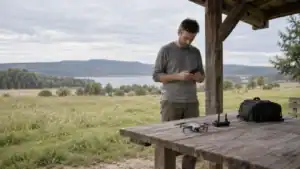
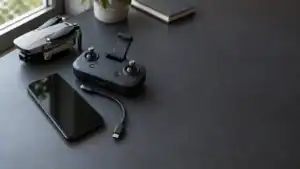
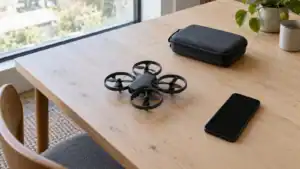
The HOVERAir X1 PRO is the best follow-me drone for most runners, cyclists, and skiers because it is built around autonomous sports tracking rather than conventional stick flying. DJI Neo 2 is the stronger choice when obstacle sensing matters more, provided U.S. buyers verify the seller, regional version, returns, and support before ordering. DJI Neo is the budget pick for open, predictable routes.
The important decision is not which drone has the longest specification list. It is whether the aircraft can match your speed, see the subject, handle the route, and leave you a safe way to recover when tracking stops. None of these drones makes a wooded trail, crowded park, ski resort, or windy ridgeline automatically safe.
Quick Verdict
Start with the route, then choose the drone. X1 PRO has the strongest sports-specific workflow, Neo 2 has the most complete sensing package, and Neo makes sense only when the route is open enough to compensate for its lack of obstacle avoidance.
Best for
Solo creators filming running, road or gravel cycling, and skiing on controlled, open routes.
Not ideal for
Dense woods, crowds, water sports, heavy precipitation, or any route where losing the subject creates an immediate hazard.
Main thing to verify
Confirm the exact flight mode, sensing coverage, bundle contents, regional support, and recovery behavior before the first full-speed run.
FPV Drone's three strongest follow-me recommendations
Featured gear
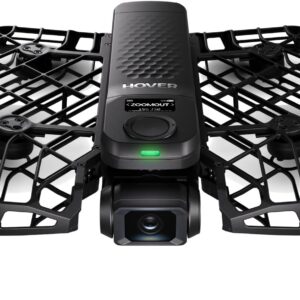
HOVERAir X1 PRO Standard 4K Follow-Me Camera
The HOVERAir X1 PRO Standard is a 192 g self-flying camera with automated subject tracking, horizontal 4K/60 video, vertical 2.7K/60 recording and a protected foldable design for sports and solo filming. Best for: Running,…
The HOVERAir X1 PRO Standard is a 192 g self-flying camera with automated subject tracking, horizontal 4K/60 video, vertical 2.7K/60 recording and a protected foldable design for sports and solo filming.
- Best for
- Choose the X1 PRO Standard for compact, controller-free sports tracking and 4K/60 recording. The…
- Product type
- Camera Drones, Drones, Under 249g Drones
- Best for
- Choose the X1 PRO Standard for compact, controller-free sports tracking and 4K/60 recording. The…
- Product type
- Self-flying follow-me camera

Featured gear
DJI Neo 2 Follow-Me Camera Drone
The DJI Neo 2 is a 151 g follow-me camera drone with palm takeoff and return, gesture control, ActiveTrack, omnidirectional sensing, a two-axis gimbal, 4K/60 fps video, vertical capture, and 49 GB of internal…
The DJI Neo 2 is a 151 g follow-me camera drone with palm takeoff and return, gesture control, ActiveTrack, omnidirectional sensing, a two-axis gimbal, 4K/60 fps video, vertical capture, and 49 GB of internal storage.
- Best for
- Best for beginners and solo creators who want a compact controller-free follow-me drone with…
- Skill level
- Beginner
- Product type
- Beginner Drones, Camera Drones, DJI Drones, DJI flying camera, Drones, Under 249g Drones
- Best for
- Beginners and solo creators who want a compact controller-free follow-me drone with stabilized 4K/60…
- Skill level
- Beginner
- Product type
- Follow-Me Camera Drone

Featured gear
DJI Neo Drone
The DJI Neo is a 135 g compact camera drone with palm takeoff, subject tracking, built-in propeller guards, 4K/30fps recording, and controller-free or optional remote and goggles control. Best for: Beginners, travelers, family clips,…
The DJI Neo is a 135 g compact camera drone with palm takeoff, subject tracking, built-in propeller guards, 4K/30fps recording, and controller-free or optional remote and goggles control.
- Best for
- Compact first-generation DJI flying camera for palm launch, subject tracking, short self-filming clips, and…
- Skill level
- Beginner
- Product type
- 135 g selfie drone, Beginner Drones, Camera Drones, DJI Drones, DJI flying camera, Drones,…
- Best for
- Compact first-generation DJI flying camera for palm launch, subject tracking, short self-filming clips, and…
- Skill level
- Beginner
- Product type
- Compact Camera and Selfie Drone
The Three Follow-Me Drones Worth Considering
All three picks can launch without a conventional controller and keep a person in frame. Their practical differences are route tolerance, sports-specific automation, image stabilization, and what happens when the environment becomes difficult.
1. HOVERAir X1 PRO: Best Overall for Action Sports
The 192 g X1 PRO is the clearest first choice for this job. HOVERAir publishes dedicated Cycling and Ski modes, a maximum tracking speed of 42 km/h (26 mph), a two-axis mechanical gimbal with electronic stabilization, 4K video up to 60 fps, and a 16-minute maximum flight time. Those are manufacturer maximums under controlled conditions, not a promise that every fast run will produce 16 minutes of usable footage.
The more important distinction is workflow. You can palm-launch the aircraft, choose an autonomous mode, and focus on the activity. In TechRadar's attributed hands-on cycling test, the X1 PRO and PROMAX kept up without difficulty. The reviewer also found that the optional Beacon added a useful live view and physical controls, although tracking was effective without it.
The Standard package listed on FPV Drone includes one Smart Battery, not the Beacon, Joysticks, charging hub, or a cold-weather bundle. One battery is enough to learn the system, but a spare is the first accessory to plan for if the goal is a full ride or ski session.
2. DJI Neo 2: Best Sensing, With a U.S. Buying Caveat
DJI Neo 2 weighs about 151 g and adds a two-axis gimbal, 4K/60 video, a published 19-minute maximum flight time, ActiveTrack with a cycling option, and omnidirectional vision supported by forward-facing LiDAR and a downward infrared system. It is the strongest pick here for a buyer who prioritizes obstacle detection and wants a controller-free follow camera.
That sensing package reduces risk, but it does not turn branches, cables, people, or blind corners into nonissues. DJI also warns that sensing works only under suitable conditions and does not replace pilot judgment. U.S. availability and manufacturer support have been less straightforward than the feature list, so read the current DJI Neo 2 U.S. availability and warranty guide before relying on a marketplace listing.
3. DJI Neo: Best Budget Pick for Open Routes
DJI Neo is the least expensive way into this style of filming, and its 135 g body is easy to carry. It supports Follow mode, palm takeoff and landing, 4K/30 video, and a published 18-minute maximum flight time. It can work well for a runner, hiker, or casual cyclist on a broad, predictable path.
The limitation is decisive: DJI states that Neo has no obstacle avoidance. Its downward vision system helps positioning, but it does not watch for trees in the direction of travel. The full DJI Neo Follow mode guide explains where tracking is useful and why open space matters.
Choose by Route, Not Marketing
A published top speed says whether a drone may keep pace in ideal conditions. It does not say whether that drone can safely negotiate the route. This decision matrix starts with the environment and gives speed its proper place.
| Route or activity | Best match | Why it fits | Preflight decision |
|---|---|---|---|
| Running on an open path | DJI Neo | Lower speed and a predictable line make the budget model's limits easier to manage. | Use a clear route, confirm recording, and keep the aircraft in sight. |
| Road or gravel cycling | HOVERAir X1 PRO | Dedicated Cycling mode and a higher published tracking speed suit steady forward movement. | Choose a traffic-free section and rehearse at reduced speed. |
| Open singletrack | DJI Neo 2 | Its broader sensing coverage gives more margin than X1 PRO or Neo. | Walk the line first. Thin branches and sudden turns can still defeat sensing or tracking. |
| Dense wooded trail | None of these autonomously | Occlusion, narrow clearance, and fine branches combine several failure modes at once. | Use a stationary camera, a body-mounted camera, or a skilled second pilot where legal and safe. |
| Open ski slope | HOVERAir X1 PRO | Dedicated Ski mode accounts for skier posture, bright snow, and slope movement. | Check resort rules, wind, precipitation, battery temperature, and recovery options. |
| Water sport or shoreline | None of these as the default | X1 PRO is not waterproof, and reflective water can challenge positioning systems. | Do not treat an over-water mode as waterproofing or crash recovery. |
The practical takeaway is simple: sensing can widen the routes you consider, but it never removes the need to inspect the route and plan a lost-tracking response.
Compare the Three Follow-Me Picks
Verify the exact bundle, battery count, seller, regional support, and return terms before ordering.
HOVERAir X1 PRO Standard
Best sports-specific workflow for cycling, skiing, and faster open routes.
DJI Neo 2
Best sensing package, but U.S. buyers must verify seller and support terms.
DJI Neo
Best low-cost choice for open, slower, predictable routes.
Which Drone Fits Your Sport?
Running and Hiking
Running on an open path is the easiest place to begin. The subject moves at a relatively consistent speed, and a wide trail gives vision tracking room to recover from small framing errors. DJI Neo is sufficient when there are no overhead branches, nearby people, cars, or abrupt switchbacks. Move to Neo 2 when the route contains more obstacles, and choose X1 PRO when pace, terrain, or shot variety becomes more demanding.
Road, Gravel, and Mountain Biking
X1 PRO is the most purpose-built choice for road and gravel cycling. Its Cycling mode and published 42 km/h tracking ceiling give it room for sustained movement, but the number is not a recommended riding speed. Wind, elevation changes, turns, subject visibility, and mode-specific limits all reduce the margin.
Mountain biking is a different problem. Open singletrack may suit Neo 2 because its sensing covers more directions. Dense woods do not. A sensor that recognizes a tree trunk may still miss a thin branch, and a drone that sees the obstacle may stop even though the rider continues out of frame. On technical trails, a body-mounted action camera or a second pilot at a planned filming point is usually the more dependable choice.
Skiing and Snowboarding
HOVERAir's Ski mode is the strongest product-specific reason to choose X1 PRO. The manufacturer says the mode is tuned for changing skier posture, slope terrain, and bright snow. Its official guide also says the aircraft hovers if tracking is lost and returns near the subject after three seconds of stillness.
That does not make the standard package winter-ready in every condition. HOVERAir warns that melted snow can damage the aircraft, recommends snow-protection stickers, and provides a separate cold-weather battery workflow. Check the exact battery and accessories in the package you are buying. Keep batteries within their specified temperature range and never launch into heavy snow or wind merely because a maximum wind-resistance number looks adequate.
Skate Parks, Team Sports, and Water
These are poor solo-follow environments. Skate parks combine people, hard surfaces, abrupt direction changes, and low-altitude obstacles. Team sports add uninvolved participants and unpredictable movement. Water adds glare, wind, and unrecoverable consequences. X1 PRO is explicitly not waterproof. If the aircraft or app offers an over-water positioning mode, that changes how the sensors behave. It does not seal the electronics.
What Obstacle Sensing Can and Cannot Do
“Obstacle avoidance” is too broad to be useful on its own. Buyers need to know which directions are covered, which modes use the sensors, the speed limits at which detection operates, and whether the aircraft brakes, reroutes, hovers, or continues.
- HOVERAir X1 PRO: rear time-of-flight proximity sensing is not omnidirectional avoidance. HOVERAir says obstacle detection is available only in Zoom Out, Dolly Track, and Dolly Zoom modes, with an X1 PRO detection-speed limit of 1.5 m/s. Do not assume it protects a high-speed Follow or Cycling run.
- DJI Neo 2: omnidirectional vision, forward LiDAR, and downward infrared sensing provide the broadest coverage here. Sensing still depends on lighting, surface detail, obstacle size, flight mode, and speed. It is assistance, not permission to ignore the route.
- DJI Neo: downward positioning helps it hold position over suitable surfaces. DJI explicitly says it has no obstacle avoidance, so the pilot must provide the missing clearance judgment.
A Better First-Session Workflow
The first successful sports clip should be deliberately boring. Learn the start, lock, recording, stop, and recovery sequence at walking speed before asking the system to manage a moving bicycle or ski run.
- Update before leaving home. Update the app and aircraft firmware, then restart both. Confirm that the flight modes described in the current manual actually appear on your device.
- Inspect the aircraft. Check propellers and guards, clean every vision and proximity sensor, verify storage space, and start with a fully charged battery.
- Choose the failure response. Know whether lost tracking causes hover, return, landing, or a prompt for manual control. Confirm the home point and Return to Home behavior when the control setup supports it.
- Verify recording. Look for the recording indicator before moving. A TechRadar DJI Neo test found that a button-initiated autonomous flight completed but failed to save video once, while app-initiated flights recorded reliably. One report is not a failure rate, but it is a good reason to check the indicator every time.
- Walk the intended line. Test the exact direction, subject position, follow distance, height, and lighting at low speed. Do not substitute a parking-lot test for a wooded trail or snowy slope.
- Use a short first pass. Stop while the battery still has a generous reserve, review the clip, and correct framing or route problems before increasing speed.
- Assign recovery responsibility. Decide who will take control, where the aircraft can hover safely, and how it will be retrieved if the subject leaves the frame.
Plan Batteries Around Attempts, Not Maximum Minutes
Published maximum flight time is measured under specific test conditions and usually ends at a lower reserve than a cautious sports session should use. Wind, cold, repeated acceleration, hovering while you reset, and time spent establishing tracking all reduce useful recording time. For X1 PRO Standard, one spare battery is the sensible first addition. For any of the three, count the number of practice passes and planned takes, then leave a recovery reserve for each pack.
U.S. Rules That Still Apply to a Follow-Me Flight
Sub-250 g does not mean rule-free. In the United States, the FAA's registration exception applies only to drones under 250 g flown exclusively under the recreational exception. Recreational flyers still need to pass TRUST, follow an FAA-recognized community-based organization's safety guidelines, obey airspace restrictions, and keep the drone within visual line of sight or use a co-located visual observer in direct communication.
Flights for work, a business, or another nonrecreational purpose generally fall under Part 107. Part 107 aircraft must be registered regardless of sub-250 g weight, and drones that are required to be registered must comply with Remote ID unless an exception applies. Check the current FAA rules and the aircraft's current Remote ID support before the job.
Most importantly, autonomous tracking does not replace the remote pilot. An athlete moving quickly through a route may be unable to monitor the aircraft and airspace continuously. A dedicated remote pilot and, when needed, a visual observer can be the difference between a feature that works technically and an operation that is safe and compliant.
Final Verdict
Buy HOVERAir X1 PRO if sports tracking is the primary job. Its dedicated Cycling and Ski modes, higher tracking ceiling, compact enclosed design, and controller-free workflow make it the most coherent choice for runners, cyclists, and skiers who plan their routes. Budget for at least one spare battery, and add the Beacon only when its live view, recovery, and control functions solve a real need.
Choose DJI Neo 2 when broader obstacle sensing matters more than the cleaner U.S. purchase path, but verify the seller, region, support, and return policy before ordering. Choose DJI Neo only for open, slower routes where its lack of obstacle avoidance is an acceptable and actively managed limitation.
No pick is suitable for every sport. If the route is dense, crowded, wet, or impossible to keep in sight, change the filming plan instead of asking automation to absorb the risk.
Best overall sports-follow pick
The X1 PRO Standard includes the aircraft and one Smart Battery. Verify whether you also need a spare battery, charging hub, Beacon, or winter accessories.
Frequently Asked Questions
Can a follow-me drone film me while I ride or ski alone?
It may be technically capable of doing so, but the operator remains responsible for the flight. In the United States, visual-line-of-sight and airspace rules still apply. Fast movement can make it difficult for the athlete to monitor the drone and surroundings, so a dedicated remote pilot or co-located visual observer may be the safer and more compliant plan.
Does obstacle avoidance make a drone safe on forest trails?
No. Vision and LiDAR can reduce collision risk, but thin branches, cables, low light, occlusion, speed, and mode-specific sensor limits remain. Walk the route first and reject any line that depends on the sensors detecting every obstacle.
Do I have to register a follow-me drone under 250 g in the U.S.?
Not when it is under 250 g and flown exclusively under the recreational exception, but all other recreational rules still apply. Part 107 aircraft must be registered regardless of weight, and registered aircraft generally must comply with Remote ID.
Can I use HOVERAir X1 PRO in rain, snow, or over water?
X1 PRO is not waterproof. HOVERAir offers a Ski mode, snow-protection accessories, a cold-weather battery workflow, and an OmniTerrain setting for certain surfaces, but none of those features makes moisture harmless. Avoid rain and heavy snow, follow the official winter instructions, and treat over-water flight as a high-consequence operation.
Sources
- HOVERAir X1 PRO and PROMAX official product and specification page: verified weight, camera, tracking speed, flight time, sensing limits, sports modes, storage, wind rating, and waterproof status.
- HOVERAir Ski Mode official guide: verified mode behavior, winter preparation, lost-tracking response, cold-weather battery guidance, and moisture warnings.
- DJI Neo official FAQ: verified Follow mode, palm operation, camera capability, human subject confirmation, and the lack of obstacle avoidance.
- DJI Neo 2 official manufacturer listing: verified weight, ActiveTrack cycling option, omnidirectional sensing, video capability, flight-time claim, and tracking-speed claim.
- FAA recreational flyer guidance and FAA drone registration guidance: verified TRUST, registration, airspace, visual-line-of-sight, visual-observer, and Remote ID requirements.
- TechRadar HOVERAir X1 PRO hands-on review and TechRadar DJI Neo hands-on review: attributed real-world cycling, Beacon, tracking, and recording-workflow observations.
Last checked: August 21, 2026