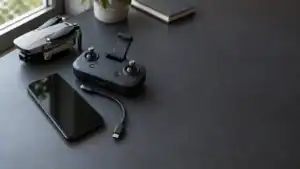
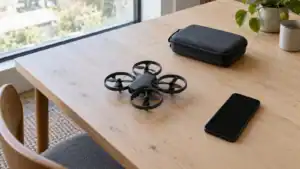
Choose DJI Neo 2 if you primarily want the drone to film you. Choose DJI Mini 4K if you primarily want to pilot the drone and film the landscape. Neo 2 is better for subject tracking, palm launch, gesture control, guarded convenience, 4K/60 video, and vertical content. Mini 4K is better for longer flights, deliberate aerial composition, RAW photos, expandable storage, and consistently level footage from a three-axis gimbal.
Neither is the universal winner. The right purchase depends less on headline camera resolution and more on who controls the shot: Neo 2 can act like an automated camera operator, while Mini 4K gives a human pilot more time and stability to build the shot manually.
Quick verdict
Buy DJI Neo 2 for
Follow-me filming, solo content, running or cycling clips, palm and gesture control, quick vertical video, and flexible controller-free use.
Buy DJI Mini 4K for
Scenic aerial footage, travel views, longer sessions, RAW photos, three-axis stabilization, and conventional stick-controlled flying.
Neo 2's decisive advantage
It can track a person and adds omnidirectional obstacle sensing. Mini 4K has neither ActiveTrack nor directional obstacle avoidance.
Mini 4K's decisive advantage
Its 31-minute flight-time rating and three-axis gimbal provide more time and a steadier platform for composed aerial shots.
Best one-line buying rule: Neo 2 is for filming the person; Mini 4K is for filming the place.
DJI Neo 2

Featured gear
DJI Neo 2 Follow-Me Camera Drone
The DJI Neo 2 is a 151 g follow-me camera drone with palm takeoff and return, gesture control, ActiveTrack, omnidirectional sensing, a two-axis gimbal, 4K/60 fps video, vertical capture, and 49 GB of internal…
The DJI Neo 2 is a 151 g follow-me camera drone with palm takeoff and return, gesture control, ActiveTrack, omnidirectional sensing, a two-axis gimbal, 4K/60 fps video, vertical capture, and 49 GB of internal storage.
- Best for
- Best for beginners and solo creators who want a compact controller-free follow-me drone with…
- Skill level
- Beginner
- Product type
- Beginner Drones, Camera Drones, DJI Drones, DJI flying camera, Drones, Under 249g Drones
- Best for
- Beginners and solo creators who want a compact controller-free follow-me drone with stabilized 4K/60…
- Skill level
- Beginner
- Product type
- Follow-Me Camera Drone
DJI Mini 4K

Featured gear
DJI Mini 4K Drone: Beginner 4K Camera Drone Under 249g
The DJI Mini 4K is an entry-level DJI camera drone built for beginners who want stabilized 4K footage without jumping into the higher-priced Mini models. It weighs under 249 g, supports 4K/30fps video, uses…
The DJI Mini 4K is an entry-level DJI camera drone built for beginners who want stabilized 4K footage without jumping into the higher-priced Mini models. It weighs under 249 g, supports 4K/30fps video, uses a 3-axis gimbal, and includes GPS-assisted flight features like Return to Home.
- Best for
- Best for new pilots who want a lightweight DJI camera drone with stabilized 4K…
- Skill level
- Beginner
- Product type
- Beginner Drones, Camera Drones, DJI Drones, Drones, Under 249g Drones
- Best for
- New pilots who want a lightweight DJI camera drone with stabilized 4K video, GPS-assisted…
- Skill level
- Beginner
- Product type
- Camera Drone
Research basis: This is a research-based comparison, not a hands-on flight test. Specifications, functions, compatibility, and current availability context were checked against DJI product and support documentation on July 24, 2026. Buyer recommendations are FPV Drone's interpretation of those verified differences.
DJI Neo 2 vs DJI Mini 4K specifications
The numbers reveal two very different design priorities. Neo 2 invests its weight and battery capacity in guarded propellers, sensing, tracking, and multiple control methods. Mini 4K uses a folding open-propeller design, a larger battery, and a three-axis gimbal to support longer conventional camera flights.
| Decision factor | DJI Neo 2 | DJI Mini 4K | Category winner |
|---|---|---|---|
| Primary purpose | Automated personal filming and follow-me content | Conventional aerial photography and video | Depends on use |
| Takeoff weight | 151 g without digital transceiver; 160 g with it | Under 249 g | Neo 2 for minimum weight |
| Camera sensor | 1/2-inch CMOS, 12 MP, f/2.2 | 1/2.3-inch CMOS, 12 MP, f/2.8 | Neo 2 on sensor and lens specification |
| Maximum video | 4K/60 in normal configurations; 4K/100 with supported remote or motion-control setups | 4K/30; 2.7K and 1080p up to 60 fps | Neo 2 |
| Vertical video | 2.7K 9:16 at up to 60 fps | No native vertical recording mode | Neo 2 |
| Photo format | 12 MP JPEG | 12 MP JPEG and DNG RAW | Mini 4K |
| Gimbal | Two-axis mechanical tilt and roll plus electronic stabilization | Three-axis mechanical tilt, roll, and pan | Mini 4K |
| Subject tracking | ActiveTrack, SelfieShot, palm and gesture control | No continuous subject tracking; preset QuickShots only | Neo 2 |
| Obstacle sensing | Omnidirectional vision with forward LiDAR and downward infrared sensing | Downward infrared sensing for positioning; no directional obstacle avoidance | Neo 2 |
| Propeller protection | Full-coverage guarded design | Open propellers by default; optional guard available | Neo 2 for close-range convenience |
| Maximum flight time | Approx. 19 minutes; about 17 with propeller guards | Up to 31 minutes | Mini 4K |
| Wind resistance | 10.7 m/s, Level 5 | 10.7 m/s, Level 5 | Tie on published rating |
| Control options | Palm, gestures, phone, compatible remotes, goggles, and motion control | DJI RC-N1 or RC-N1C with a connected phone | Neo 2 for flexibility; Mini 4K for a simple standard setup |
| Video transmission | Phone Wi-Fi or optional O4 digital transceiver; up to 10 km FCC with a compatible controller | O2 transmission; up to 10 km FCC with the included-style controller | Neo 2 for options; Mini 4K for out-of-box simplicity |
| Storage | 49 GB internal; no microSD expansion | No useful internal recording storage; microSD up to 256 GB | Neo 2 for convenience; Mini 4K for removable capacity |
| Return to Home | Available with supported control configurations | GPS-based Smart RTH | Mini 4K for its conventional controller-first workflow |
The important camera distinction:
Neo 2 has the newer video specification, but Mini 4K is the steadier traditional aerial platform. Buyers should not reduce this decision to 4K/60 versus 4K/30 or two-axis versus three-axis alone. The subject, flight style, and final edit determine which camera system is more useful.
| Compare | DJI Neo 2 Follow-Me Camera Drone | DJI Mini 4K Drone: Beginner 4K Camera Drone Under 249g |
|---|---|---|
| Product |
View DJI Neo 2 Follow-Me Camera Drone |
View DJI Mini 4K Drone: Beginner 4K Camera Drone Under 249g |
| Best for | Best for beginners and solo creators who want a compact controller-free follow-me drone with stabilized 4K/60 fps video, obstacle sensing, gesture control, and palm launch. Its main limitations are short one-battery endurance, no remote or Digital Transceiver in this package, no microSD or RAW capture, and unresolved regional support considerations for U.S. buyers. | Best for new pilots who want a lightweight DJI camera drone with stabilized 4K video, GPS-assisted flight, Return to Home, and beginner-friendly controls. Skip it if you want true FPV freestyle, racing, obstacle avoidance, Follow Me, or a higher-end low-light camera. |
| Skill level | Beginner | Beginner |
| Product type | Beginner Drones, Camera Drones, DJI Drones, DJI flying camera, Drones, Under 249g Drones | Beginner Drones, Camera Drones, DJI Drones, Drones, Under 249g Drones |
| Product page | View product | View product |
| Retailer | Check Price | Check Price |
These drones solve different filming problems
DJI Mini 4K follows the familiar camera-drone formula. Unfold the arms, connect a phone to the controller, establish a home point, take off, and pilot the aircraft to compose aerial shots. The drone stays where the pilot puts it, the three-axis gimbal keeps the horizon stable, and the 31-minute rating gives the operator time to explore angles.
DJI Neo 2 is closer to a flying personal camera. It can launch from a palm, respond to gestures, track a person, perform automated moves, return to a palm, or fly through a phone, conventional controller, goggles, or motion controller. Its guarded design and sensing system support quick, close-range filming in ways Mini 4K was not designed to match.
This difference changes the buying question. Someone who wants hiking, running, cycling, family, or solo-travel clips may get more usable footage from Neo 2 even though it has a shorter flight time and one fewer mechanical gimbal axis. Someone who wants shorelines, farms, houses, landscapes, or slow establishing shots may prefer Mini 4K even though it lacks tracking and records at a lower maximum 4K frame rate.
Follow-me filming: Neo 2 wins by a wide margin
Neo 2 is built to keep a person in frame. ActiveTrack supports moving-subject filming, SelfieShot automates solo compositions, and gesture control reduces the need to hold a phone or controller. DJI lists a maximum 12 m/s speed in tracking status under its test conditions, which broadens the useful range of activities beyond walking.
Mini 4K QuickShots are not ActiveTrack
Mini 4K can recognize a subject for Dronie, Rocket, Circle, Helix, and Boomerang QuickShots. Those are preset camera movements with a defined beginning and end. They do not turn Mini 4K into a continuous follow-me drone, and DJI does not list ActiveTrack for this model.
This distinction is easy to miss because both products use automated shooting modes. QuickShots are useful when the pilot stops, creates clearance, selects a subject, and runs a short routine. ActiveTrack is intended to keep filming while the subject continues moving. If following is central to the purchase, Neo 2 is the clear choice.
Neo 2 still requires route planning
Omnidirectional sensing makes Neo 2 more suitable for automated movement, but it is not collision-proof. Vision systems depend on lighting, surface texture, speed, and obstacle size. Thin wires, small branches, reflective surfaces, low light, and sudden movement still demand caution. Sport mode also disables obstacle sensing.
The full DJI Neo 2 review looks more closely at its tracking, sensing, camera, bundles, and current seller considerations. If you are deciding whether its upgrades justify choosing it over the original Neo, use the DJI Neo vs DJI Neo 2 comparison.
Camera quality: newer video hardware versus steadier aerial framing
Neo 2 has the stronger video specification. Its 1/2-inch 12 MP sensor is slightly larger than Mini 4K's 1/2.3-inch sensor, its f/2.2 lens is brighter than f/2.8, and it records 4K at up to 60 fps in normal configurations. Supported remote and motion-control setups can reach 4K/100. For social content, it also records 2.7K vertical video at up to 60 fps.
Mini 4K tops out at 4K/30, but its camera sits on a full three-axis mechanical gimbal. That extra pan axis gives the camera more mechanical isolation from aircraft yaw and helps produce the slow, level movement expected from a conventional aerial camera. It also captures DNG RAW photos, AEB, and panoramas, giving still photographers more post-processing flexibility.
Choose Neo 2 when movement is in front of the camera
For a runner, cyclist, child, pet, vehicle, or creator speaking to camera, higher frame rates and automated tracking matter more than long hover time. Neo 2 can keep the subject framed, record smoother action, and output higher-resolution vertical footage without relying on a manual pilot to fly backward or sideways.
Choose Mini 4K when the aircraft creates the movement
For a reveal over a ridge, a slow orbit around a building, a shoreline pass, or a high establishing shot, the pilot controls the movement. Mini 4K provides more flight time to find the angle and a three-axis gimbal to keep the camera stable through yaw corrections. RAW photos also make it the better still-image tool despite the older sensor specification.
Neither is a professional imaging platform
Both use small 12 MP sensors, fixed-aperture lenses, and consumer-focused camera systems. Neo 2 is optimized for automated personal video, while Mini 4K is an entry-level aerial camera. Buyers who need a larger sensor, advanced color profiles, true vertical gimbal rotation, or more sophisticated obstacle avoidance should compare higher-tier DJI models rather than forcing either budget drone into that role.
For a deeper interpretation of the Mini model's camera, range, battery, gimbal, and missing features, see the DJI Mini 4K specifications guide.
Compare Current Prices
Compare complete packages rather than aircraft-only prices. Neo 2 may need a digital transceiver and controller, while Mini 4K packages normally include a conventional controller but still need a microSD card.
Flight time, range, and controller experience
Mini 4K provides far more time per battery
DJI rates Mini 4K for up to 31 minutes and Neo 2 for approximately 19 minutes without the extra propeller guards referenced in DJI's test notes. That 12-minute difference is large enough to change how a flight feels. Mini 4K gives a beginner more time to establish GPS, climb, compose, repeat a shot, and return with reserve. Neo 2 is better suited to shorter clips and repeated nearby launches.
Real flight time will be lower once the pilot maintains a landing reserve and accounts for wind, acceleration, recording, temperature, and battery age. The relative advantage still remains. If session length matters, the DJI Mini 4K battery guide explains when one, two, or three packs make sense.
Both advertise a 10 km transmission maximum, but the systems differ
Mini 4K uses DJI O2 and a conventional RC-N1 or RC-N1C controller, with an advertised maximum of 10 km under unobstructed, interference-free FCC test conditions. Neo 2 can use phone Wi-Fi or add its removable O4 digital transceiver for compatible controllers and goggles, also reaching an advertised 10 km FCC maximum.
The headline distance should not determine a safe mission. Battery reserve, wind, terrain, buildings, radio interference, visual-line-of-sight rules, and return planning normally reduce a sensible operating radius. Mini 4K's practical range is explored in the DJI Mini 4K range guide.
Mini 4K is simpler if you want a normal camera-drone controller
The standard Mini 4K package documented by DJI includes the RC-N1C controller. The phone connects by cable, the sticks control the aircraft, and the DJI Fly screen provides the camera view, map, battery information, and flight settings. This is predictable and easy to understand.
Neo 2 is more flexible, but bundle details matter
Neo 2 supports palm control, gesture control, phone control, RC 2, RC-N2, RC-N3, compatible goggles, Motion 3, and FPV Remote Controller 3 configurations. That flexibility is valuable, but Neo 2 requires its removable digital transceiver for a remote controller or goggles. A Drone Only package may include neither the transceiver nor a remote, so verify every line of the bundle before comparing totals.
Obstacle sensing, propeller guards, and beginner safety
Neo 2 has the stronger sensing system. DJI specifies omnidirectional monocular vision, forward-facing LiDAR, and downward infrared sensing. In supported conditions, the obstacle-avoidance action can be set to brake or bypass. Full-coverage propeller protection also reduces direct contact with the blades during close-range handling.
Mini 4K uses downward infrared sensing to support low-altitude positioning, but it has no forward, backward, lateral, or upward obstacle-avoidance system. Smart Return to Home does not change that limitation. The pilot must set an RTH altitude above surrounding obstacles and monitor the route.
Do not confuse positioning sensors with obstacle avoidance.
Mini 4K can hover stably and return toward its home point, but it cannot see and route around a tree in front of it. Neo 2 can sense in multiple directions, yet its system still depends on light, contrast, speed, and obstacle size. Both require active supervision.
Neo 2 is more forgiving around the operator
Palm launch, Palm Return, guarded propellers, and sensing make Neo 2 more convenient for close personal filming. That does not make crowded spaces appropriate. The pilot should still avoid faces, crowds, moving vehicles, confined rooms, water, and routes without safe clearance.
Mini 4K rewards deliberate flight planning
Open propellers are efficient and help Mini 4K achieve its longer endurance, but they require a clear takeoff area and more care around people and objects. DJI offers a compatible 360-degree propeller guard, although accessories can affect performance and may change how local weight thresholds apply. Beginners should complete activation, firmware updates, compass or IMU prompts, RTH settings, and a low first flight before attempting longer routes. The Mini 4K setup checklist walks through that process.
Bundles, storage, and ownership differences
Neo 2 is ready to record without a memory card
Its 49 GB of built-in storage supports immediate recording and fast transfers, but there is no microSD expansion. Once the storage fills, footage must be moved or deleted. The convenience is excellent for short personal clips, though high-frame-rate 4K can consume space quickly.
Mini 4K requires a microSD card for full-resolution recording
DJI's support guide says Mini 4K does not include internal recording storage and supports microSD cards up to 256 GB. Removable storage is better for long sessions and easy media swaps, but forgetting the card can prevent normal full-resolution shooting. Add an approved card to the real purchase total.
The standard packages start from different assumptions
Mini 4K is normally sold as a conventional camera-drone kit with an RC-N1C controller and one DJI Mini 2 Intelligent Flight Battery. Neo 2 configurations range from a controller-free Drone Only package to RC-N3 and motion-control bundles. One listing can therefore appear cheaper while lacking the hardware needed for the buyer's intended control method.
Check these items before comparing value
- Control method: Decide whether palm and phone control are enough or whether you need a remote.
- Neo 2 transceiver: Confirm it is included if you plan to use a controller or goggles.
- Battery count: Mini 4K lasts longer per pack, but either drone benefits from a multi-battery kit.
- Storage: Neo 2 includes internal storage; Mini 4K needs a compatible microSD card.
- Seller and region: Verify warranty, return policy, activation region, and DJI Care eligibility.
- Current inventory: DJI's U.S. store listed Mini 4K but showed it out of stock when checked, while Neo 2's official product presence varied by region.
Use the DJI Neo 2 bundle guide to compare the transceiver, controller, batteries, charging equipment, and support path rather than relying on the first advertised package price.
Which one should you buy?
Buy DJI Neo 2 if you want to be in the video
- You want the drone to follow you while walking, running, cycling, or traveling.
- You often create Reels, Shorts, or other vertical content.
- You value palm launch and quick controller-free filming.
- You want directional obstacle sensing and guarded propellers.
- You may later add a conventional controller, goggles, or motion control.
- You prefer short automated clips over long exploratory flights.
Neo 2 is the stronger content-creator tool because it reduces the number of jobs the operator must perform at once. It can position itself, keep a subject framed, and capture movement without a second person piloting the shot.
Buy DJI Mini 4K if you want to compose the video
- You want scenic views, real-estate perspectives, travel footage, or establishing shots.
- You prefer a familiar two-stick controller and map-based flight workflow.
- You need substantially longer flight time per battery.
- You want a three-axis gimbal for slow, level aerial movement.
- You shoot RAW photos or want removable memory cards.
- You do not need the aircraft to follow a moving person continuously.
Mini 4K remains a strong beginner camera drone because it gives the pilot time, range, and stable camera movement without adding complex professional features. The DJI Mini 4K review covers its strengths, missing features, and accessory requirements in more detail.
Consider another model if you want both jobs in one aircraft
Buyers who need long flight time, a three-axis gimbal, advanced subject tracking, and robust omnidirectional avoidance are asking for a higher-tier camera drone. Neo 2 and Mini 4K are compelling partly because each concentrates on a narrower job at a lower weight and cost. Neither combines all of those capabilities.
| Use case | Better choice | Main reason |
|---|---|---|
| Running or cycling follow shots | DJI Neo 2 | ActiveTrack, sensing, and faster subject tracking |
| Solo travel videos | DJI Neo 2 | Palm launch, automated framing, and vertical video |
| Landscape and shoreline footage | DJI Mini 4K | Long flight time and three-axis gimbal |
| RAW aerial photography | DJI Mini 4K | DNG RAW support and panoramic modes |
| Quick family clips nearby | DJI Neo 2 | Guarded design and minimal setup |
| Learning conventional drone controls | DJI Mini 4K | Standard controller-first camera-drone workflow |
| FPV goggles and motion control | DJI Neo 2 | Compatible FPV control options with the required hardware |
| One battery for a relaxed flight | DJI Mini 4K | 31-minute manufacturer rating versus 19 minutes |
Final verdict: choose the filming style before the drone
DJI Neo 2 is the better follow-me drone. It can track a person, launch and return to a palm, respond to gestures, record 4K/60 and 2.7K vertical video, sense obstacles in multiple directions, and work through several control systems. For solo creators and activity footage, those capabilities are more valuable than a longer battery rating.
DJI Mini 4K is the better traditional camera drone. Its three-axis gimbal, 31-minute maximum flight time, RAW photos, expandable storage, GPS-based controller workflow, and stable scenic-flight behavior make it better for deliberate aerial composition. It does not follow people continuously and does not provide directional obstacle avoidance.
If the drone should act as your camera operator, buy Neo 2. If you want to act as the aerial camera operator, buy Mini 4K.
Choose the Right DJI Drone
Check the exact package, battery count, controller, storage needs, region, and seller support before comparing the final cost.
Frequently asked questions
Can DJI Mini 4K follow you?
No. DJI Mini 4K can recognize a subject during preset QuickShots, but it does not support continuous ActiveTrack follow-me filming. Neo 2 is the appropriate choice when the aircraft needs to keep following a moving person.
Which has the better camera, DJI Neo 2 or Mini 4K?
Neo 2 has the stronger video specification with a slightly larger sensor, brighter lens, 4K/60 recording, and 2.7K vertical video. Mini 4K has the better traditional aerial-camera setup because its three-axis gimbal produces steadier controlled movement and it captures DNG RAW photos. The better camera depends on whether the subject moves or the aircraft creates the movement.
Which drone flies longer?
DJI Mini 4K. DJI rates it for up to 31 minutes, compared with approximately 19 minutes for Neo 2 under their respective test conditions. Real flight time is lower after allowing for wind, maneuvering, temperature, and a safe landing reserve.
Does DJI Mini 4K have obstacle avoidance?
No. It has downward infrared sensing that supports positioning, but it cannot detect and avoid obstacles in front, behind, beside, or above the aircraft. Neo 2 has omnidirectional sensing with forward LiDAR, although that system also has environmental and flight-mode limits.
Can DJI Neo 2 fly with a normal remote controller?
Yes. DJI lists RC 2, RC-N2, and RC-N3 support for the Neo series. Neo 2 requires its removable digital transceiver when used with a remote controller or goggles, so confirm that the exact package includes the necessary hardware.
Which is easier for a complete beginner?
Neo 2 is easier for immediate automated clips because it supports palm launch, gestures, and guarded propellers. Mini 4K is easier for learning the standard camera-drone workflow because its normal package includes a conventional controller and its longer battery life gives the pilot more time to practice. The easier model depends on whether the beginner wants automated filming or manual piloting.
Sources
- DJI Neo 2 official specifications: Verified weight, speed, flight time, camera modes, gimbal, sensing, transmission, storage, and battery specifications.
- DJI Neo 2 official product page: Verified palm and gesture control, SelfieShot, ActiveTrack, obstacle sensing, and controller options.
- DJI Neo 2 beginner guide: Verified setup, control methods, digital-transceiver requirement, obstacle-avoidance settings, and storage guidance.
- DJI Mini 4K official store page: Verified the camera, transmission, flight-time, wind-resistance, included-controller, RAW-photo, and current store-listing details.
- DJI Mini 4K and Mini 2 SE official specifications: Verified Mini 4K video modes, photo formats, three-axis gimbal, flight performance, transmission, and battery details.
- DJI Mini 4K beginner guide: Verified controller setup, QuickShots, Smart RTH, storage requirements, and accessory compatibility.
- DJI obstacle-avoidance system guide: Verified the sensing directions and system types used by Neo 2 and Mini 4K.
Last checked: July 24, 2026.